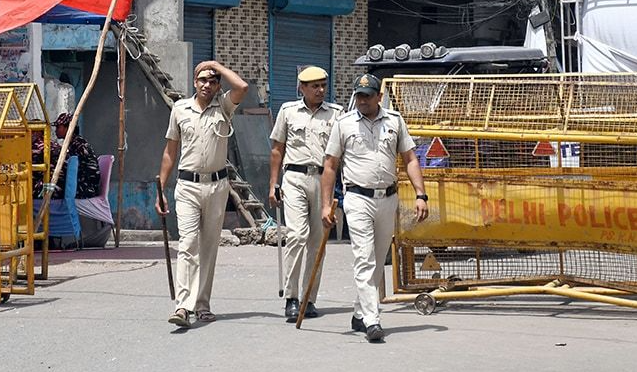
Delhi Police has filed a chargesheet of 973 pages in the rape and murder case of a 22-year-old daughter of a senior IRS officer, naming former domestic help Rahul Meena as the accused. The accused used knowledge of a spare key to enter the house, assaulted the victim and fled with cash, investigators said.

This image is only for illustrative purposes.
Delhi Police have filed a detailed 973-page chargesheet in a city court against Rahul Meena, the former domestic help accused in the rape and murder of a 22-year-old woman, who was the daughter of a senior IRS officer. According to police sources, the chargesheet lays out the sequence of events, forensic findings and witness statements in a case that has deeply shaken the capital.
Investigators say Meena, who was dismissed in February over financial misconduct, entered the house early on the morning of April 22 using prior knowledge of a spare key. The victim, an IIT graduate preparing for the Civil Services examination, was alone at the time. Police sources allege that he raped her, strangled her with a mobile phone charging cable after she resisted his demand for money, stole cash estimated at Rs 2 lakh to Rs 2.5 lakh and fled after changing into the victim’s brother’s clothes. Yeh case kaafi serious hai because it combines sexual violence, murder, betrayal of trust and a strong forensic trail.
What the Chargesheet Says
The chargesheet reportedly presents a detailed reconstruction of the crime. It states that Meena entered the house in the early morning, taking advantage of his knowledge of the home and the spare key. Once inside, he allegedly committed rape and then killed the victim when she resisted his demand for money. According to police sources, he used a charging cable to strangle her.
The document also says he stole cash from the residence before trying to cover his tracks by changing clothes. That detail is important because it suggests an attempt to avoid identification after the crime. The change of clothes may also have been meant to make him appear less traceable during escape. In criminal cases, such post-crime behaviour often becomes part of the prosecution’s argument that the act was not spontaneous in the sense of being harmless but was followed by conscious steps to conceal evidence. This story was also covered by NDTV.
Police have listed 82 witnesses in the case. That number is significant because it suggests the investigation covers not only the immediate crime scene but also the chain of events before and after the incident. Witnesses in such cases can include family members, neighbours, hotel staff, forensic experts, investigators, CCTV analysts and other persons linked to movement or communication. Seedhi baat yeh hai: the prosecution appears to have built a strong paper trail.
Forensic Evidence and Arrest Trail
According to sources, fingerprints, palm prints and thumb impressions recovered from the scene matched the accused. His DNA also reportedly matched samples collected from the victim’s body. In a case like this, forensic evidence can be extremely powerful because it provides objective support for the prosecution’s version of events.
Police also say CCTV footage showed Meena entering the residential complex at 6:30 am and leaving at 7:20 am. That video trail helped investigators identify and arrest him from a hotel in Dwarka the same evening. This kind of time-stamped evidence is crucial in murder investigations because it places the accused at the scene and narrows the timeline of the offence.
The combination of digital, biological and physical evidence gives the case a layered structure. CCTV shows movement, prints show contact, and DNA connects the accused to the victim’s body. When all three align, the prosecution’s case becomes much stronger. It does not mean a court has already decided guilt, but it does mean the investigation appears to have found multiple converging lines of evidence. Yeh issue kaafi important hai because forensic consistency is what often makes or breaks a murder trial.
The Money Angle and Alleged Motive
One of the most sensitive parts of the case is the alleged motive. A senior police officer said Meena had a gambling habit and debts of Rs 5-7 lakh linked to online gaming applications. During interrogation, he allegedly said he had gone to the house “just to ask for money” and that the crime “just happened”.
That statement, if proven to be accurate, may become a key part of the prosecution narrative. It suggests that the original purpose of the visit may have been financial, but the interaction escalated into rape and murder. In criminal investigations, motive helps establish intent, but it is the sequence of actions that matters most in court.
The alleged debt and gambling problem also add a social dimension to the case. Online gaming losses and financial stress have been increasingly discussed in Indian cities, especially when they intersect with desperation or crime. Not every person in debt commits violence, of course, but serious financial pressure can sometimes become a risk factor when combined with access, opportunity and poor judgement. This case may therefore be read not only as a crime story but also as a warning about how personal debt can spiral into catastrophic consequences.
Background and Context
The victim’s father is a senior IRS officer and her mother is a dentist. She herself was an IIT graduate preparing for the Civil Services examination, which makes the case even more tragic. She was young, academically accomplished and working toward a future in public service. Her death has therefore resonated widely because it represents the violent destruction of a life that many would have seen as full of promise.
The fact that the accused was a former domestic help also adds a layer of trust betrayal. Domestic workers often have access to the private spaces of a home, which naturally creates dependence and trust between families and employees. Most such relationships are ordinary and lawful, but when trust is abused, the emotional and legal damage can be severe.
The chargesheet comes after a period in which police gathered technical evidence and mapped the timeline of the attack. The arrest from a Dwarka hotel on the same evening further suggests that investigators acted quickly once movement data and CCTV links were identified. In cities like Delhi, where surveillance is extensive, such evidence can become central to solving serious crimes. That is why the investigation moved from suspicion to a strongly documented case so rapidly.
Timeline
February: Rahul Meena is dismissed over financial misconduct.
April 22, early morning: He allegedly enters the victim’s house using knowledge of a spare key.
Around 6:30 am: CCTV footage reportedly shows him entering the residential complex.
Between 6:30 am and 7:20 am: Police say the alleged rape, murder and theft take place.
Later that day: Meena is arrested from a hotel in Dwarka.
Friday: Delhi Police file a 973-page chargesheet in court.
Now: The case is set to move through the judicial process.
Why This Matters
This matters because it is not only a murder case but also a reminder of how quickly trust, access and vulnerability can turn deadly. The victim was in her own home, a place where safety should have been absolute. When such a crime happens inside a private residence, it shakes people’s sense of security in a very deep way. Yeh issue kaafi important hai because families across India rely on domestic help and household staff every day.
It also matters because the case highlights how strong forensic work can support justice. Fingerprints, DNA, CCTV and witness statements together create a much clearer evidentiary picture. In a country where many cases depend on circumstantial proof, this kind of documentation can help courts reach a more reliable conclusion.
There is a broader social impact too. The case will likely renew public discussion on domestic worker background checks, home security and the risks linked to financial desperation. It also underlines the need for responsible handling of online gaming addiction and debt. While crime can never be reduced to one cause, financial stress combined with access to private spaces can create dangerous conditions.
India Angle
For Indian readers, the case is especially disturbing because it happened in Delhi, a city that is already under constant scrutiny for women’s safety. In Hinglish, seedhi baat yeh hai: ghar ke andar bhi agar safety na ho, toh log aur kahaan feel secure karenge? That is why this story will resonate strongly with families who employ domestic help or live in shared urban spaces.
The case also touches an Indian reality that is becoming more common: young people under pressure to succeed academically while dealing with a society that expects excellence. The victim was an IIT graduate preparing for the Civil Services examination, which means she represented both academic achievement and public ambition. Her death is therefore not just a private tragedy; it is a national-level reminder of how vulnerable women remain despite education and privilege.
There is also the issue of trust in urban households. In Indian cities, many families depend on domestic workers for daily functioning. Most of these relationships are built on trust, but the fear created by rare violent crimes can make people more cautious. That is why this case may lead many households to think about documentation, access control and screening in a more serious way.
Analysis
My opinion is that the police appear to have built a strong case, at least on paper. A 973-page chargesheet is substantial and suggests the investigation was thorough. The combination of CCTV footage, forensic matches and witness statements usually gives prosecutors a good foundation. But the courtroom will still be the final test, where every claim must stand up under legal scrutiny.
I also think the accused’s alleged statement that he went there “just to ask for money” and that the crime “just happened” is particularly chilling. If reported accurately, it shows how casually some offenders may try to narrate a violent act after the fact. Courts and investigators will likely treat that statement carefully, because it may reveal motive, panic or an attempt to minimise responsibility. Either way, it adds a disturbing psychological layer to the case.
What Next
The next step will be the court process, where the chargesheet will be examined and the prosecution’s evidence tested. The accused may challenge the forensic findings, the interpretation of CCTV footage or the motive alleged by police. That is normal in a serious criminal trial.
The family of the victim will likely continue to follow the case closely as it moves through the legal system. Given the emotional and public significance of the case, there may also be broader discussion about women’s safety, domestic access and cyber-gambling debt. If the court accepts the chargesheet and the supporting evidence, the trial could become one of the more closely watched crime cases in Delhi.
For the public, the next question is whether the evidence translates into accountability. That will depend on how the court evaluates the material and whether the prosecution can maintain consistency throughout the trial.
Conclusion
The filing of a 973-page chargesheet in the Delhi rape and murder case involving the daughter of a senior IRS officer marks a major step forward in a deeply disturbing investigation. Police sources say Rahul Meena’s alleged access to the home, the forensic evidence, CCTV trail and 82 witnesses have all been brought together to build the prosecution case.
While the court will ultimately decide the outcome, the investigation already paints a grim picture of betrayal, violence and calculated escape. For Delhi and for India, the case is a sobering reminder that safety at home depends on trust, vigilance and a justice system that can respond with speed and rigour.
Written By A. Jack