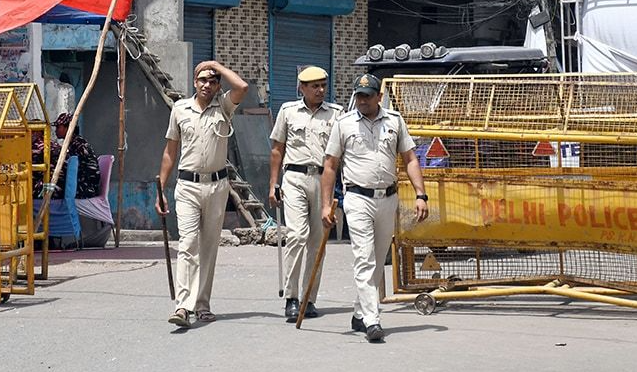
The appointment puts a senior officer trained in intelligence in one of India’s most sensitive policing roles. Kumar now takes charge at a time when Delhi is grappling with issues ranging from law and order, cyber crime, women’s safety to VIP security.
This image is only for illustrations.
The government on Friday named Anurag Kumar as the new Commissioner of Police, Delhi, marking an important change at the top of one of India’s most crucial police forces. Kumar, a 1994-batch IPS officer, has been brought back from the Intelligence Bureau and appointed to lead the Delhi Police with immediate effect, replacing Satish Golcha.
According to the official order, Kumar will hold the post “until further orders.” Golcha, who took charge in August last year and was due to continue till April 2027, has been directed to report to the Delhi Lieutenant Governor. The appointment is significant because Delhi is not just any city; it is the seat of Parliament, the Supreme Court, the Prime Minister’s Office, foreign embassies and several key national institutions. Yeh appointment kaafi important hai because the capital’s police chief plays a role that extends far beyond routine law enforcement.
Why This Appointment Matters
Anurag Kumar’s appointment is notable for two reasons. First, he comes from the Intelligence Bureau, which means his professional background is rooted in intelligence analysis, counter-terrorism and national security. Second, Delhi Police is a force that routinely handles high-stakes situations, including protests, political gatherings, VIP movement, public order and sensitive criminal investigations.
A police commissioner in Delhi must think on multiple levels at once. The job is not only about crime control. It also involves maintaining peace in a politically active city, managing emergency responses, ensuring coordination with central agencies and protecting critical national assets. An officer with intelligence experience can bring a different style of leadership — one that is often more anticipatory and security-orientated. This story was also covered by The Hindu.
This appointment also suggests that the government wants a senior, experienced and security-focused officer at the helm. In a city like Delhi, where even a small incident can become a national news event, that choice carries weight. Seedhi baat yeh hai: Delhi Police chief ka role ordinary nahi hota, it is one of the most visible and sensitive jobs in Indian policing.
Who Is Anurag Kumar?
Anurag Kumar is a 1994-batch Indian Police Service officer from the AGMUT cadre. He has nearly 32 years of experience in policing and administration and most recently served as special director in the Intelligence Bureau, the country’s premier intelligence agency.
His work in the IB involved key areas such as national security, counter-terrorism strategy, intelligence analysis and other sensitive matters. That background means he is not just a field police officer but also someone who has worked in the quieter, strategic side of state security. Officers from intelligence agencies often bring a strong understanding of threat assessment, coordination and preventive action.
Kumar also has a decorated service record. In 2010, he was awarded the Police Medal for Meritorious Service, and later in 2016, he received the President’s Police Medal for Distinguished Service. These are important recognitions in Indian policing and reflect long-term contribution and professional respect. He also holds a bachelor of engineering degree, which adds a technical edge to his academic profile.
While awards do not automatically define leadership, they do indicate consistency, discipline and trust within the system. That makes Kumar’s move to Delhi’s top police post a serious administrative decision rather than a routine transfer. It signals confidence in his ability to handle a demanding portfolio.
How The Change Happened
Kumar’s repatriation from the Intelligence Bureau to his parent cadre, AGMUT, was approved by the Appointments Committee of the Cabinet chaired by Prime Minister Narendra Modi on Thursday. Soon after, the official order naming him as Delhi’s Police Commissioner was issued on Friday.
The timing indicates a swift and planned transition. Such movements at this level are usually handled carefully because the police chief’s post cannot remain uncertain for long in the capital. Delhi’s policing system interacts constantly with national security agencies, the Union government and local administration, so continuity at the top is essential.
The replacement of Satish Golcha also carries administrative significance. Golcha had assumed charge in August last year and was expected to serve until April 2027. However, his early replacement suggests a fresh direction in leadership. That does not automatically imply dissatisfaction; sometimes postings are driven by broader administrative considerations, experience requirements or strategic reshuffling. But any change in Delhi Police leadership naturally draws attention because of the city’s political centrality.
Challenges Ahead
Kumar steps into the role facing a long list of pressing issues. Delhi Police must maintain law and order in a city that routinely hosts political demonstrations, public protests, large religious gatherings and major national events. It must also deal with organized crime, cybercrime, street-level safety concerns and increasing demands for women’s safety.
Counter-terror preparedness remains a major responsibility too. Delhi’s symbolic and strategic importance means that even a small security lapse can have national consequences. The police chief must therefore keep a constant balance between public order and proactive threat monitoring. Add to that the pressure of VIP security, and the role becomes even more demanding.
Cybercrime is another growing challenge. Like most big cities, Delhi is seeing more digital fraud, online extortion, impersonation and identity-related crime. That requires not just police presence on the ground but also technical investigation and coordination with specialized units. Kumar’s intelligence background could be useful here because modern policing now increasingly overlaps with digital intelligence and anticipatory threat tracking.
Women’s safety will remain a major public concern as well. Delhi Police is frequently under public scrutiny on this issue, and the commissioner will likely face expectations to improve response systems, monitoring and accountability. This is one of those positions where the public does not wait long for results. People notice both what the police stop and what they fail to stop.
Background And Context
The Delhi Police are among the most important police forces in the country because the capital houses the Parliament, Rashtrapati Bhavan, the Prime Minister’s Office, the Supreme Court, foreign embassies and many other sensitive institutions. That makes the city unlike any other policing jurisdiction in India. A commissioner here must be part administrator, part security planner and part crisis manager.
The role often becomes visible during major events, protests, or security incidents. The police chief is expected to work closely with central agencies, manage intelligence inputs and respond quickly to developments that can have political or diplomatic implications. Because of that, appointments to the post are watched closely by both the public and the government.
In Delhi, leadership also matters because policing is constantly under public scrutiny. Citizens, opposition parties, courts and media all pay attention to how the force handles sensitive matters. That means the commissioner not only leads operations but also becomes the face of accountability. Yeh role bahut demanding hai, because every major incident in the capital quickly becomes a test of the leadership at the top.
Timeline
August last year: Satish Golcha takes charge as Delhi Police Commissioner.
Thursday: The Appointments Committee of the Cabinet approves Anurag Kumar’s repatriation from the Intelligence Bureau.
Friday: The government issues the order appointing Kumar as Delhi’s new Police Commissioner.
With immediate effect: Kumar assumes charge, and Golcha is directed to report to the Delhi Lieutenant Governor.
Also Read: Four Arrested After Misbehaving With Delhi Poll Officer During Voter Revision in Chandni Mahal
Why This Matters
This matters because leadership changes in Delhi Police affect not just the police force but the national security ecosystem around the capital. The commissioner’s decisions influence how protests are managed, how intelligence is shared, how VIP movement is secured and how citizens experience law and order. A shift at the top can shape priorities and tone across the force.
It also matters because Delhi is a showcase city. What happens in the capital is often read as a reflection of how the central system is functioning. If the new commissioner succeeds in improving response times, security coordination and public confidence, the impact will be felt far beyond Delhi. If problems persist, the scrutiny will be just as wide. That is why this appointment is more than a routine transfer. Yeh issue kaafi important hai because the capital’s policing sets the tone for national-level confidence.
There is also a practical impact for ordinary residents. They may not follow bureaucratic appointments every day, but they do care about safety, traffic control, protest management, theft, fraud and emergency response. A strong commissioner can improve all of those areas through better supervision and faster decision-making.
India Angle
For Indian readers, this appointment matters because Delhi is the political and symbolic centre of the country. When the city’s police chief changes, it is not just a local administrative update. It has relevance for the entire country. In Hinglish, seedhi baat yeh hai: Delhi ki policing ka असर poore India ki governance image par padta hai.
The appointment also reflects how India increasingly values officers with intelligence and security backgrounds in key leadership roles. As threats become more complex — from cybercrime to coordinated unrest — policing is no longer just about boots on the ground. It is about information, anticipation and coordination. Kumar’s career path fits that shift.
There is also a public trust angle. People want the capital to be safe, organized and responsive. They want visible order during events and calm during crises. That makes the identity of the police commissioner important in a way few other postings are. A strong leader can reassure citizens that the city is being managed with discipline and seriousness.
Analysis
My opinion is that Kumar’s intelligence background may prove especially valuable in Delhi’s current environment. The city faces a combination of conventional policing issues and broader security demands. That requires someone who can think beyond routine enforcement. A former IB officer may bring a sharper threat-assessment mindset and stronger inter-agency coordination. That could help in handling both visible and invisible risks.
I also think the transition shows the government’s preference for a senior, trusted and experienced hand at a politically sensitive time. Delhi Police leadership is rarely just about policing. It is about message, confidence and control. A commissioner with nearly three decades of service and a strong intelligence background sends a signal of preparedness. Whether that translates into on-ground results will be the real test.
From an editorial standpoint, the story is important because it is not sensational, but it is consequential. It may not involve a dramatic event, but it affects the machinery that responds to dramatic events. That makes it a classic governance story: quiet on the surface, but highly significant underneath.
What Next
The immediate next step is Kumar taking formal charge and beginning to assess priority areas. He will likely review intelligence coordination, law and order trends, crime hotspots and special security protocols. In the first few weeks, his leadership style and emphasis areas will become clearer.
Public attention will then shift to how he handles the most visible policing challenges in the capital. Protest management, women’s safety, cybercrime response and major event security will be watched closely. Any early move to strengthen coordination or tighten enforcement will likely draw attention.
There may also be internal adjustments within the force as the new commissioner brings in his own approach to supervision and strategy. That is normal in senior postings. For Delhi residents, the key question will be simple: does the city feel safer and better managed under the new leadership? That answer will come over time.
Conclusion
Anurag Kumar’s appointment as Delhi Police Commissioner marks a significant leadership shift in one of India’s most sensitive policing posts. With nearly 32 years of experience and a strong intelligence background, Kumar takes charge at a time when Delhi faces complex law-and-order, cybercrime and security challenges. His tenure will matter not only for the capital’s day-to-day policing but also for how the country sees the security management of its most important city. The expectations are high, and the coming months will show how his intelligence-driven experience shapes Delhi Police under his command.
Written By A. Jack