Delhi has approved a Rs 473 crore project to replace almost 96,000 street lights with smart LED systems on Public Works Department roads before Diwali. The upgrade is intended to enhance visibility, reduce complaints, cut electricity use and bolster public safety across the capital.
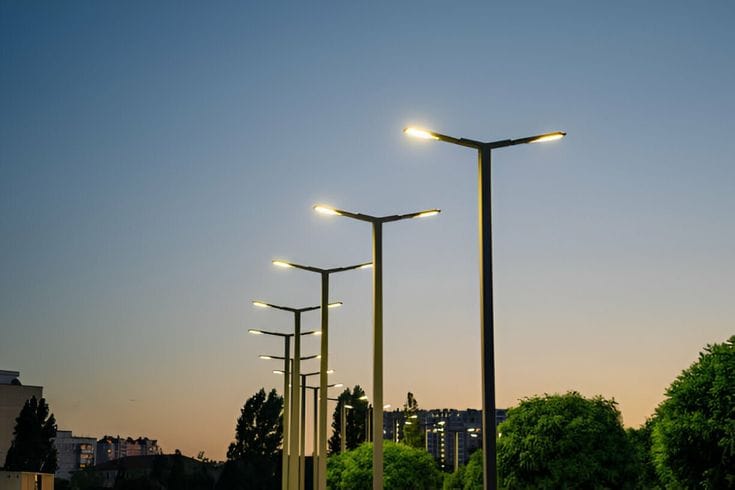
Delhi’s street lighting network is set for a major upgrade as the government moves to replace old sodium vapour lamps and ageing LEDs with smart lighting before Diwali.
The Delhi government has cleared a large-scale street lighting upgrade plan that will replace nearly one lakh street lights with smart LED systems across roads maintained by the Public Works Department. The Rs 473 crore project was approved on Wednesday in a meeting chaired by Chief Minister Rekha Gupta and PWD Minister Parvesh Verma.
According to officials, around 96,000 street lights across the capital will be upgraded under the plan. This includes nearly 45,000 older sodium vapor lamps and another 51,000 aging LED fixtures that have often drawn complaints from residents about poor visibility and delayed repairs. The rollout has been targeted for completion before Diwali, when traffic, market activity, and late-evening movement rise sharply across Delhi. Yeh move kaafi important hai because it directly affects road safety, public comfort, and daily urban life.
What Will Change
Delhi’s current street lighting network still includes a large number of High Pressure Sodium Vapour lamps, the older yellow-orange lights that many commuters still see on arterial roads and flyovers. These lights are being replaced with smart LEDs as part of the new upgrade. Officials said another 51,000 older LED fixtures will also be replaced or modernized under the same project. NDTV had covered the full story.
The government is also planning to install about 5,000 additional poles in stretches that currently have poor or no lighting. That is a crucial detail because the problem is not just old bulbs; in many areas, the absence of adequate poles creates dark patches that make night driving and walking unsafe. For residents, this means better-lit roads, fewer dead zones, and fewer long waits for minor lighting faults to be fixed.
The new system will be connected to a centralized Command and Control Center. This center will be able to detect faults in real time, allowing the government to monitor the lighting network more actively than it does now. Officials also said the brightness level can be adjusted remotely depending on traffic conditions, with intensity increasing or decreasing by up to 90 percent if required. That level of control is a major shift from the older complaint-based repair system.
Why the Upgrade Is Needed
The main reason behind the project is that Delhi’s existing street lighting system has long suffered from maintenance gaps. Many lights stop working and remain unrepaired for days because the government often learns about faults only after people complain. Chief Minister Rekha Gupta pointed this out clearly, saying that in the absence of a real-time monitoring system, faulty lights were identified only after complaints were received.
She also said that dark spots remained unattended for long periods, which affected road visibility and public safety, particularly women’s safety. That is a major concern in a city like Delhi, where late-night movement is common and road lighting has a direct impact on how safe people feel while commuting. In simple words, old lights and dark stretches are not just inconvenient—they can become a real safety risk.
The switch to smart LEDs also aligns with the government’s push for more energy-efficient public infrastructure. As Delhi tries to modernize its urban systems, street lighting is one of the easiest areas where technology can deliver visible improvements. Better lights, lower electricity use, and fewer maintenance delays make this a practical upgrade rather than just a cosmetic one.
Expected Benefits
The government says the new street lighting system will reduce electricity consumption and maintenance costs. Once fully operational, the network is expected to save nearly Rs 25 crore every year in power costs. That is a meaningful saving for a city government because it means a recurring expense can be reduced while service quality improves.
Smart LEDs also tend to last longer and offer more consistent lighting than older sodium vapor lamps. That means fewer outages, lower replacement frequency, and better visibility at night. For pedestrians, cyclists, motorcyclists, and car drivers, this could make a noticeable difference. It can also help traffic movement because roads that are properly lit tend to feel less chaotic after dark.
Another important benefit is the ability to adjust brightness based on need. This can help conserve energy during low-traffic periods while still keeping roads safe. The combination of remote monitoring and adjustable intensity makes the system more efficient than traditional streetlight networks that rely heavily on manual checks.
Background
Street lighting in Indian cities has often been a weak point in urban governance. Many municipal systems depend on manual reporting, which means faults are noticed only when a citizen complains or when darkness becomes too obvious to ignore. That reactive approach often leads to delays, repeated repair calls, and public frustration.
Delhi’s move comes after repeated complaints about dark roads, unlit stretches, and patchy maintenance. The issue has been particularly visible on arterial roads, underpasses, and flyovers where visibility matters the most. The government’s 2026-27 Budget had already announced a smart lighting push as part of a broader plan to modernize public infrastructure and improve energy efficiency.
This new project is therefore not a sudden decision. It is part of a larger shift toward a digitally monitored urban services model. If executed properly, it could become one of the more visible civic improvements in the capital before Diwali. Urban residents usually notice street lighting more than many other infrastructure upgrades because they interact with it every single night.
Timeline
2026-27 Budget: Delhi announces a broader smart infrastructure and energy-efficiency push.
Wednesday: The Rs 473 crore streetlight replacement project is approved.
Now: Planning begins for the replacement of about 96,000 street lights.
Before Diwali: The government aims to complete the rollout.
After rollout: The new command-center-based monitoring system is expected to begin real-time oversight.
Also Read: 2 Minors Stabbed to Death in Delhi’s Rohini Over Old Rivalry, Police Say
Why This Matters
This matters because street lighting affects daily safety, mobility, and the quality of public space. When roads are well-lit, commuters feel more secure, traffic movement becomes smoother, and dark corners that can discourage movement begin to disappear. For women, senior citizens, and late-night workers, this can make a real difference in confidence and convenience.
It also matters because this is one of those civic changes that has immediate visibility. People do not need a technical explanation to understand whether their road is brighter at night. If the project works, the public will notice it directly. That makes it both a practical upgrade and a political test. Yeh issue kaafi important hai because it combines safety, savings, and accountability in one public project.
India Angle
For Indian readers, Delhi’s smart LED move reflects a larger trend in urban governance across the country. Cities like Pune, Bengaluru, Hyderabad, and Ahmedabad are also under pressure to modernize public utilities and reduce wasteful energy use. As electricity costs rise and urban populations expand, smart lighting has become a logical improvement that many state governments are now considering.
The India angle is also about public safety. In many cities, bad lighting contributes to accidents, petty crime concerns, and a general feeling of insecurity after dark. If Delhi can show success with centralized monitoring, remote fault detection, and lower electricity bills, it may become a model for other Indian capitals and large municipal systems. In Hinglish, yeh sirf Delhi ka upgrade nahi hai—it can become a template for other cities too.
Analysis
My view is that this project has solid promise because it solves a visible and everyday problem. Street lights are one of the simplest indicators of whether a city feels cared for. When they fail, the city feels neglected. When they work well, people rarely think about them, but they benefit from them every single day. The inclusion of real-time monitoring is especially important because maintenance systems in Indian cities often fail due to slow response times, not lack of intent. The real test, however, will be execution. Replacing fixtures is one thing; keeping the new system responsive after Diwali is another.
What’s Next?
The next stage will involve procurement, installation planning, pole additions, and integration with the command-and-control center. The government will likely prioritize high-traffic roads, dark stretches, and areas with recurring complaints first. Since the target is before Diwali, the implementation timeline will be tight and visible.
Once the system goes live, Delhi residents will expect fewer complaints, quicker repairs, and better nighttime visibility. If the upgrade succeeds, it could also push the government to expand smart lighting to more roads beyond the initial PWD network. But if delays or technical issues arise, the project may face criticism for overpromising. For now, the rollout is a good step, but the real outcome will depend on how quickly and effectively it reaches the ground.
Conclusion
Delhi’s decision to replace nearly 96,000 street lights with smart LED systems is a major urban upgrade that could improve safety, reduce power use, and modernize the capital’s nighttime infrastructure. The Rs 473 crore project is ambitious, but it addresses a problem residents know very well: dark roads, slow repairs, and uneven lighting.
If executed on time, the project could make a visible difference before Diwali and set a strong example for other Indian cities. The promise is clear—better lighting, smarter monitoring, and lower costs. Now the focus shifts to delivery, because in a city like Delhi, citizens will judge this project by what they see after sunset.
Written By A. Jack