Amid soaring temperatures in the national capital, all schools must ring bells every 45-60 minutes for hydration breaks, plus buddy systems and no outdoor activities to prevent dehydration disasters.
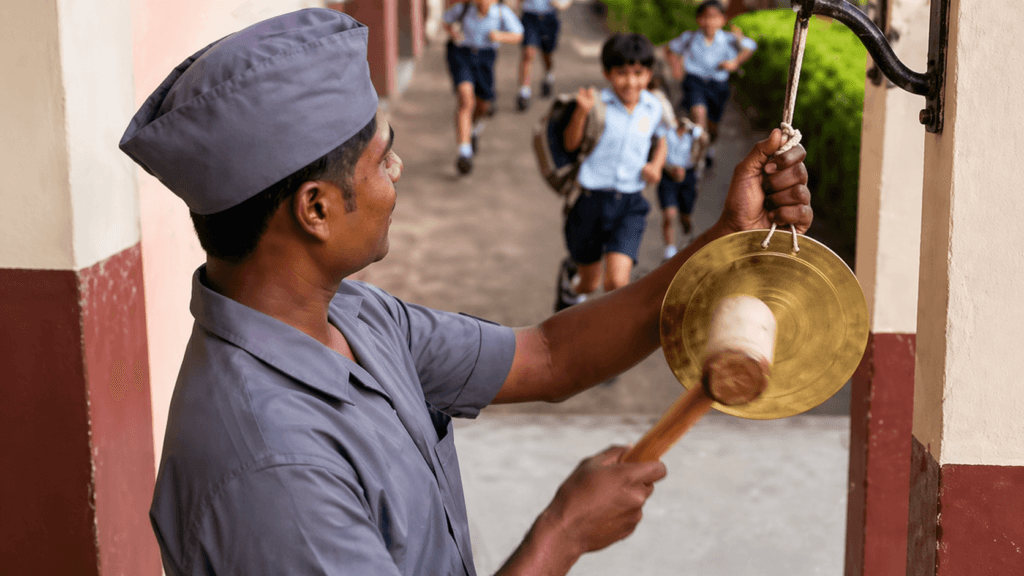
Students in a Delhi government school line up for a mandatory water break as the “water bell” rings amid the April 2026 heatwave, with temperatures crossing 40°C.
Delhi Schools Introduce Hourly Water Bells
In a proactive move to protect over 2 million schoolchildren from the brutal summer heat, the Delhi government has mandated the “water bell” system across all government, aided, and private recognised schools. Starting immediately in April 2026, bells will ring every 45 to 60 minutes, signalling compulsory hydration breaks. This comes as temperatures in the national capital consistently hit 40-45°C, raising alarms over dehydration and heatstroke risks. Additional measures include buddy pairing, shaded assemblies, and parent advisories—ensuring no child is left vulnerable during peak heat hours.
Why and How These Measures Were Rolled Out
Yeh garmi ka mausam bacchon ke liye khatarnak ho gaya hai, so the Delhi govt ne turant action liya. The directive stems from the India Meteorological Department (IMD) forecasting severe heatwave conditions through May 2026, with Delhi recording highs of 43.2°C on April 20 alone. Logical trigger: Last year’s heatwave saw 150+ child hospitalisations in Delhi schools for dehydration—numbers that could double this year without intervention. India Today has covered the full story.
How it works: Schools ring an audible bell (or chime) every hour, pausing classes for 2-5 minutes so students drink water at designated coolers. A buddy system pairs kids (e.g., one senior with a junior) to watch for dizziness or fatigue, reporting instantly. Assemblies? Cancelled or indoors under fans/AC for max 15 minutes. Outdoor PT/sports? Banned from 10 AM-4 PM. Nodal teachers oversee, with posters on “heatstroke signs” (sweating stops and confusion) mandatory. Action reports due weekly to DoE—non-compliance risks funding cuts. Fact: Delhi has 5,000+ schools serving 20 lakh kids; implementation is via circular dated April 21, 2026.
Voices from Experts and Ground Zero
Delhi Education Minister Atishi Marlena stated, “Bacchon ki jaan sabse pehle! Water bell is a simple, proven tool—every school must adopt it without fail.” (Kids’ lives first!)
A principal from East Delhi’s Sarvodaya Vidyalaya shared: “We’ve started already—kids love the breaks, and no fainting cases this week. Yeh system game-changer hai.”
Paediatrician Dr Anita Rao warns, “Dehydration hits kids fastest; symptoms like dry lips or lethargy need instant action. Schools are frontline defence in urban heat islands like Delhi.”
Heatwaves Hit Delhi Hard
Delhi’s summer battles aren’t new—context shows urgency:
2019: The first “water bell” trial in Rajasthan (40 schools) cut dehydration by 70%.
2022: Delhi pilots it amid a 49.2°C record; 25 child heatstroke deaths nationally.
April 2024: Gujarat mandates statewide post-1,200 heat deaths.
March 2026: IMD predicts “above-normal” heat; Delhi hits 41°C early.
April 20, 2026: Heatwave declared; schools report 50+ minor cases.
April 21: DoE circular issued—water bottles, buddies from next day.
April 22 onwards: Monitoring; extensions if heat persists till June.
India’s heatwaves kill 20,000+ yearly (mostly May-June), per NDMA. Delhi, with concrete jungles trapping heat, sees school risks spike—80% of cases in govt schools lack AC. Also Read: Delhi-NCR’s air turns foul again with AQI at 226, triggering GRAP-1 curbs
Why This Matters
Simple bells could save lives—impacting 2 million Delhi kids directly. Dehydration causes 10% school dropouts in heat; heatstroke kills via organ failure in hours. For society: Healthier kids mean better learning (studies show 20% cognitive dip above 35°C). Economically, it prevents a ₹500 crore annual hospital burden from heat illnesses (AIIMS data). Yeh matter har parent ke dil ko chhooega—safe schools build trusting communities.
The India Angle
Bharat ke har sheher mein yeh heatwave ka issue same hai—Delhi se UP, Rajasthan tak. 2026 mein, 15 states red alert pe; Mumbai hit 39°C, Chennai 42°C. Hinglish bolun: “Bacche school jaate hain toh garmi se pareshan—water bell jaise simple fixes zaroori hain.” For Tier-2/3 cities like Chāndpur (UP), it’s a blueprint: Govt schools without fans need this now. Nationally, NCERT could standardise; 25 crore students are affected yearly.
Analysis
Brilliant, low-cost innovation; why not nationwide? Urbanisation + climate change amps risks—Delhi’s green cover is down 15% since 2020. Logically, compliance is 90% in private schools (AC-equipped) and tougher in govt ones (overcrowded).
What Next
Week 1: Nodal teachers train; 80% compliance targeted. By May, IMD extensions mean indoor classes are mandatory. Challenges? Water scarcity—schools need tanker tie-ups. Future: App-based alerts, AC subsidies (₹10,000/school budgeted). If successful, Haryana/Punjab adopt it by June; NDMA national guideline by July 2026.
A Refreshing Step in Scorching Times
Delhi’s hourly water bells, buddy watches, and heat curbs mark smart, child-first action against 2026’s fiery summer. From the April 21 directive to daily hydration, it’s proactive parenting by the state. Yeh chhoti si ghanti badi jaan bacha sakti hai.
Parents, pack water bottles; schools, ring loud. Cooler days are ahead—stay safe.