Three men aged between 32 and 42 died while cleaning a septic tank at a factory in Delhi’s Mundka Industrial Area on Friday, once again highlighting the deadly risks associated with hazardous manual cleaning work. Police have arrested three persons including the factory owner and a contractor and registered a case under negligence, anti-manual scavenging laws and SC/ST Act provisions.
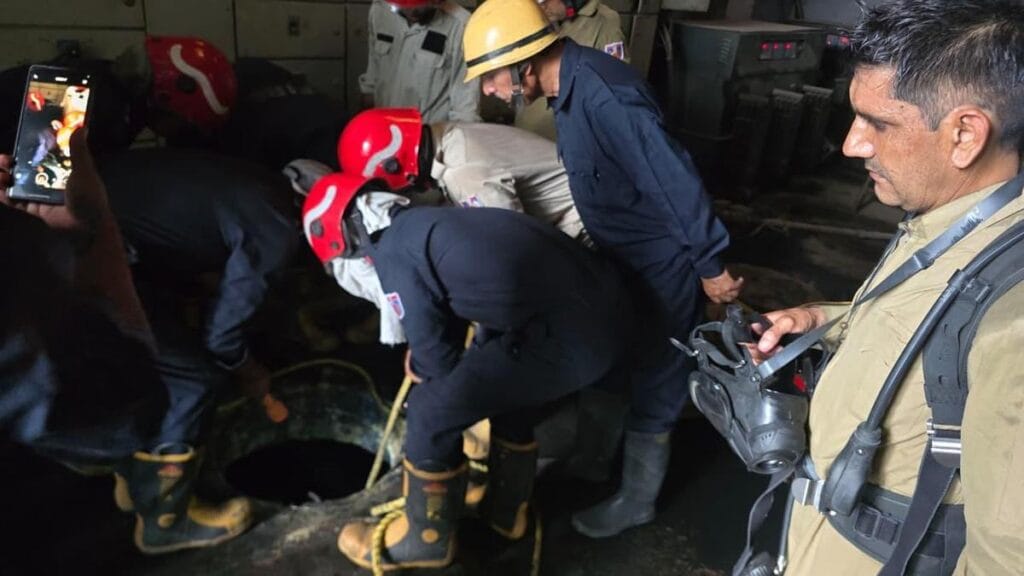
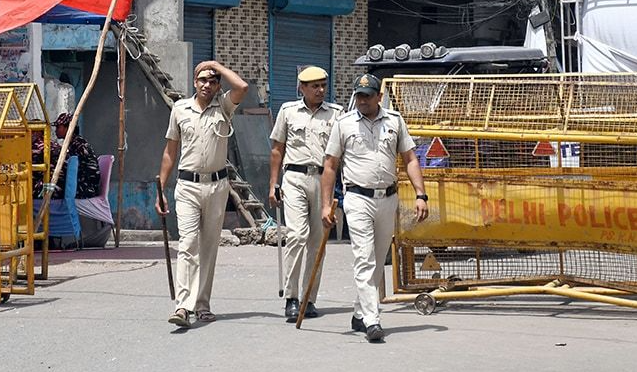
Police personnel and rescue teams at a factory in Delhi’s Mundka Industrial Area after three men died while cleaning a septic tank on Friday. Image Credit: The Hindu
Delhi Septic Tank Tragedy: A tragic workplace death in west Delhi’s Mundka Industrial Area has once again brought the issue of hazardous septic tank cleaning into sharp focus. Three men, aged 32 to 42, died on Friday while cleaning a septic tank at a factory, police said. The bodies were recovered and sent for post-mortem examination, while authorities arrested three people, including the factory owner and a contractor, in connection with the case.
This is not just another industrial accident. It is a serious reminder that unsafe sanitation work continues to claim lives in India despite laws meant to stop it. The case has triggered anger from activists, questions about compliance, and demands for accountability from political leaders. Yeh issue kaafi important hai because it shows how fatal negligence can still be normalized in some workplaces.
What Happened and How
According to police, the three men died while cleaning a septic tank at a factory in the Mundka Industrial Area. The exact cause of death will be confirmed only after the post-mortem, but such incidents often involve toxic gases, poor ventilation and a complete absence of safety equipment. In many similar cases, workers enter confined spaces without oxygen support, protective gear or rescue arrangements, and one collapse quickly turns into multiple deaths. The Hindu has covered the full story.
Police have arrested factory owner Suraj Marwaha and two others, including a contractor, as part of the investigation. The case has been registered under Bharatiya Nyaya Sanhita sections related to death by negligence and common intention, along with Section 9 of the Prohibition of Employment as Manual Scavengers and Their Rehabilitation Act, 2013, and Section 3(1)(j) of the SC/ST (Prevention of Atrocities) Act. That legal framing is significant because it suggests investigators are treating the deaths not as an accident alone but as a potentially unlawful and discriminatory act involving forced hazardous cleaning.
The use of multiple legal provisions also shows the seriousness of the matter. If workers were made to do dangerous septic tank work without proper safeguards, the case may extend beyond simple workplace negligence. It could involve violations of labor protection and sanitation law and possibly abuse of vulnerable workers.
Why This Likely Happened
While the full forensic and witness findings are still awaited, the most likely causes in such cases are well known. Septic tanks can contain deadly gases such as methane, hydrogen sulfide and low-oxygen air. Without ventilation and entry protocols, a person can collapse within minutes. If another worker enters to rescue them without protection, a chain reaction can cause multiple fatalities.
That is one reason these deaths keep repeating despite legal bans. In practice, unsafe manual scavenging and hazardous tank cleaning often continue because of weak enforcement, cost-cutting, and poor compliance by contractors or owners. Factories and industrial units sometimes rely on informal labor arrangements, which makes accountability harder after a tragedy.
A factory or printing press unit should have had a proper confined-space safety system if the tank needed cleaning. That would normally include gas testing, mechanical ventilation, standby rescue equipment, harnesses, and trained supervisors. If any of those were missing, the tragedy would become even more serious. In simple words, it yeh sirf accident nahi lagta—it looks like a preventable death caused by unsafe working conditions.
Police Action and Legal Angle
Police said they arrested three people, including the factory owner and a contractor, after the incident. The case was booked under sections dealing with negligence and common intention, as well as provisions of the Prohibition of Employment as Manual Scavengers and Their Rehabilitation Act, 2013. The inclusion of the SC/ST Act matters because forced manual scavenging has historically affected marginalized communities and the law specifically addresses coercive and degrading labor practices.
This legal response sends a signal that authorities are not treating the matter lightly. But the bigger question is whether arrests after deaths are enough. In many such cases, action comes only after lives are lost, not before. That pattern is exactly what activists have been criticizing for years.
The bodies were sent for autopsy, which will help determine whether the men died from suffocation, toxic exposure or another cause related to the tank’s condition. The post-mortem report will be important for both criminal investigation and any future compensation proceedings. It may also help establish whether the victims entered the tank voluntarily, under instruction, or through coercion.
Background and Context
Deaths while cleaning sewer lines and septic tanks have remained one of the most shameful and persistent occupational hazards in India. Despite legal restrictions on manual scavenging and hazardous cleaning, such incidents continue to occur in cities and industrial areas. The problem is not just one of law, but of enforcement, contractor networks and invisible labor.
Mundka has seen industrial growth, but industrial growth without strict safety standards often creates danger. Factories, printing units and warehouses depend on workers who are sometimes hired through intermediaries. When accountability is fragmented, safety becomes the first casualty. This case now fits into a larger pattern of labor exploitation and regulatory failure.
The activism around this issue is also longstanding. Civil society groups have repeatedly flagged flouting of norms, lack of accountability and the routine use of workers for dangerous cleaning tasks without proper protection. The outrage after this incident is therefore not surprising; it reflects a deep frustration with a system that seems to react only after tragedy.
Timeline
Friday: Three men are sent to clean a septic tank at a factory in Mundka Industrial Area.
During the work: The men die inside or near the tank, likely due to hazardous conditions.
After the incident: Bodies are pulled out and sent for post-mortem examination.
Police action: Three people, including the factory owner and a contractor, are arrested.
Legal case: FIR is registered under negligence, anti-manual scavenging laws and the SC/ST Act.
Public reaction: Activists and political leaders demand accountability and compensation.
Also Read: Delhi Woman Dies by Suicide in Nangloi, Leaves Video Blaming In-Laws for Harassment
Reported Reactions and Statements
Activists have pointed to repeated violations of safety norms and the absence of accountability after such deaths. Their criticism is grounded in a simple point: if manual scavenging and hazardous cleaning are banned, why do such deaths still happen so often?
Congress leaders have also sought a probe and compensation for the families of the deceased. That demand is likely to gain traction because public anger tends to rise sharply when workers die in clearly preventable conditions. Families are often left not only grieving but also struggling for financial support and legal recognition.
A labor safety expert would likely say that this case is a textbook example of what happens when confined-space rules are ignored. Proper entry procedures, gas checks and emergency response planning are not optional. When they are skipped, the risk of death is immediate and extreme.
Why This Matters
This matters because it is about more than one industrial unit or one tragic day in Delhi. It reflects a national failure to fully eliminate unsafe manual scavenging and hazardous sanitation work. In a modern city, no worker should die cleaning a septic tank without protection, training or rescue support.
It also matters because the law already exists. India has legislation banning manual scavenging and regulating hazardous cleaning, yet enforcement often remains weak. When a death happens inside a factory, the public expects immediate accountability, not just after-the-fact arrests. The real test is whether the system prevents the next death.
There is a human impact too. Three families have now lost loved ones, likely breadwinners, in circumstances that may have been avoidable. That emotional and financial damage is enormous. Yeh sirf ek news item nahi hai—it is a deep social failure.
India Angle
For Indian readers, this incident hits hard because it speaks to the everyday reality of labor safety in many cities. Delhi may be a national capital, but accidents like this show that urban growth does not always mean safer workplaces. In Hinglish, seedhi baat yeh hai: jab safai ka kaam jaanlewa ban jaye, to system mein kuch bahut galat hai.
This also connects to a broader Indian issue: the gap between law on paper and law on the ground. India has strong anti-manual scavenging laws, but implementation is uneven. Workers from poorer communities are still often the ones exposed to the most dangerous jobs. That makes this tragedy both a local Delhi story and a national warning.
For families across India, this is a reminder to ask hard questions when workers are sent into tanks, sewers or confined spaces. Has gas testing been done? Is there a rescue plan? Are the workers trained? These may sound technical, but they are life-or-death questions.
Analysis
My opinion is that the biggest issue here is not just the incident itself but the normalization of unsafe work. Too often, such deaths are described as isolated accidents. They are not. They are symptoms of a wider system where compliance is weak, contractors cut corners, and workers pay the price. That is why the legal sections invoked here matter so much.
The arrest of the factory owner and contractor is a necessary step, but it cannot be the end of the story. What will matter next is whether investigators trace responsibility all the way up the chain, including whether the unit had safety approvals, whether workers were hired informally, and whether any previous violations were ignored. Without that, the same cycle can repeat.
What Next
The next step is the post-mortem report, which will clarify the medical cause of death. Police will also likely record witness statements, examine safety compliance at the site and determine how the workers were assigned the task.
If violations are confirmed, more arrests or additional charges could follow. The factory may also face regulatory scrutiny, and the families could seek compensation through legal and administrative channels.
The larger question is whether this tragedy will trigger stricter inspections of industrial units in Delhi. If authorities act decisively, it could force companies to review how septic tank and confined-space work is assigned. If not, the public will likely see this as yet another case of delayed outrage and weak prevention.
Conclusion
The deaths of three men while cleaning a septic tank in Mundka are a grim reminder that dangerous sanitation work still exists in India despite clear legal prohibitions. With the factory owner and two others arrested, the case is now headed into a legal and forensic phase, but the deeper issue is prevention. If the system cannot stop workers from being sent into lethal conditions, then enforcement is failing where it matters most. This tragedy should not become just another headline; it should become a turning point.
Written By A. Jack