
A car dealer in Mumbai, aged 25 years, was reportedly killed when the steering wheel airbag of a Honda parked for routine inspection suddenly deployed and struck him on the neck. Police have filed an Accidental Death Report and are investigating whether a technical fault, electrical problem or some hidden defect caused the fatal incident.
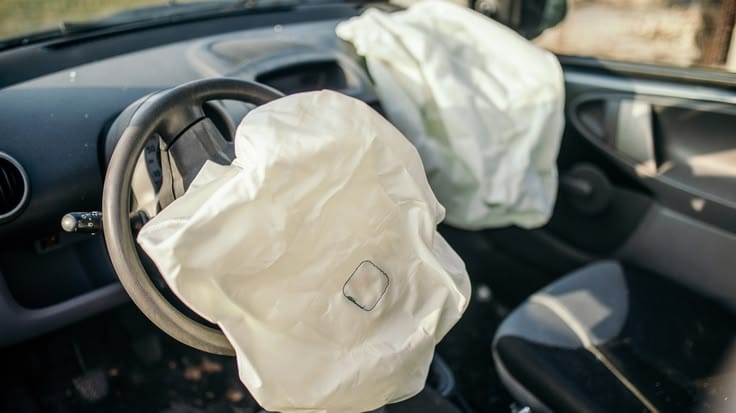
This Image is only for representation.
A bizarre and tragic accident in Mumbai has claimed the life of 25-year-old car dealer Mohit Suresh Soni after the steering wheel airbag of a parked vehicle allegedly deployed without warning and caused a fatal neck injury. The incident took place on Wednesday afternoon when Soni was reportedly inspecting a second-hand Honda car by the roadside before accepting it for sale to a third party. According to police, the airbag’s plastic cover may have flown off with force and struck the right side of his neck, leading to severe hemorrhaging and death before he could be admitted to the hospital.
This is the kind of accident that feels almost unbelievable at first, but the early police findings suggest it was very real and very sudden. A routine car check, which should have been a normal part of business, ended in a fatality. For Mumbai’s used-car market and for vehicle owners across India, the case is a disturbing reminder that even parked cars can be dangerous if something is technically wrong.
What Happened
Police said Soni had stopped the car by the roadside to examine it before finalizing its sale. At that point, the steering wheel airbag allegedly deployed unexpectedly. The force of the deployment, along with the airbag cover, is believed to have caused a grievous injury to his neck. Passers-by alerted police, and he was rushed to Pandit Bhimsen Joshi Government Hospital in Bhayandar, where doctors declared him dead before admission. NDTV has covered the full story.
The most striking part of this incident is that the car was parked and there was reportedly no external collision. That immediately changes the nature of the case. Airbags are designed to activate during an impact, not while a vehicle is stationary. So the central question now is simple but crucial: what caused the system to trigger?
Police have registered an Accidental Death Report and are treating the matter as an ongoing technical and forensic inquiry. That means the investigation is still focused on cause and mechanism rather than criminal intent at this stage.
How the Death May Have Happened
While the exact cause is still under investigation, several possibilities are being examined. One possibility is a malfunction in the airbag system itself, which can happen due to faulty sensors, wiring problems, or previous damage. Another possibility is an issue in the vehicle’s electrical or mechanical system that caused the airbag to deploy incorrectly. Investigators are also checking whether the car had ever suffered a previous collision, repair, or airbag replacement that could have affected the system.
Police sources said the 15-year-old vehicle had a valid fitness certificate, but that alone does not eliminate the possibility of a hidden technical fault. In older vehicles, wear and tear can affect electronic and safety components in ways that are not always visible during a basic inspection. That is especially true for airbag systems, which rely on a chain of sensors and triggers.
Forensic teams have collected blood samples from inside the car, and the Regional Transport Office has been asked to examine the vehicle’s mechanical and electrical systems. Investigators are also tracing the previous owner to find out whether the car had shown similar problems before. That kind of background check is important because safety issues often leave a trail in repair history, insurance claims or prior complaints.
Why the Airbag Became Dangerous
Airbags save lives in crashes, but they can also become dangerous if they deploy when they are not supposed to. They inflate within milliseconds and do so with considerable force. In normal use, that force is meant to cushion the impact of a collision. But if a person is too close or if deployment happens unexpectedly, the airbag can cause serious injury.
In this case, police believe the steering wheel airbag and its plastic cover may have struck the victim’s neck directly. That suggests the injury may not have come only from impact pressure but also from a hard component that came loose during deployment. If confirmed, that would explain the severity of the bleeding. It also shows why even a safety device can turn lethal when something goes wrong.
This is a rare but very serious situation. It is not enough to say the airbag was present. The condition of the entire system, especially in a used vehicle, matters a great deal. Hidden electrical problems or prior tampering can create dangerous outcomes even when the car appears roadworthy.
Background and Context
Used-car buying in India is a huge market, and most customers rely on routine inspections rather than advanced diagnostics. A lot of buyers and dealers look at engine condition, body damage, tyres and registration papers. But hidden safety issues, especially in systems like airbags, can be missed unless the car undergoes detailed technical testing.
This case also highlights how safety technology in vehicles has become more complex over time. Airbags are standard in many modern cars, but in older vehicles, especially ones that have changed hands several times, previous repairs or component failures can create unpredictable risks. In a 15-year-old vehicle, that is a legitimate concern.
The fact that the car had a valid fitness certificate is important but not conclusive. Fitness checks do not always catch every latent electronic defect. So the incident may force a closer look at how used cars are inspected before resale, especially when safety-related systems are involved.
Timeline
Wednesday afternoon: Mohit Suresh Soni inspects a Honda car by the roadside before agreeing to sell it to a third party.
During inspection: The steering wheel airbag allegedly deploys unexpectedly in the parked car.
Immediately after: The airbag cover is believed to strike the right side of his neck.
Passers-by alert police: He is rushed to the hospital in Bhayandar.
Before admission: Doctors declare him dead.
Police action: An Accidental Death Report is registered, and forensic and technical investigations begin.
Further probe: RTO checks, vehicle tracing and technical assessments are ordered.
Reported Statements and Family Concern
Soni’s family has asked for a detailed probe into the circumstances of his death. That demand is completely understandable. A young man dying while merely inspecting a parked car is not a routine accident and deserves a thorough explanation.
Police have not yet released a final cause, and that caution is necessary. In cases like this, it is easy for speculation to spread fast. But the proper approach is to wait for forensic and technical findings before drawing conclusions. Until then, the case remains a tragic mystery with an open investigation.
An automotive safety expert would likely say that unexplained airbag deployment is a serious warning sign of electrical or sensor malfunction. They would also point out that old vehicles, especially those with uncertain repair histories, must be checked carefully before resale. That is the practical lesson here.
Also Read: BMW Z4 Crashes at 250 km/h Near Mumbai: 2 Killed, Body Parts Scattered
Why This Matters
This matters because it shows that vehicle safety is not only about crashes on the road. A parked car should not turn into a hazard during a normal inspection. Yeh issue kaafi important hai because many people in India buy and sell second-hand cars every day without thinking much about hidden safety systems.
It also matters for road safety regulation. India’s used-car market is growing rapidly, and this case may push dealers, owners and buyers to take airbag condition more seriously. A valid fitness certificate is helpful, but incidents like this show that paperwork alone cannot guarantee safety.
There is also a broader public interest angle. When a safety feature kills instead of protects, trust in the system is shaken. That can affect consumer confidence, resale practices and the way inspection standards are enforced.
India Angle
For Indian readers, this case is especially relevant because second-hand car sales are common across cities and towns. Many buyers focus on price, mileage and looks, but safety systems can be overlooked. In Hinglish, seedhi baat yeh hai: gaadi theek dikhna aur gaadi safe hona do alag cheezein hain.
This incident may also encourage more buyers in India to demand deeper vehicle checks before purchasing older cars. That could include airbag diagnostics, electrical testing and a review of repair history. For dealers, it is a reminder that a car’s hidden condition matters just as much as its exterior.
At a policy level, the case could prompt talk about whether existing fitness tests are enough for older vehicles. If a parked car’s airbag can deploy and kill someone, then safety inspection standards may need a serious update.
Analysis
My view is that the most important part of this story is not just the freakish nature of the accident but the questions it raises about technical inspection in used vehicles. People assume airbags are passive and safe until needed. This case shows that a malfunctioning safety system can itself become lethal.
The investigation will probably focus on electronics, wiring, deployment sensors and the car’s repair history. If a prior crash or faulty repair is discovered, that could explain the deployment. If not, the case may point to a rare and alarming mechanical failure. Either outcome has consequences for the used-car market.
There is also a consumer-awareness angle here. Many buyers in India rely on informal checks and trust the seller’s word. This tragedy suggests that older cars should be subjected to far more rigorous inspection before ownership changes hands.
What Next
The next step is the forensic report, which should help determine whether the airbag deployed because of a technical fault, electrical short, sensor error or prior damage. The RTO examination will be important too, especially if there is evidence of tampering or poor maintenance.
Police will also continue tracing the previous owner to reconstruct the car’s repair history. If the vehicle had earlier issues, that could significantly change the direction of the probe. The family is likely to press for a full explanation and possibly accountability if negligence is found.
For the wider public, the likely outcome is greater discussion about used-car checks and airbag safety. If the case becomes more widely reported, it may also encourage buyers to ask tougher questions before finalizing a purchase.
Conclusion
Mohit Suresh Soni’s death in Mumbai is a shocking reminder that even a parked car can become dangerous if a critical safety system fails. What was supposed to be a routine inspection of a second-hand Honda turned into a fatal accident when the steering wheel airbag allegedly deployed unexpectedly. With forensic teams, police and the RTO now involved, the key question is not just how he died but how such a deadly malfunction happened in the first place. Until that is answered, this case will remain a sobering warning for the entire used-car market.
Written By A. Jack