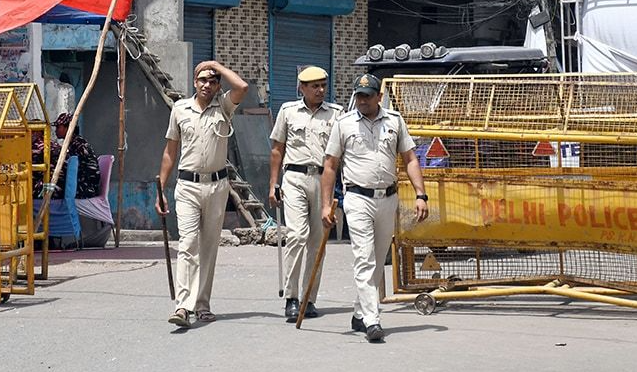
The couple was in Mussoorie to celebrate husband’s birthday. P Radha Gayatri, 27, was found dead in her room on June 15. Police said the investigation has now turned towards him. However, further investigation is still on.
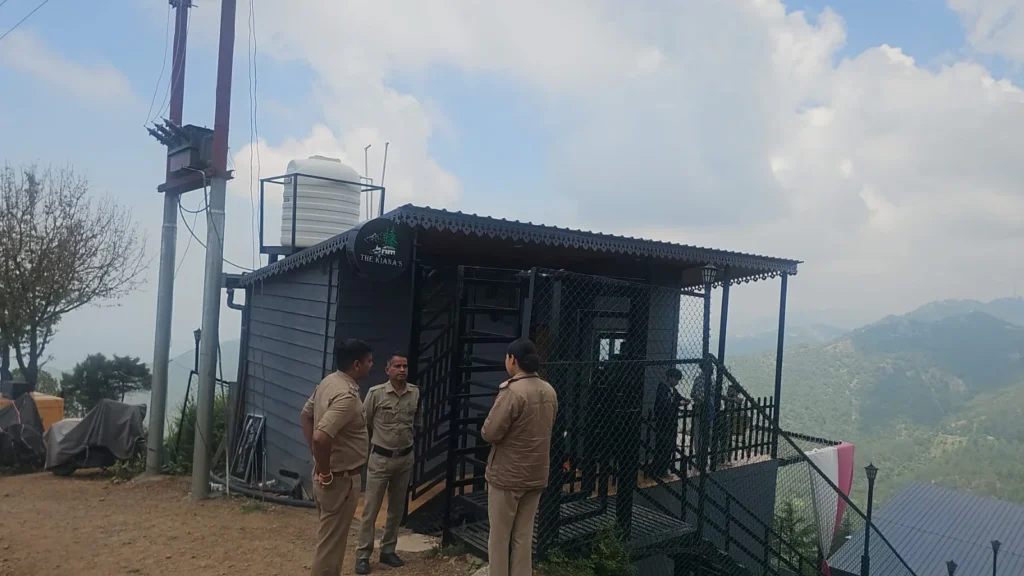
The Mussoorie homestay where a Delhi woman was found dead in her room on June 15, leading to her husband’s arrest a month later. Image Credit: Sbkinews.in
A Delhi techie has been arrested more than a month after his wife, P Radha Gayatri, 27, was found dead at a homestay on the Mussoorie-Dhanolti road in Uttarakhand. Police said the husband, who also works in the IT sector, was arrested from the Madhu Vihar area of east Delhi after a court issued a non-bailable warrant. He was later produced before the Judicial Magistrate in Mussoorie and sent to judicial custody for 14 days.
The case has drawn attention because it began as what appeared to be a private holiday tragedy and has since developed into a criminal investigation. The couple had traveled to Mussoorie to celebrate the husband’s birthday, but the trip ended with Gayatri being found dead on the floor of their room on June 15. Yeh case kaafi serious hai because it raises questions not just about one death, but about the circumstances before, during and after that night.
What Police Say Happened
According to police, the husband told them that the couple had drinks and went to sleep around 3:30 am on June 15. He claimed that when he woke up in the morning, he found his wife dead. The police statement says the body was found lying on the floor without clothes, with bloodstains on the bedsheet. Officers also said two empty liquor bottles and food items were recovered from the room.
Those details are important because they shaped the initial suspicion around the death. A room in that condition naturally raises questions about what happened in the hours before the body was discovered. Police say the investigation has suggested the husband’s involvement, which is why the court warrant was obtained and the arrest was made. This story was also covered by NDTV.
At this stage, what is verified is the arrest, the custody order and the police claim that the probe indicates his involvement. What is not publicly confirmed is the full chain of events leading to Gayatri’s death. That distinction matters because it is a developing criminal case, not yet a final judicial finding.
Family’s Complaint and Suspicion
The victim’s father, P Sudhakar, lodged a complaint demanding a thorough probe into the circumstances of his daughter’s death. The family, according to police, had already expressed suspicion about the husband. That complaint appears to have been a key step in pushing the case beyond an unexplained death and into a formal criminal investigation.
In many such cases, family complaints play a crucial role because they bring details, concerns and background that may not be visible in the first police response. Here too, the family’s insistence on scrutiny seems to have kept the investigation active. Police registered a case against the husband and began probing further, eventually leading to the warrant.
The emotional weight of this part of the story is significant. Gayatri was not just a victim in a police file; she was a daughter, a newly married woman and a young IT employee from a family that likely expected a routine holiday, not a tragedy. That is why the case has received attention beyond the immediate local area.
Background and Context
The couple got married on November 8, 2025, and both families originally belong to Visakhapatnam, Andhra Pradesh. That background adds another layer to the case because it connects multiple places: Delhi, Mussoorie and Visakhapatnam. It also shows how India’s mobile urban workforce often lives far from its extended family networks, which can make such tragedies more isolated and difficult for relatives to respond to quickly.
The fact that both were IT employees also reflects a very common modern Indian urban profile: young professionals, recently married, living in a metro city and travelling for short breaks. In that sense, the case resonates with many Indian families because it feels familiar and close to home. But the alleged crime, if proven, shows how quickly a private trip can become the subject of a police investigation.
Mussoorie, as a tourist destination, often hosts couples and families looking for a quiet break. A homestay setting usually suggests privacy and leisure. But when something goes wrong in a closed-room environment, the absence of immediate witnesses makes the investigation more difficult and often more dependent on forensic clues, medical reports and phone or digital evidence.
Timeline
November 8, 2025: P Radha Gayatri and her husband get married.
June 15, 2026, around 3:30 am: The husband says they went to sleep after drinking at a Mussoorie homestay.
Morning of June 15: Gayatri is found dead on the floor of the room.
After the death, Gayatri’s father, P. Sudhakar, files a complaint seeking a probe.
Following weeks: Police investigate and say the evidence suggests the husband’s involvement.
Saturday, July 12, 2026: The husband is arrested from Madhu Vihar in east Delhi on a non-bailable warrant.
Same day: He is produced before the court and sent to judicial custody for 14 days.
Why This Matters
This matters because the case involves the death of a young woman shortly after marriage, a setting that automatically raises public concern and social sensitivity. When a death under suspicious circumstances happens inside a private room, especially during a holiday, it becomes even more important that the investigation is careful and transparent. Yeh issue kaafi important hai because families need answers, and the justice system needs to be seen doing its job properly.
It also matters because cases like this can shape public trust in how police handle suspicious deaths involving spouses. If the investigation is thorough, evidence-based and timely, it helps reduce speculation and ensures accountability. If not, rumors can spread fast, especially in emotionally charged cases.
There is also a wider social issue here. Across India, many women live far from their parental homes after marriage, sometimes in cities where their families cannot intervene easily. When a tragedy occurs in that setting, the family’s only recourse is often a police complaint and a request for a proper investigation. That makes procedural fairness extremely important.
India Angle
For Indian readers, this case has a strong emotional and social angle because it touches on marriage, family trust and urban mobility. In Hinglish, seedhi baat yeh hai: ek newly married couple ka holiday sirf ek trip nahi tha, balki ek aise case mein badal gaya jahan ab police, court aur family sab answers dhoondh rahe hain. The story is relevant to families across India because it shows how vulnerable young couples can be when a private tragedy happens away from home.
There is also an interstate dimension. The couple had roots in Visakhapatnam, lived in Delhi and travelled to Uttarakhand. This is now a very common Indian pattern, where people’s lives are spread across multiple cities. That can make support systems weaker in moments of crisis.
The case may also resonate with people who follow crime reporting closely because it includes key elements often seen in suspicious-death investigations: a contested explanation, family suspicion, a post-incident probe and an eventual arrest. But the most important point remains that this is still an ongoing case, and public discussion should not replace legal process.
Analysis
My opinion is that the arrest changes the tone of the story from a suspicious death report to a developing criminal case. The non-bailable warrant indicates that police believed there was enough material to move firmly against the husband. That does not mean guilt has been legally established, but it does mean the investigation has crossed an important threshold.
The reported details from the room are also likely to become central in the investigation. Empty liquor bottles, food items and bloodstains can help build the timeline, but they must be interpreted carefully alongside forensic and medical evidence. In such cases, one detail rarely tells the whole story; it is the combination of evidence that matters.
I also think the family’s complaint was crucial. Without that push, the case may have remained a routine death report for longer. This is often how serious investigations begin in India: through persistent family pressure, followed by police examination and court intervention. That makes the complainant side of the story just as important as the arrest itself.
What Next
The next stage will likely focus on custodial interrogation, forensic review and court proceedings during the husband’s 14-day judicial custody. Police may try to reconstruct the timeline of the night, verify the drinking claim and check other evidence from the homestay room. They will also likely examine communications, call records and any witness statements that can help explain what happened.
The court process will be key from here. If police gather enough evidence, the case could move toward a stronger charge sheet. If the evidence remains incomplete, further investigation may continue. Either way, the judicial process will determine how the case develops from arrest into trial.
For the family, the next step is likely continued waiting for legal clarity. For the public, the case may continue to attract attention because it involves a young married woman and a suspicious death in a tourist destination. As more facts emerge, the story could become a major legal and crime update.
Conclusion
The arrest of the Delhi techie a month after his wife, P. Radha Gayatri, was found dead at a Mussoorie homestay marks a major development in a case that has already drawn public attention. Police say the investigation now suggests his involvement, and he has been sent to judicial custody while the further probe continues. The case is tragic because it began as a birthday trip and ended in a death that still needs full legal explanation. For now, the central facts are clear: a young woman died under suspicious circumstances, her family demanded answers, and the police have now taken a significant step in the investigation.
Written By A. Jack