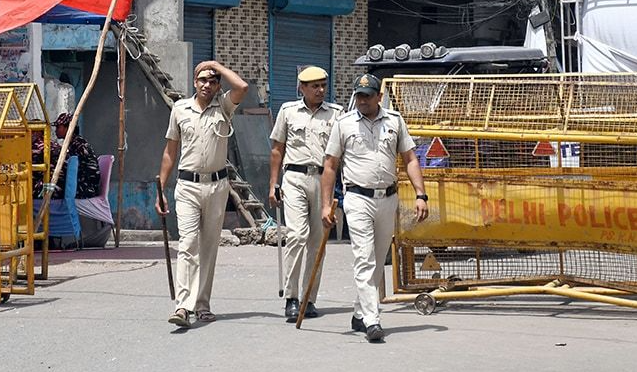
A 60-year-old watchman was allegedly run over multiple times by an SUV in a “well-planned” murder in Delhi’s Peeragarhivillage in an attack linked to an earlier verbal spat, police said. Four suspects have been arrested and investigators said the killers even removed the number plate of the vehicle to evade detection.
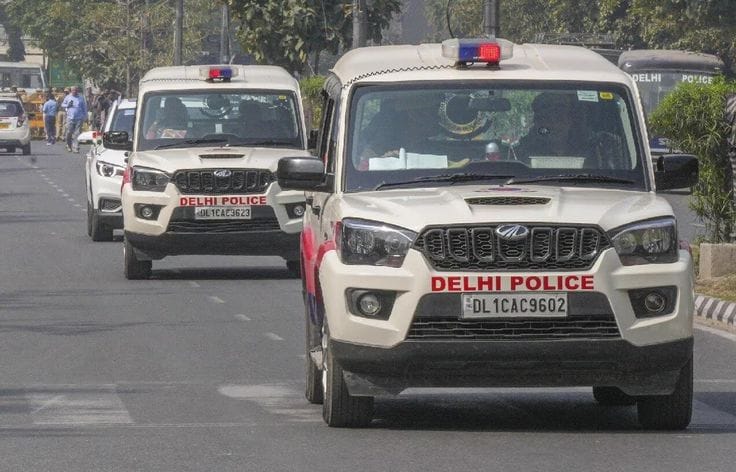
Police investigate the scene in Outer Delhi’s Peeragarhi village after a 60-year-old watchman was allegedly killed by an SUV in a planned attack.
Delhi Watchman Murder
A shocking murder in Outer Delhi’s Peeragarhi village has triggered outrage after a 60-year-old watchman, identified as Bijender Bhardwaj, was allegedly run over multiple times by an SUV following a verbal altercation. Police said the killing took place around 2.54 am on Sunday at a temp stand, where the victim was on duty and alone when the attackers struck.
Investigators believe the attack was not a spur-of-the-moment incident but a planned murder carried out after a prior dispute over petty issues. Four people have been apprehended so far, and the case has been registered under Section 103(1) of the Bharatiya Nyaya Sanhita at Paschim Vihar West Police Station. Yeh case kaafi serious hai because it shows how a small argument can escalate into a brutal, premeditated crime.
What Happened
According to police, the SUV used in the crime had its number plate removed, apparently to make identification difficult. CCTV footage reportedly shows the vehicle parked near the tempo stand with its headlights on while Bhardwaj sat on a chair. A man then got out carrying a stick and began attacking him. NDTV has covered the full story.
As Bhardwaj tried to escape, the assailant allegedly got behind the wheel, knocked him down, and ran him over three to four times before fleeing the scene. Police said the victim was first beaten with sticks and then crushed repeatedly by the SUV. That detail is important because it shows the level of violence involved. This was not just an assault; it was an execution-style attack carried out with intent.
Investigators said the murder appears “more planned than spontaneous” and does not fit the pattern of ordinary road rage. The fact that the vehicle’s plate was missing delayed identification, making the investigation more difficult at first. Still, police formed more than eight teams and scanned CCTV footage from nearby roads, intersections, and commercial establishments to trace the accused.
The SUV’s last known sighting was captured on a CCTV camera near Hiran Kudna on the Delhi-Haryana border, which helped investigators narrow the search. In cases like this, CCTV becomes crucial because it can reconstruct movement, timing, and possible escape routes. Without it, identifying suspects in a fast-moving crime like this can take much longer.
How Police Reached the Suspects
Police said four suspects were apprehended on Monday and are being questioned. The investigation moved quickly once footage from the scene and surrounding areas was analyzed. Officials also said the absence of a number plate initially created a major challenge because it prevented immediate tracing of the vehicle.
The investigative response shows how modern policing now depends heavily on surveillance networks. A crime committed in one place can be tracked through cameras across multiple points of a city. That appears to be exactly what happened here. The repeated search across intersections and commercial establishments allowed officers to connect the dots and identify likely suspects.
Family members of the victim have alleged that the attackers acted without provocation while he was on duty. His younger brother, Mukesh Bhardwaj, said the victim was sitting peacefully on a chair when a man got out of the car, beat him with sticks, and then rammed the SUV from different sides. He also said there was no major enmity, only a possible earlier argument. That account matches the police’s own suspicion that the incident stemmed from a prior verbal spat rather than any sudden random aggression.
Family’s Allegations
The family’s version of events adds to the gravity of the case. Mukesh Bhardwaj said the victim was not involved in any major feud and had simply been doing his job at the tempo stand when the attack occurred. He also said the family received a call around 3 am from another chowkidar informing them of the incident.
One of the family’s strongest concerns was about the initial police response. They alleged that the matter was first treated as a road accident before murder charges were added later. That allegation matters because in violent crime cases, the first classification can affect how seriously the case is handled in the opening hours. If the incident was originally viewed as an accident, the family’s frustration is understandable.
Still, once police reviewed the CCTV footage and other evidence, the case was upgraded to murder. That shift suggests the evidence was strong enough to support the more serious charge. In legal and investigative terms, that is a crucial development.
Background
Peeragarhi is a busy area in Outer Delhi, where tempo stands, commercial activity, and local movement continue late into the night. Watchmen and security guards working at such spots often have minimal protection, especially during overnight shifts. Their job is to remain alert in isolated conditions, which can make them vulnerable if violence breaks out.
This case also reflects a broader urban safety issue in India. Many private guards, chowkidars, and night watchmen work in low-light environments with limited backup. If a dispute arises, they often have little time or support to respond. That is why attacks on such workers provoke strong public reaction. They are usually seen as ordinary people trying to earn a living, not as participants in conflict.
In Delhi, where traffic, nightlife, and local commerce continue around the clock in many zones, the safety of night workers is an important but often overlooked issue. Incidents like this one remind authorities and citizens alike that crime does not always happen in isolated pockets; it can strike at routine workplaces too.
Timeline
Before Sunday: Police say the victim and accused had an earlier verbal altercation over petty issues.
Around 2.54 am on Sunday: The attack takes place at a tempo stand in Peeragarhi village.
Immediately after the assault: The SUV flees, and the victim is left critically injured.
Soon after: CCTV footage from the scene and nearby areas is reviewed by investigators.
Monday: Four suspects are apprehended and questioned.
Current status: A murder case is registered under BNS Section 103(1) at Paschim Vihar West Police Station.
Also Read: Police Enforces 14-Day Jamavbandi Restrictions, Clarify There Is No Lockdown
Why This Matters
This matters because it raises concerns about public safety, the protection of night workers, and the growing use of vehicles in violent crimes. When an SUV is used as a weapon, the brutality of the act becomes more alarming, and the need for deterrence becomes stronger. It also shows how a small disagreement can become a deadly crime if anger is not controlled.
It matters socially too because it affects the sense of safety in ordinary workplaces. If a watchman can be attacked so viciously at a tempo stand, residents and workers naturally begin to worry about their own security. Yeh issue kaafi important hai because it is not just a murder story—it is a reminder of how vulnerable low-paid workers can be in everyday urban life.
India Angle
For Indian readers, this case highlights a familiar and painful reality: many frontline workers, guards, and chowkidars remain exposed at night while keeping neighborhoods and commercial spaces secure. These workers often receive the least protection even though they are the first line of safety in many communities.
The India angle is also about law enforcement and road crime. In cities across the country, vehicles are sometimes used in assaults or run-down incidents, making the road itself part of the crime scene. In Hinglish, seedhi baat yeh hai: gussa aur badla jab gaadi ke saath combine hota hai, toh nateeja bahut khatarnak ho sakta hai. That is why this case will likely be discussed not only as a murder but also as a warning about escalating street violence.
Analysis
My opinion is that the most disturbing part of this case is the planning. The removal of the number plate, the multiple run-overs, and the apparent coordination suggest intent rather than impulse. That makes the crime far more serious than a momentary fight gone wrong. It also speaks to a larger urban crime trend: when disputes are handled through violence instead of resolution, the outcome can be catastrophic within seconds. The police seem to have acted quickly once the CCTV evidence became available, but the bigger lesson is that city safety depends not just on police response after a crime but on preventing such escalation in the first place.
What Next
The next step will likely involve interrogation of the four apprehended suspects, forensic examination of the SUV and a deeper review of the CCTV trail. Police may also examine whether more people were involved in planning or executing the attack. If there was indeed prior enmity, investigators will want to know how the verbal spat escalated and who decided to carry out the murder.
A clearer picture should emerge once the suspects are questioned and the evidence is matched with witness statements. The registered murder case means the investigation is now firmly in the serious crime category. The family will likely push for a full prosecution and accountability. For residents of Peeragarhi and nearby areas, the next few days may bring more police presence and scrutiny around local night-time security.
Conclusion
The killing of Bijender Bhardwaj in Peeragarhi village is a brutal reminder that even a petty argument can turn deadly when violence is planned and carried out with intent. Police say the murder was premeditated, the SUV’s number plate was removed to avoid detection, and four suspects are now in custody.
This case is important not only because it is a murder but also because it exposes the vulnerability of night workers and the dangers of road-based violence in a busy city like Delhi. As the investigation continues, the focus will be on uncovering the full motive, identifying everyone involved and ensuring that justice is delivered.
Written By A. Jack