The Delhi government on Friday announced a winter pollution action plan that includes a “no fuel without PUC” rule, increased parking charges, work-from-home provisions and more restrictions on construction activity during the annual smog season. The measures, explained under a newly notified winter air quality management framework, are meant to enable authorities, businesses and residents to prepare in advance for the period from November to February, when Delhi’s air quality generally worsens.
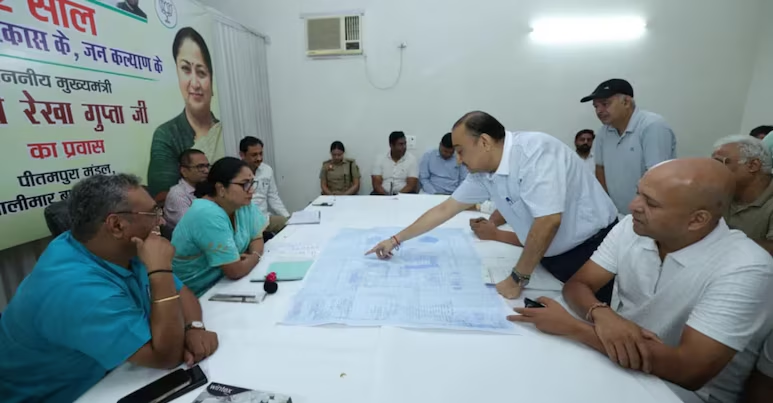
Chief Minister Rekha Gupta unveils Delhi’s newly notified winter air quality management framework on Friday, June 19, 2026, introducing the “no fuel without PUC” rule. [Image Credit: NDTV]
The Delhi government on Friday unveiled a winter pollution action plan that includes a “no fuel without PUC” rule, higher parking charges, work-from-home provisions, and tighter restrictions on construction activity during the annual smog season. The measures, outlined under a newly notified winter air quality management framework, are intended to help authorities, businesses, and residents prepare in advance for the period between November and February, when Delhi’s air quality typically deteriorates.
Chief Minister Rekha Gupta said the government has decided to announce potential restrictions months ahead of winter instead of introducing them after pollution levels spike. Potential restrictions and arrangements are being communicated months before winter sets in so that people do not face inconvenience later.
Why and HOW the Event Happened
Delhi’s winter pollution action plan was announced months ahead to avoid sudden inconvenience. CM Rekha Gupta emphasized advance communication so people can prepare.
Vehicular emissions are a key contributor to Delhi’s winter pollution. The “no fuel without PUC” rule links fuel supply to a valid Pollution Under Control Certificate, reducing emissions. NDTV has covered the full story.
Non-BS-VI commercial vehicles registered outside Delhi face entry curbs between November 1 and January 31. CNG, electric, emergency, and government vehicles are exempt.
Doubled parking charges from November 1 to February 28 discourage excessive private vehicle use. This aims to reduce traffic and emissions during winter.
Work-from-home arrangements allow up to 50% physical attendance in government and private offices. Essential and emergency services are exempt. This reduces commuter volume.
Construction and demolition activities must comply with dust-control norms between November 1 and January 31. Additional curbs may apply from December 10 to January 20, the peak pollution period.
Quotes and Statements
Chief Minister Rekha Gupta said: “Potential restrictions and arrangements are being communicated months before winter sets in so that people do not face inconvenience later. This framework ensures departments, agencies, businesses, and residents are aware well before winter.”
A Delhi resident commented: “Doubled parking and WFH will reduce my commute. No fuel without a PUC is strict but needed. Yeh plan kaafi important hai for clean air.”
A transport operator stated: “Non-BS-VI entry curbs will affect us. We need time to upgrade vehicles. Advance notice helps comply before winter.”
A construction firm manager said, “Anti-smog guns and mist suppression will increase costs. But dust control is necessary. We’ll comply with norms.”
An environmental expert commented, “Linking fuel to PUC and doubling parking fees reduce emissions. WFH and construction curbs cut pollution. Drone surveillance ensures compliance.”
A parking facility owner said, “Doubled charges will reduce vehicles. We expect lower footfall but better air quality. Yeh issue important hai for Delhi.”
Background and Contexts
Delhi’s winter smog is a recurring crisis. Air quality routinely falls into “Very Poor” and “Severe” categories between November and February due to vehicular emissions, construction dust, open burning, and weather conditions.
The GRAP (Graded Response Action Plan) mechanism is revised by the Commission for Air Quality Management. The new framework operates alongside GRAP, ensuring coordinated action.
PUC (Pollution Under Control) certificates check vehicle emissions. Linking fuel supply to valid PUC reduces high-emission vehicles on roads.
Non-BS-VI vehicles emit more pollutants. Restricting their entry reduces pollution from older commercial vehicles.
Construction dust is a major pollution source. Anti-smog guns, mist suppression, and dust-control norms aim to reduce emissions.
Open burning of garbage and leaves releases toxic fumes. Drone surveillance and penalties deter violations.
The Environment (Protection) Act, 1986 provides a legal basis for the framework. Previous pollution measures include the odd-even scheme, construction curbs, and GRAP stages.
Timeline
June 19, 2026, Friday: Delhi govt unveils winter pollution action plan.
November 1, 2026: Doubled parking charges start; non-BS-VI entry curbs begin.
November–February 2026: Winter smog season, air quality “Very Poor” to “Severe.”
December 10–January 20, 2026: Peak pollution period, additional construction curbs possible.
January 31, 2026: Non-BS-VI entry curbs end.
February 28, 2026: Doubled parking charges end.
Framework: Notified under Environment (Protection) Act, 1986, operates alongside GRAP.
–Advance notice: Months before winter to avoid inconvenience.
Also Read: Delhi Govt to Create ‘Cooling Zones’ for Parents Waiting Outside NEET Centres on June 21
Why This Matters
This matters because Delhi’s winter smog affects millions’ health. Advance plan reduces sudden inconvenience and ensures compliance. Yeh issue kaafi important hai for clean air and public health.
It also matters for society. Vehicular emissions, construction dust, and open burning are key pollution sources. The plan targets these to improve air quality.
For businesses and residents, WFH and parking fees change routines. But cleaner air benefits everyone. The framework ensures preparedness.
India Angle
The India angle is strong because Delhi’s pollution is a national concern. Other cities face similar smog. This plan sets a benchmark for India.
In Hinglish, seedhi baat yeh hai: jab Delhi winter pollution plan announce karta hai, toh pure India mein attention hota hai. WFH, parking fees aur PUC rule pure desh mein discuss hoga.
For Indian readers, this highlights the need for advanced pollution measures. Other states may adopt similar frameworks. Clean air is a national priority.
Analysis
My opinion is that advance notification and a multi-measure approach are key. PUC linking, parking fees, WFH and construction curbs reduce emissions effectively. Drone surveillance ensures compliance.
Yeh plan kaafi important hai because it addresses vehicular emissions, dust, and open burning. Advance notice avoids inconvenience, and Indian cities may follow Delhi’s model.
What Next
Delhi residents and businesses will prepare for November–February measures. Vehicle owners will upgrade to BS-VI, parking users may reduce visits, and offices will implement WFH.
Construction firms will deploy anti-smog guns and mist suppression. RWAs will prevent open burning; drone surveillance will detect violations.
Other cities may adopt similar advanced frameworks. State governments may introduce PUC-linked fuel, parking fees, WFH and construction curbs.
The Commission for Air Quality Management will monitor GRAP and framework implementation. Penalties for violations will be enforced.
Conclusion
The Delhi government unveiled a winter pollution action plan with no fuel without PUC, doubled parking fees, 50% WFH, non-BS-VI entry curbs, construction dust controls, and drone surveillance on open burning. Framework, notified under the Environment (Protection) Act, operates alongside GRAP. Advance notification avoids inconvenience. Delhi air quality is “Very Poor” to “Severe” from November to February. Yeh plan kaafi important hai for clean air and health. Other cities may follow.
Written By A. Jack