
Mumbai: Commuters in Mumbai had a harrowing time after the public transport services were disrupted following the employees of the Brihanmumbai Electric Supply and Transport (BEST) undertaking went on an indefinite strike on Friday. In the morning, hardly any buses could leave from the 27 BEST depots across Mumbai. During the morning rush hour, commuters were forced to use alternative modes of transport, including autorickshaws, taxis, app-based cabs and the Metro, to reach their destinations as striking employees allegedly did not allow buses to leave the depots.
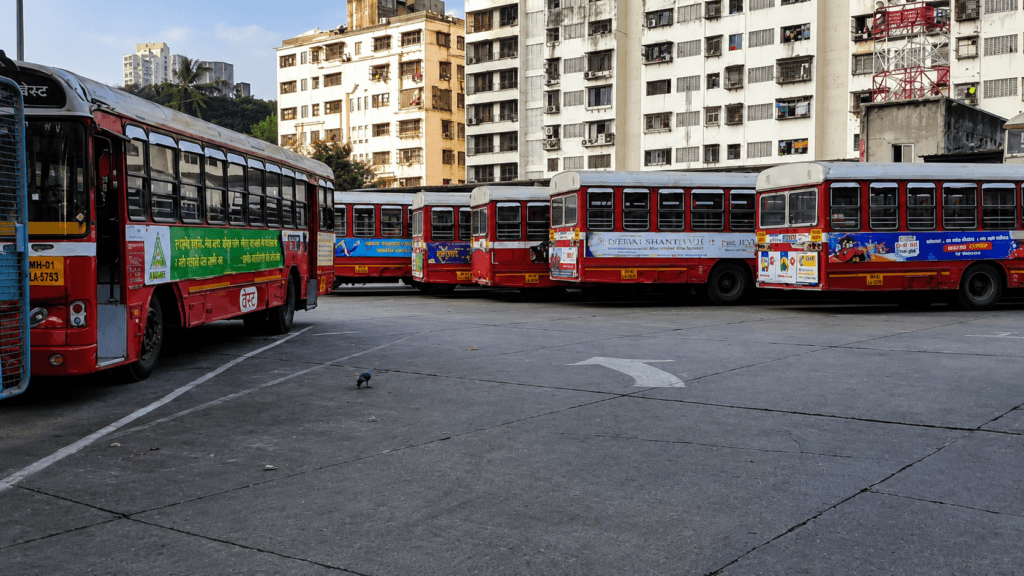
Striking BEST employees block buses at a depot in Mumbai on Friday, June 19, 2026. Image Credit: NDTV
Employees of the Brihanmumbai Electric Supply and Transport (BEST) undertaking went on an indefinite strike on Friday, affecting public transport services in Mumbai and causing inconvenience to hundreds of thousands of commuters. Hardly any buses could leave the 27 BEST depots across Mumbai in the morning. Striking employees allegedly prevented buses from leaving the depots, forcing commuters to rely on alternative modes of transport, such as autorickshaws, taxis, app-based cabs, and the Metro, to reach their destinations during the morning rush hour.
The BEST undertaking is yet to issue an official statement on the exact impact of the strike, which has been called by the BEST Sanyukt Kamgar Kruti Samiti, a joint action committee comprising 12 unions. Among the key demands include the merger of BEST’s budget with BMC, one-time settlement of legal dues for retired employees, Seventh Pay Commission implementation for 2016–2026, abolition of contractual arrangements, and absorption of wet-lease bus workers.
Why and HOW the Event Happened
The strike was called by BEST Sanyukt Kamgar Kruti Samiti, a joint action committee of 12 unions. Their key demands drove the agitation: the merger of the BEST budget with the BMC, a one-time settlement for retired employees’ legal dues, Seventh Pay Commission implementation for 2016–2026, abolition of contractual arrangements, and absorption of wet-lease bus workers. NDTV has covered the full story.
The strike commenced despite an ad-interim order from an industrial court restraining employees from striking. The Maharashtra government also invoked the Maharashtra Essential Services Maintenance Act (MESMA), which prohibits disruption of essential services. This defiance led to the indefinite strike.
Hardly any buses left the 27 BEST depots in the morning. Striking employees allegedly prevented buses from leaving, stalling operations. This caused massive inconvenience to commuters during morning rush hour.
Commuters relied on alternative transport: autorickshaws, taxis, app-based cabs, and the Metro. These modes became overcrowded as BEST buses were unavailable.
Quotes and Statements
A striking BEST employee said: “Our demands are fair. Merger with BMC, Pay Commission, and wet-lease absorption are crucial. We’ll continue striking until grievances are resolved.”
A commuter commented: “This strike is a nightmare. No buses, overcrowded metros, and rickshaws. Yeh issue kaafi important hai for daily commuters.”
The BEST Sanyukt Kamgar Kruti Samiti representative stated, “We called the strike despite the court order and MESMA. Our demands are urgent. Government must respond.”
A Mumbai police official said, “Legal action will be taken against anyone obstructing transport, damaging property, or preventing willing employees from working. We’ll ensure services run.”
A Shramik Utkarsh Sabha representative commented: “We distanced ourselves from the strike. Discussions with administration and government are underway to resolve grievances.”
A transport expert said, “BEST carries 2.5 million passengers daily. Strike disrupts critical service. Government must negotiate to end agitation quickly.”
Background and Context
BEST is Mumbai’s second-largest public transport provider after suburban railways. It carries 25 lakh passengers daily and supplies electricity to 10 lakh consumers in south and central Mumbai. BEST operates around 2,700 buses, most hired from private operators on a wet-lease basis. Absorption of wet-lease workers is a key demand to ensure job security.
Seventh Pay Commission recommendations for 2016–2026 have not been implemented. Delays in pay commission implementation drive employee grievances. Contractual arrangements in transport and electricity departments lead to job insecurity. Abolition of contractual arrangements is a key demand.
Merger of BEST’s budget with BMC is demanded to improve financial stability and integration with civic corporations. Previous BEST strikes have disrupted Mumbai transport. This indefinite strike follows similar patterns of employee agitation over pay and job security.
MESMA invocation prohibits essential service disruption. Industrial court orders restrain strikes. This strike defies both, showing employee determination. BMC merger discussions have been ongoing. Employees want a budget merger to ensure BEST’s financial health and integration.
Timeline
Prior to Friday: BEST Sanyukt Kamgar Kruti Samiti formed, comprising 12 unions.
Key demands raised: BMC merger, Pay Commission, wet-lease absorption, contractual abolition, and legal dues settlement.
Industrial court: Passes ad-interim order restraining strike.
Maharashtra govt.: Invokes MESMA, prohibits essential service disruption.
Friday, June 19, 2026: BEST employees go on indefinite strike.
Morning: Hardly any buses leave 27 depots.
Striking employees: Prevent buses from leaving depots.
Commuters: Rely on autorickshaws, taxis, app-based cabs, and the Metro.
BEST: Yet to issue an official statement on impact.
Mumbai police: Warn of legal action against obstruction, damage, and preventing employees from working.
Shramik Utkarsh Sabha, BEST Kamgar Union: Distance from agitation, discussions underway.
Why This Matters
This matters because BEST carries 25 lakh passengers daily. Strike disrupts critical transport, affecting Mumbai’s mobility and economy. Yeh issue kaafi important hai for commuters.
It also matters for society. Job security, pay commission, and budget merger are key employee rights. Strike highlights labor grievances in essential services.
For the industry, wet-lease systems and contractual arrangements need reform. This strike pushes for absorption and stability in the transport sector.
India Angle
The India angle is strong because Mumbai’s transport strike resonates across India. Other cities face similar labor agitations in public transport.
In Hinglish, seedhi baat yeh hai: jab Mumbai bus strike hota hai, toh pure desh mein commuters ko problem hota hai. Yeh issue pure India mein discuss hoga, especially in major cities.
For Indian readers, this highlights the need for labor rights and public transport stability. Other states may face similar strikes, and government must address grievances.
Analysis
My opinion is that the strike’s defiance of the court order and MESMA shows employee determination. Key demands like the BMC merger and Pay Commission are valid. Government must negotiate quickly.
Yeh strike kaafi important hai because it disrupts critical transport and highlights labor grievances. Commuters suffer, and government must resolve issues to end agitation.
What Next
Government and BEST administration will likely negotiate with 12 unions to resolve grievances. Pay Commission implementation, BMC merger, and wet-lease absorption may be discussed.
Strike may continue until demands are met. Commuters will rely on alternative transport, causing ongoing inconvenience.
Mumbai police will enforce warnings, taking legal action against obstruction or damage. This aims to protect services.
Shramik Utkarsh Sabha and BEST Kamgar Union may mediate between employees and government. Discussions could lead to the strike’s end.
BEST may issue an official statement on strike impact soon. Commuters will await resolution.
Conclusion
BEST employees launched an indefinite strike on Friday, June 19, 2026, affecting 25 lakh commuters, with 27 depots stalled and 2,700 buses halted. Key demands: BMC budget merger, Seventh Pay Commission (2016–2026), wet-lease absorption, contractual abolition, and legal dues settlement.
Strike despite the industrial court order and MESMA. commuters rely on autorickshaws, taxis, app-based cabs, and the Metro. Mumbai police warn of legal action. Shramik Utkarsh Sabha and BEST Kamgar Union distance: discussions are underway. Yeh strike kaafi important hai for Mumbai transport and labor rights.
Written By A. Jack