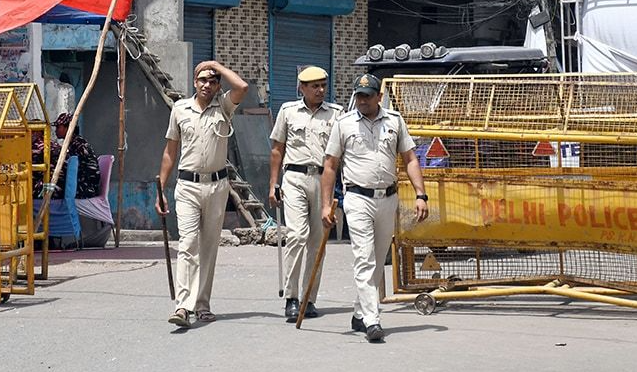
Delhi Police have arrested a 32-year-old YouTuber who allegedly intentionally rammed into women riders and minor girls, secretly filmed their reactions and uploaded clips online for social media growth and monetization. The accused Gurman Singh allegedly adopted a “Road Safety Wala” identity to woo viewers while preying on vulnerable road users on public roads.

Delhi YouTuber Gurman Singh in west Delhi. Image Credit: India Today
A disturbing case from Delhi has exposed how social media fame can cross into criminal behaviour. Police have arrested 32-year-old YouTuber Gurman Singh, who allegedly crashed into women riders and minor girls on public roads, secretly filmed their reactions, and uploaded the videos to gain followers and earn money through monetization. The arrest was made on Friday from Subhash Nagar in west Delhi after multiple complaints of road harassment and unauthorized recording surfaced.
According to police, Singh operated under the online name “Road Safety Wala,” but investigators say the content was anything but harmless. The allegations point to a calculated pattern: identify women riders or pillion riders, collide with their vehicles intentionally, record their responses, and then post the clips online without consent. In a city where road safety and women’s safety are already serious issues, this case is especially troubling.
What Police Say Happened
Police say the case came to light after a complaint filed by Raja Garden resident Sunny Arora on June 2. Arora alleged that two motorcycle-borne men intentionally rammed into his minor daughters’ scooty from behind, followed them, and made inappropriate remarks. The family later discovered videos featuring the girls had been posted on the accused’s YouTube and Facebook accounts without permission. NDTV has covered the full story.
That complaint appears to have opened the door to a wider investigation. During scrutiny of Singh’s social media presence, investigators reportedly found that a significant portion of the content focused on women riders and minor girls. The account pattern, police said, suggested that the videos were not random traffic encounters but part of a deliberate strategy to generate engagement.
Deputy Commissioner of Police (West) Hareshwar Swami said Singh operated the YouTube channel @bikeronroad33, which had around 21,000 subscribers, and a Facebook page titled “Road Safety Wala,” which had more than 2.1 lakh followers. That kind of reach matters because it shows the scale at which harmful content can spread when packaged as entertainment or public service.
Why the Content Was Allegedly Made
Police say Singh allegedly admitted during interrogation that he created such videos to grow his social media following, generate viral content, and earn revenue through monetization on YouTube and Facebook. He also allegedly confessed that he specifically targeted women riders because such clips brought higher engagement and more online attention.
That part of the case is important because it reveals a darker side of the creator economy. Social media rewards attention, and in some cases people begin to chase outrage, shock or humiliation because it performs better than normal content. But when that pursuit involves real people—especially minor girls—it becomes a serious legal and ethical issue. Yeh issue kaafi important hai because likes and views should never come at the cost of safety or dignity.
Police also said Singh would allegedly try to avoid suspicion by casually apologizing after the collision, saying, “Sorry, Didi,” before recording the victim’s reaction. If true, that suggests the act was not spontaneous but planned to appear accidental while still producing dramatic footage.
Evidence Seized and Legal Action
Investigators seized Singh’s mobile phone, which allegedly contained access to his social media accounts, along with videos, screenshots and other digital evidence linked to the case. That kind of material is often central in cyber and online harassment investigations because it can show intent, posting patterns and audience targeting.
An FIR has been registered at the Cyber Police Station (West) under relevant provisions of the Bharatiya Nyaya Sanhita and the POCSO Act. The inclusion of the POCSO Act is especially serious because the complaint involved minor girls. Any offense involving minors, unauthorized recording, harassment or exploitation is treated with far greater gravity under Indian law.
Police have also started action to take down the accused’s social media accounts. That is a practical move because accounts used to spread harmful content can continue causing damage even after an arrest if they remain active. Investigators are also trying to identify additional victims, which suggests the case may expand beyond the initial complaint.
Background and Context
This is not just a road harassment case; it is also part of a wider internet problem. Content creators across the world are under pressure to post frequently, stay viral and grow monetization. That pressure can encourage reckless, manipulative or outright abusive behaviour when creators believe controversy will bring more clicks.
In India, the problem is even more sensitive because public roads are shared spaces where safety and consent are already major concerns. A scooter ride should not become a performance for social media. A woman or child should not be treated as content material. When creators cross that line, they turn everyday public space into a site of exploitation.
The fact that Singh used a channel name suggesting road safety adds another layer of deception. The branding may have been intended to create trust or legitimacy while the conduct behind it was allegedly predatory. That contrast will likely play a big role in public outrage over the case.
Timeline
June 2: Raja Garden resident Sunny Arora files a complaint alleging that his minor daughters were intentionally rammed by motorcycle riders and later filmed.
Following days: Police begin examining online accounts and digital evidence.
During investigation: Authorities find content linked to women riders and minor girls on Singh’s social media pages.
Friday: Gurman Singh is arrested from Subhash Nagar in west Delhi.
After arrest: Police seize his phone and begin steps to remove his accounts from social platforms.
Now: Further investigation continues to identify possible additional victims.
Also Read: Former Delhi Health Official Arrested in Multi-Crore Medical Scam Case
Why This Matters
This matters because it touches three major public concerns at once: women’s safety, child protection and the abuse of social media for profit. A person who turns harassment into content is not just being irresponsible; he may also be exploiting victims for online reach. That makes the case much bigger than a simple traffic incident.
It also matters because it shows how quickly digital platforms can turn harmful acts into income. If content involving harassment, humiliation or fear gets monetized, then the system itself creates incentives for more such behaviour. That is deeply dangerous and needs stronger platform responsibility. In Hindi terms, yeh sirf prank culture nahi hai — yeh exploitation hai.
The case also reinforces how important it is for victims and families to report suspicious online activity. Without the complaint, the pattern may have continued longer. The stronger message here is that consent matters, especially when minors are involved, and public humiliation cannot be packaged as entertainment.
India Angle
For Indian readers, the case is especially alarming because it happened on ordinary city roads, not in some distant online-only setting. It could have involved any family going about a normal day. In Hinglish, seedhi baat yeh hai: jab road par chalna bhi safe na ho aur koi usse content bana de, toh issue bahut serious ho jata hai.
This story also resonates because many Indian users consume short-form videos daily, often without thinking about how the clip was made or who may have been harmed in the process. The case is a reminder that viral content sometimes hides ugly behaviour behind humor or “awareness” branding.
For parents in India, the arrest will likely raise concerns about children’s exposure to public road harassment and hidden cameras. For women riders, it may reinforce the need for reporting and documenting suspicious incidents. The larger message is simple: online fame should not override public safety.
Analysis
My view is that the most disturbing part is not just the collision, but the alleged planning behind it. If a creator intentionally targets women riders, stages an apology, and posts the footage for engagement, then the behaviour is systematic rather than accidental. That is what makes this story more than a viral scandal.
The case also exposes the weak moral boundary in parts of online content creation. Some creators start with a safety message and drift into provocation because algorithms reward reactions. That is exactly why digital literacy and platform enforcement matter so much. Viral reach should never be allowed to normalize harassment.
Another important point is the role of consent. Even if a scene is public, recording and posting vulnerable individuals, especially minors, without consent can still be harmful and unlawful. This case will likely become a reference point in future discussions about online abuse disguised as content creation.
What Next
The next step will likely involve deeper forensic examination of Singh’s phone and social media accounts, including deleted files, upload history and audience data. Police may also identify more victims by reviewing video content and complaint leads.
If the evidence supports the allegations, more charges could follow, and platform takedowns may continue. The case may also prompt wider scrutiny of similar accounts that use road “pranks” or staged collisions to generate views.
For the public, the key question is whether this will lead to a stronger response from social media platforms and law enforcement. If not, similar creators may continue pushing boundaries for reach and revenue.
Conclusion
The arrest of Delhi YouTuber Gurman Singh is a reminder that social media fame can take a dangerous turn when engagement becomes more important than ethics. What police describe as intentional collisions with women riders and minor girls, followed by secret filming and monetization, is not just a content issue—it is a safety and dignity issue. The case now underlines a hard truth: viral reach can never be an excuse for harassment, especially when children and women are targeted on public roads.
Written By A. Jack