Ebola disease is a serious and often fatal viral disease that spreads through direct contact with infected bodily fluids and contaminated surfaces. It remains a major public health problem because, although symptoms may develop suddenly, the disease may be difficult to diagnose early and outbreaks require a rapid community response.
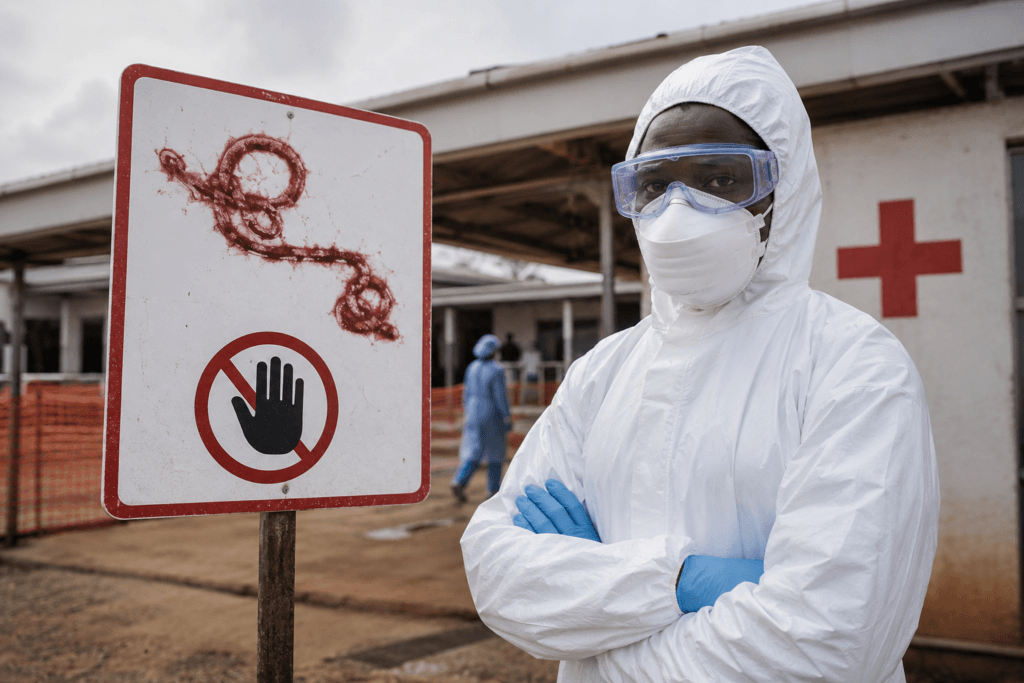
Health workers are ready to respond to the Ebola outbreak, stressing infection control, treatment, and prevention. {This is an AI generated image}.
Ebola is one of the most deadly viruses that infects humans and other primates. The disease has caused deadly outbreaks in parts of Africa. Early diagnosis and strict isolation are critical, as it can spread through contact with infected bodily fluids.
The information given explains how the virus is transmitted from animals to humans and from human to human through direct contact with blood, secretions, organs, or other bodily fluids of infected people and with surfaces and materials (e.g., bedding and medical equipment) contaminated with such fluids. This makes Ebola a serious public health issue not only for the affected countries but also for the global health system more broadly. This is a very important issue because speed, awareness, and community cooperation are very important for outbreak control.
How Ebola Spreads
Ebola is believed to start in wildlife, especially wild animals such as fruit bats, porcupines, and non-human primates. It then enters the human population when people come into contact with infected animals or their bodily fluids.
Once a person is infected and develops symptoms, the virus can be transmitted to others through direct contact with blood, secretions, organs, or other body fluids. It can also be spread by contaminated surfaces and objects that have touched these fluids, such as bedding and clothing.
This is why Ebola control depends so much on isolation, protective equipment, and safe handling of infected material. A minor lapse in infection control can set off a chain of transmission.”
Symptoms And Diagnosis
The incubation period for Ebola is typically between 2 and 21 days. One reason early monitoring of close contacts is important is that an infected person cannot transmit Ebola until symptoms begin.
Symptoms often begin suddenly and may include fever, fatigue, malaise, muscle pain, headache, and sore throat. These can later progress to vomiting, diarrhea, abdominal pain, rash, and signs of impaired kidney and liver function.
Sometimes there is internal and external bleeding, for example, oozing of blood from the gums or blood in the stools. Bleeding is not always present, and the illness may not be so readily apparent at first.
Doctors may also find it difficult to distinguish Ebola from other diseases such as malaria, typhoid fever, and meningitis. This is where lab testing is important for confirmation. Simply put, symptoms alone aren’t enough. Test results matter.
Why Ebola Is So Dangerous
The average case fatality rate for Ebola is around 50%, but past outbreaks have ranged from 25% to 90%. That wide range shows how serious the disease can be, depending on the outbreak setting, speed of treatment, and strength of health systems.
“The biggest risk is not only the virus itself but also how quickly it can overwhelm health facilities and communities if response measures are delayed. In areas with bad infrastructure the disease spreads fast before people even know what’s going on.
Another big challenge is fear. Outbreaks of Ebola frequently spark panic, misinformation, and stigma, making it harder to trace contacts and care for patients. Thus, public health teams require both medical tools and strong communication strategies.
Read Also: Hantavirus Infection: Symptoms, Risks, Prevention and Medical Facts You Must Know
Ebola Disease: Background And History
The first Ebola outbreaks occurred in remote villages of central Africa, close to tropical rainforests. The virus was first identified in 1976 and has since caused repeated outbreaks in different parts of the world.
The largest and most complex outbreak was the 2014-2016 epidemic in West Africa. It became the largest Ebola event ever recorded and had more cases and deaths than all previous outbreaks combined. The outbreak spread from Guinea to Sierra Leone and Liberia across land borders, illustrating how quickly a regional health crisis can become an international emergency.
That outbreak changed the way the world thinks about Ebola. It also pushed governments and global health agencies to strengthen surveillance, laboratory systems, and outbreak preparedness.
Treatment And Vaccines
Early aggressive supportive care increases survival. Treatment is supportive, including rehydration with oral or intravenous fluids and treatment of specific symptoms. Put simply, the earlier a patient gets proper care, the better the chance of survival.
Monoclonal antibody treatment with mAb114 (ansuvimab) or REGN-EB3 (Inmazeb) is recommended by the World Health Organization for Ebola virus disease. These therapies have become important tools in the treatment of confirmed cases.
There are also approved vaccines for Ebola virus disease (e.g., Ervebo and Zabdeno/Mvabea). Ervebo is indicated for use in outbreak responses. For other Ebola diseases, treatments are limited, and candidate vaccines are still under development.
This combination of supportive care, treatment, and vaccination has improved global readiness, but it has not eliminated the threat. Outbreaks can still occur, especially where health systems are under pressure.
Why Ebola Matters
Ebola matters because it’s deadly, it moves fast, and once it gets started, it’s hard to stop. It’s not just a health issue; it’s a social, economic, and logistical one.
An outbreak can impact schools, travel, local markets, hospitals, and trust in public institutions. Fear of health facilities can lead to avoidance, and that can make the situation worse.” That’s why medicine only solves part of the equation, and clear messaging and community engagement are equally important.
Ebola is important for India and other countries too, as infectious diseases can travel quickly across borders through global travel. While local risk may be low, health systems need to have strong preparedness, screening, and emergency response plans.
Why Ebola Matters for India’s Health Preparedness
India has improved its public health infrastructure in recent years, but diseases like Ebola still serve as an important reminder that global outbreaks do not stay local for long. Airports, hospitals, laboratories, and border health systems all need to stay alert.
The message for Indian readers is clear: strong infection control, rapid reporting, and public cooperation are imperative during any emerging disease threat. And we’ve seen in other outbreaks how misinformation and delay can make containment much more difficult.
From a policy perspective, Ebola also points to the need for better training of health workers, improved diagnostic systems, and safe isolation procedures. All of this is pretty important because being ready today can help prevent panic tomorrow.
What Ebola Means for Public Health Systems
“The lesson from Ebola is that you don’t control an outbreak with one tool.” You need the whole system: surveillance, testing, tracing, treatment, vaccination, and community trust.
Another important point is that the first symptoms can resemble many other diseases. This means health systems should not assume that a fever is “just malaria” or “just typhoid” in high-risk settings. Quick suspicion and quick testing can save lives.
There is a particular need for community engagement. We found that when local people understand how Ebola spreads and why isolation is important, they are more likely to cooperate with response teams. And without that trust, even the best medical tools will fail.
Timeline
1976: Ebola is discovered.
First cases: Cases reported in remote villages in central Africa.
2014-2016: The West Africa outbreak is the largest and most complex epidemic of Ebola to date.
Recent years: Vaccines and monoclonal antibody treatments approved, response options improved.
Today: Global health agencies keep their focus on surveillance, preparedness, and outbreak control.
This timeline shows how Ebola moved from a newly discovered virus to one of the world’s most closely watched infectious diseases.
What Happens Next in the Ebola Response
The future response to Ebola will require faster diagnostics, wider access to vaccines, and stronger health systems preparedness. Researchers continue to look at candidate treatments and vaccines for different Ebola diseases.
Public health agencies will probably continue to emphasize early detection and contact tracing. Since infected persons are not contagious until symptoms develop, close surveillance of exposed contacts continues to be one of the most effective control mechanisms.
Community education will continue to be important too. Safe burials, infection prevention in hospitals, and social mobilization can make the difference between a contained cluster and a larger outbreak.
Conclusion
Ebola disease is still one of the most serious viral threats because it is lethal, hard to diagnose early, and can be spread rapidly through direct contact. Although approved vaccines and treatments have improved the global response, the disease still needs strict surveillance, rapid care, and strong public cooperation.
The larger lesson is clear: medicine alone never controls outbreaks. They are ruled by a mix of science, preparedness, and trust. So in that way, Ebola is not only a health story but also a cautionary tale about how vulnerable communities are when systems are slow and information is weak.