Sasa Kalajdzic scored in the final seconds of stoppage time to secure a dramatic 3-3 draw for Austria against Algeria in Kansas City on Saturday, keeping Austria alive in the FIFA World Cup 2026. The result sent both teams through to the round of 32, while Austria escaped a knockout exit by the skin of their teeth.
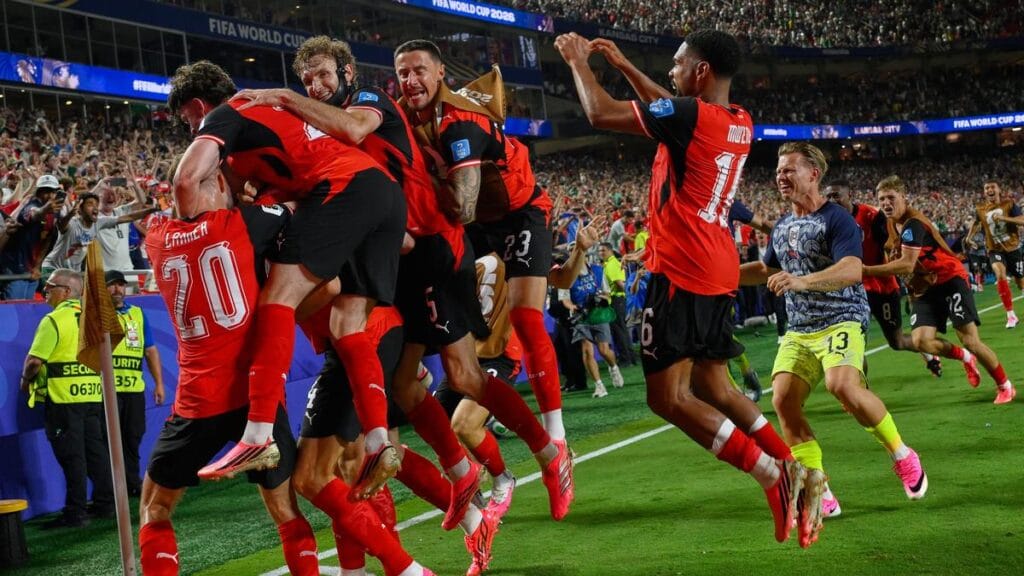
Austria players celebrate after Sasa Kalajdzic’s stoppage-time equalizer against Algeria in Kansas City secured a place in the World Cup round of 32. Image Credit: The Hindu
Austria reached the FIFA World Cup 2026 round of 32 in the most dramatic way possible, drawing 3-3 with Algeria on Saturday night in Kansas City, Missouri, thanks to a last-second equalizer from Sasa Kalajdzic. The result was enough for Austria to advance, while Algeria also booked their own place in the next round. For Austria, the point was vital because a defeat would have sent them out of the tournament immediately.
The match had everything that makes World Cup football irresistible: tension, momentum swings, pressure and a late twist that changed the whole group picture. Austria looked finished, then rescued themselves at the very last moment. Algeria, meanwhile, also got the outcome they needed, even though they will likely feel frustrated to have let a late lead slip. In a tournament where a single goal can alter everything, this was a classic example.
How the Match Unfolded
The game was tight, fast-moving and emotionally charged from the start. Both teams knew that qualification was still on the line, and neither side could afford to switch off. Austria had to avoid defeat to stay alive, while Algeria also needed to keep control of the match to guarantee their own progress.
The scoreline moved quickly, and the contest developed into a back-and-forth battle rather than a slow tactical grind. Austria had periods where they pushed forward with urgency, but Algeria responded well and kept finding ways to stay level or regain momentum. By the time the match entered stoppage time, Austria were staring at elimination. The Hindu has covered the full story.
Then Sasa Kalajdzic produced the defining moment of the night, scoring in the closing seconds of second-half stoppage time to make it 3-3. That goal was enough to send Austria through and leave the group standings just about in their favour. It was the kind of finish that players dream about and fans never forget.
Why Austria Survived
Austria survived because they refused to stop attacking even when time was running out. That is often the difference between a side that progresses and a side that exits. One late swing of momentum was enough to save their tournament.
Kalajdzic’s goal was crucial, but so was Austria’s mental response after falling behind in a match where a loss would have meant elimination. Tournament football rewards teams that keep belief alive until the final whistle. Austria did exactly that. They did not protect the scoreboard too early, and that persistence paid off.
There was also a strategic element to the result. A draw was enough for Austria to go through, so once they realized defeat would be fatal, the urgency increased dramatically. Teams under that kind of pressure often collapse late. Austria did the opposite, which says a lot about their character.
Algeria’s Perspective
Algeria will also leave Kansas City with a place in the round of 32, so their night was not a disaster. In fact, the draw was enough to keep their World Cup hopes alive. That said, conceding so late after being in a strong position will sting.
From Algeria’s point of view, the performance showed resilience and attacking quality but also a lack of game management in the final moments. When a team leads or is level deep into stoppage time, the priority is often to slow the match down, protect space and keep the ball away from danger. Austria found the one opening they needed, and Algeria paid the price.
Still, qualification matters most at this stage. Algeria’s journey continues, and that is the main objective fulfilled. The frustration will fade if they can respond well in the next round.
Iran’s Campaign Ends
The result also had a wider consequence: it ended Iran’s World Cup campaign. That adds an extra layer of significance because Group J was not only about Austria and Algeria. Other teams were watching closely, and this draw helped settle the final standings in a way that shut the door on Iran.
That is one of the most fascinating things about World Cup group stages. A goal in one game can affect the fate of another team entirely. Austria’s last-minute equalizer did more than save them; it also confirmed that Iran would go home. In tournament football, the ripple effect is often just as important as the match itself.
Background and Context
Austria came into this match knowing the stakes were extremely high. A loss would have been a sudden and painful exit, which meant the pressure was on from the first minute. Teams in that position often become cautious, but Austria needed to stay proactive without overcommitting. That balance is difficult to strike, especially in a high-scoring game.
Algeria’s path was different but equally important. They had already put themselves in a strong position and only needed to finish the job. The draw did exactly that, even if the manner of qualification was uncomfortable. In knockout-style group finales, survival is the real currency, not style points.
Group J became a perfect example of how narrow the margins are in major tournaments. One goal in stoppage time changed not just Austria’s fate but also the group’s final structure. This is why fans and analysts obsess over every minute in the World Cup. Nothing is settled until the final whistle.
Timeline
Early match: Austria and Algeria trade momentum in a tense Group J clash.
Mid-game: Both sides continue to push, knowing qualification is still undecided.
Late stages: The match moves toward a result that would have eliminated Austria.
Closing seconds of stoppage time: Sasa Kalajdzic scores Austria’s equalizer.
Full time: The game ends 3-3, sending Austria and Algeria into the round of 32.
After the result: Iran’s World Cup campaign comes to an end.
Also Read: DR Congo Stun Uzbekistan 3-1 to Reach FIFA World Cup Knockouts After Brilliant Comeback
Why This Matters
This matters because knockout qualification is often decided by moments like this. Austria were one goal away from elimination, and Kalajdzic’s late equalizer changed their entire World Cup trajectory. That kind of turnaround can shape confidence for the rest of the tournament. Yeh issue kaafi important hai because the psychological impact of surviving a scare can carry into the next round.
It also matters because Algeria now advance with momentum, but they will need to improve their game management if they want to go deeper. In World Cup football, getting through is only the first step. Staying composed under pressure is what comes next.
For fans, this is a reminder that the World Cup is not only about dominant wins. Some of the most memorable results are tense, messy and decided in the final seconds. This match had exactly that kind of energy.
India Angle
For Indian football fans, this result is a great example of why World Cup group-stage drama is so addictive. Austria stayed alive because they believed until the end. In Hinglish, seedhi baat yeh hai: kabhi-kabhi last minute ka ek goal poori kahani badal deta hai.
Indian viewers often connect strongly with underdog-survival stories, and Austria fit that mold here. A team that was seconds away from elimination suddenly made it through. That sense of hope under pressure is something every football fan in India can relate to, especially in tournaments where the stakes keep rising.
There is also a tactical lesson here. Teams that want to progress in major tournaments must never stop attacking too early. Austria’s late goal was not luck alone; it came because they kept pushing when many sides would have accepted defeat. That is a mindset Indian football can learn from as it continues to develop.
Analysis
My view is that Austria earned their place the hard way. They did not win comfortably, but they showed the type of resilience that tournament teams need. When a side responds to danger with a stoppage-time equalizer, that says something about its mentality.
Algeria’s draw should not be seen as failure, because they did what was necessary to qualify. But the late concession will bother them, and rightly so. Good teams in tournament football learn how to shut games down. Algeria did enough to advance but not enough to finish the game on their terms.
The result also reinforces a bigger World Cup truth: qualification is often about not letting one bad moment become two. Austria were in danger, but they stayed connected and got the goal. That one action may define their tournament confidence moving forward.
What Next
Austria now move into the round of 32, where they will face Spain. That is a major challenge and a huge opportunity. If they carry the same fighting spirit into that match, they could make life difficult for one of the tournament’s top sides.
Algeria will face Switzerland in the next round, which should be a highly competitive contest. Their challenge will be to turn qualification into a deeper run and avoid the kind of late lapse that almost cost them here.
Iran’s campaign is now over, so the focus shifts to the teams still alive. For Austria and Algeria, the real test begins now: knockout football leaves no room for late saves if you fall behind.
Conclusion
Austria’s 3-3 draw with Algeria was one of the most dramatic group-stage finishes of the FIFA World Cup 2026 so far. Sasa Kalajdzic’s stoppage-time equalizer saved Austria from elimination and sent both teams into the round of 32, while the result also ended Iran’s tournament. It was a reminder that in World Cup football, a single moment can rewrite the entire story. Austria survived, Algeria advanced, and the knockout stage now promises even more tension.
Written By A. Jack