Egypt produced a piece of history on Friday July 3, 2026 in Arlington, edging Australia on tense penalties to reach the knockout round of the FIFA World Cup for the first time. Emam Ashour’s opener was cancelled out and the match ended level but Egypt kept perfect composure from the spot, scoring all four penalties with Harry Souttar and teenager Lucas Herrington missing for Australia.
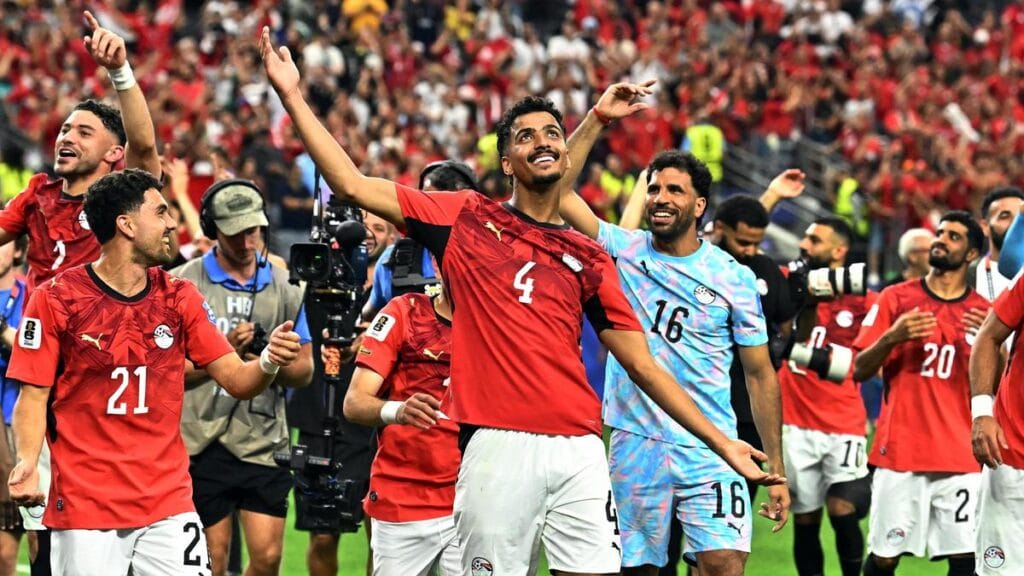
Egypt players celebrate after a dramatic penalty shootout win over Australia in Arlington that sent them into the World Cup knockout history books. Image Credit: The Hindu
Egypt produced one of the most important results in their football history by beating Australia in a penalty shootout in Arlington on Friday, July 3, 2026, to advance in the FIFA World Cup knockout phase. The match had everything a World Cup elimination tie should have: early pressure, a lead for Egypt, an equaliser that changed the mood, and a nerve-shredding finish decided by penalties. In the end, Egypt were flawless from the spot, while Australia failed twice and paid the price.
This was not just another win. It was Egypt’s first knockout-round victory at a World Cup, a breakthrough that carries huge emotional and sporting value. For a nation where football matters deeply, the achievement will be remembered for years. Yeh moment kaafi special hai because it turns long-standing ambition into a real historic result.
How Egypt Won the Match
Australia began brightly and nearly struck first. Cristian Volpato’s long-range effort in the fifth minute clipped the top of the bar, a moment that could have changed the whole rhythm of the game. Early chances like that often set the tone in knockout football, but this one did not lead to an Australian breakthrough. The Hindu has covered the full story.
Egypt responded with more control as the match settled. Emam Ashour gave Egypt the lead, and at that point it looked as though they might be able to manage the pressure and finish the job in regulation time. But Australia fought back, and an own goal pulled them level. Once the match became tied again, both teams knew they were heading into the most brutal part of tournament football: the penalty shootout.
That is where Egypt were perfect. They converted all four of their kicks with composure and calm, showing no hesitation under pressure. Australia, on the other hand, missed through Harry Souttar and Lucas Herrington, the teenager whose miss became one of the defining moments of the tie. In knockout football, those tiny margins are everything.
The psychology of the shootout mattered as much as the technique. Egypt looked settled, while Australia appeared to carry the weight of the moment in the decisive kicks. It is one thing to play well; it is another to perform in silence when the entire result depends on one kick. Egypt did that better.
The Importance of Emam Ashour’s Goal
Emam Ashour’s opener was crucial because it gave Egypt the confidence to believe they could take control of the match. In tournament football, the first goal often reshapes the entire strategic picture. It forces the other side to chase, which can open up space but also increases pressure.
Ashour’s strike also mattered symbolically. Egypt have often been seen as a team capable of competing, but not always of crossing the finish line in the biggest moments. A goal like this in a World Cup knockout tie is the kind of contribution that changes a player’s place in national memory.
Even though the goal was later cancelled out by Australia’s equaliser, it still provided the foundation for the final result. Without that early breakthrough, the game may have unfolded very differently. That is why goals in knockout matches are never just about the scoreboard. They also shape belief, rhythm and emotional control.
Australia’s Brave but Painful Effort
Australia were not passive in this match. They created the first real warning when Volpato tested the bar early, and they stayed alive throughout the game. Their equaliser showed resilience and kept them in a position to win.
But in the end, the margin came down to penalty-taking under pressure. Souttar’s miss and Herrington’s miss were the decisive moments that sent Australia out. That is the cruel side of knockout football. A team can do many things right and still go home because of two failed spot kicks.
Lucas Herrington’s involvement is especially notable because he is still a teenager. That does not lessen the disappointment, but it does highlight the psychological burden carried by young players in big tournaments. The experience may shape him in the long term, but on this night it was a painful learning moment.
Background and Context
Egypt’s first knockout-round victory at a World Cup is a landmark for the country’s football history. International tournaments often define how football nations are remembered, and for Egypt, this result adds a major chapter. It shows that the team can handle pressure, absorb setbacks and still finish the job.
Australia also came into the tie with a point to prove. In recent years, they have tried to establish themselves as a competitive force in world football. Making a strong showing in knockout games is part of that mission, but this result shows how unforgiving the World Cup can be.
The World Cup knockout stage is different from group-stage football. There is no safety net. One moment, one mistake, one shootout can erase 90 minutes of effort. Egypt understood that better on the day, and Australia was left to absorb the consequences.
Timeline
Early minutes: Australia nearly score when Volpato’s shot hits the top of the bar.
First half / open play: Egypt settle into the match and find their rhythm.
Egypt lead: Emam Ashour scores to put Egypt ahead.
Australia respond: An own goal brings Australia level.
Full time: The tie remains deadlocked, sending the match to penalties.
Shootout: Egypt score all four penalties.
Misses: Harry Souttar and Lucas Herrington miss for Australia.
Final outcome: Egypt win and make World Cup knockout history.
Also Read: FIFA World Cup 2026: Switzerland Sweep Past Algeria 2-0 to Reach World Cup Last 16
Why This Matters
This matters because it is a breakthrough result for Egypt on the biggest stage in football. First knockout-round wins are not just statistics; they become part of a country’s football identity. For Egyptian fans, this is the sort of result that validates years of hope and pressure.
It also matters because it shows that tournament football still rewards composure over reputation. Australia had their chances, but Egypt held their nerve when it counted. In a penalty shootout, the pressure is immense, and the team that stays calm usually wins. Yeh issue kaafi important hai because it shows how mental strength can matter as much as physical quality.
For the global game, this result adds another reminder that World Cup football is unpredictable. A favourite can look strong and still lose. An underdog can hold its nerve and write history. That uncertainty is part of what keeps fans hooked.
India Angle
For Indian football fans, Egypt’s win will resonate because it shows the emotional power of a tournament breakthrough. In Hinglish, seedhi baat yeh hai: jab kisi team ko first big win milta hai, toh woh sirf match nahi hota — woh ek yaad ban jaata hai. That is exactly what happened here.
Indian readers who follow World Cup drama will also appreciate the penalty shootout intensity. Shootouts are familiar across sports because they turn skill into pressure and pressure into story. Egypt staying perfect from the spot is the kind of performance that fans remember and discuss for years.
There is also a wider lesson for Indian football development. Mental preparation matters. Teams that learn to stay calm in knockout moments often go further than teams that rely only on talent. That is a useful takeaway for coaches, players and supporters in India.
Analysis
My opinion is that Egypt deserves credit not just for winning but for the way they won. Scoring all four penalties is no accident. It reflects preparation, mental focus and confidence under extreme pressure. In knockout football, that is exactly the kind of detail that separates progress from exit.
Australia’s exit will feel harsh, but it also shows the thin margins in tournament football. One missed penalty by a senior player and one by a teenager can undo a full match of effort. That is why penalty shootouts remain one of the most unforgiving systems in sport.
If Egypt can carry this confidence into the next round, they may become one of the tournament’s most dangerous stories. Teams that win like this often grow stronger because they believe they can survive any situation.
What Next
Egypt now moves into the next round with real momentum and a huge psychological boost. Their challenge will be to turn this historic win into a deeper tournament run. The key question is whether they can maintain the same composure against a stronger or more experienced opponent.
Australia, meanwhile, will need to absorb the disappointment and look ahead. The shootout loss is painful, but the experience may still prove valuable for younger players like Herrington. In the long term, the challenge will be turning near-misses into future success.
For the tournament overall, Egypt’s win adds another layer of unpredictability. It reminds every remaining team that knockout football is not just about attack and defence — it is also about nerve.
Conclusion
Egypt’s penalty-shootout win over Australia was a historic breakthrough and one of the tournament’s most emotionally charged results. Emam Ashour’s goal gave Egypt a foothold, Australia fought back, and then Egypt stayed perfect when it mattered most from the spot. With their first-ever knockout-round World Cup win now secured, Egypt have moved from hopeful participants to history-makers. The result will be remembered not only for the scoreline but also for the nerve, belief and composure that delivered it.
Written By A. Jack