The Dutch were efficient, composed and ruthless when the Tunisian defense fell apart in the first half. As a result, the Netherlands avoid a tricky last-32 tie with Brazil while Tunisia’s campaign ends in disappointment.
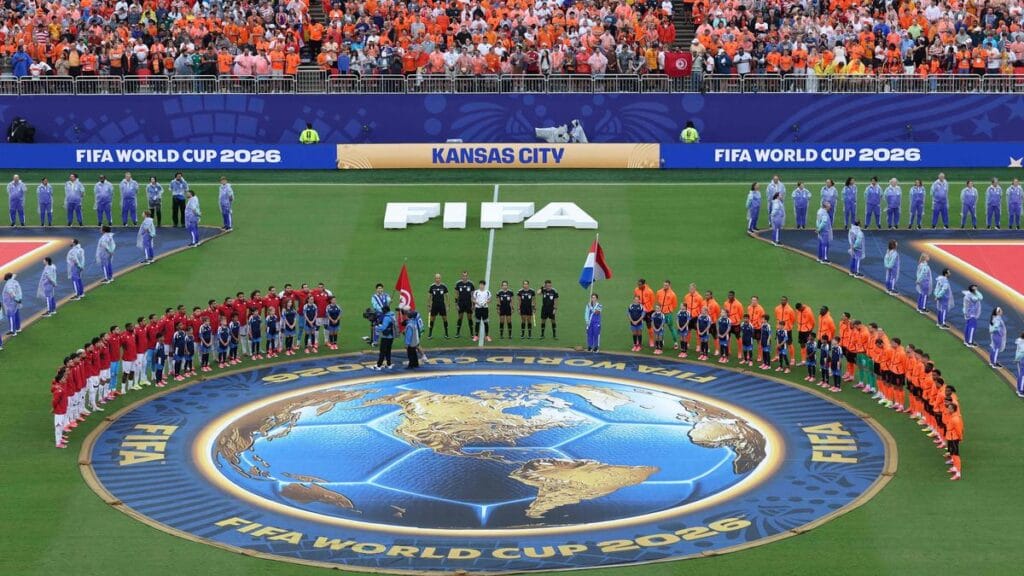
Players line up ahead of the FIFA World Cup 2026 Group F match between Tunisia and Netherlands. Image Credit: The Hindu
FIFA World Cup 2026: The Netherlands beat Tunisia 3-1 on Thursday in Kansas City to top World Cup Group F and secure a more favorable path into the knockout rounds. Ronald Koeman’s team capitalized on poor Tunisian defending early in the match, with Ellyes Skhiri putting through his own net before Brian Brobbey doubled the lead from close range. The Dutch were already in command by the time Tunisia settled, and the victory ensured they avoided a tougher Round of 32 tie against Brazil.
How the Match Was Won
This was a match decided by sharp execution and defensive mistakes. The Netherlands did not need to produce a long spell of pressure to get ahead; they simply punished Tunisia almost every time the North Africans made an error. That is often how tournament football works at the highest level — one side stays patient and the other side cracks. The Hindu has covered the full story.
The first goal came when Denzel Dumfries delivered a dangerous cross and Ellyes Skhiri sliced the ball into his own net. Own goals are always painful, but this one reflected Tunisia’s general discomfort in dealing with Dutch movement down the flank. Minutes later, Sunderland forward Brian Brobbey added a second from close range, finishing off another attacking move that exposed the Tunisian back line.
By the time those two goals went in, the Dutch fans had already settled into a party mood, with orange-clad supporters even doing Mexican waves midway through the first half at Arrowhead Stadium. That atmosphere said a lot about the game state. The Netherlands looked calm and in control, while Tunisia appeared to be chasing a contest that was slipping away from them.
Why the Dutch Looked So Comfortable
Ronald Koeman’s side were effective because they did not overcomplicate the match. They attacked the wide areas, moved the ball at a sensible pace and forced Tunisia to defend awkward situations. That approach created the opening for the own goal and then made the second finish possible.
Another key factor was confidence. Once the Netherlands went 2-0 up, they could manage the game rather than chase it. In World Cup football, that can be just as important as scoring. When a team is ahead and composed, the opponent often runs out of ideas.
It also helped that the Dutch entered the match knowing exactly what was at stake. A win would put them top of the group and steer them away from Brazil in the last 32. That kind of motivation matters, and it was visible in the way they handled the early stages.
Tunisia’s Problems
Tunisia’s main issue was defensive organization. They were simply too loose in the moments that mattered most. The own goal summed up their trouble, but it was not just one error; it was a pattern of uncertainty that made life easier for the Dutch.
At this level, you cannot afford those lapses against a side like the Netherlands. Once the Dutch had room to attack, they were clinical enough to punish any hesitation. Tunisia may have had moments later in the match, but by then the damage was already done.
This defeat is especially frustrating because the game was there to be managed better. Tunisia did not need to dominate possession; they simply needed to stay compact and avoid the kind of breakdown that allowed the Netherlands to go two goals ahead early. Unfortunately for them, that did not happen.
Reported Quotes and Statements
While no direct post-match player quotes were provided in the available report, the match itself tells a clear story. A football analyst would likely describe the Netherlands as “professional and efficient” because they took control without needing to force the issue. Another fair assessment would be that Tunisia were “punished for defensive indecision,” which is often what happens in major tournaments when the margin for error disappears.
That is the essence of this result. The Netherlands did not need a spectacular performance to win. They just needed to be better in the key moments, and they were.
Background and Context
This victory matters because it shaped the knockout bracket. By topping Group F, the Netherlands avoid a last-32 clash with Brazil, which is a significant advantage in any World Cup. Tournament paths can be just as important as performance, and finishing first often provides a better route deeper into the competition.
For Tunisia, the match marks the end of a campaign that never really found momentum. World Cup tournaments are brutally short, and if a team wastes early opportunities or concedes soft goals, it becomes very difficult to recover. That is what happened here.
The Netherlands, meanwhile, continues to build the profile of a team that knows how to handle group-stage pressure. They may not always play the most dramatic football, but they are often disciplined, structured and tactically clear. Those traits tend to matter more in knockout tournaments than flashy possession alone.
Timeline
Early first half: The Netherlands begin with control and width in attack.
First goal: Ellyes Skhiri turns Denzel Dumfries’ cross into his own net.
Soon after: Brian Brobbey scores from close range to make it 2-0.
Midway through the first half: Dutch fans celebrate and even join in Mexican waves at Arrowhead Stadium.
Later in the match, Tunisia tries to respond but cannot undo the early damage.
Full time: The Netherlands win 3-1, top Group F and avoid Brazil in the last 32.
Also Read: Ecuador Shock Germany 2-1 to Reach World Cup Knockout Stage After Late Fightback
Why This Matters
This matters because World Cup group placement can change a team’s entire route through the tournament. The Netherlands now has a more manageable knockout path, which could influence how far they go. In a competition like this, one result can shape everything that follows.
It also matters because Tunisia’s exit reflects the harsh reality of elite tournament football. There is no long recovery window, no chance to fix a sloppy start later. Yeh issue kaafi important hai because teams at this level are judged not just by effort but by how well they handle pressure moments.
For fans, this kind of match shows why group games matter so much. Even before the knockouts begin, the tournament is already being reshaped by who wins and who slips. A team that tops its group can make life much easier for itself, and that is exactly what the Netherlands achieved.
India Angle
For Indian football fans, this is a useful example of how top teams manage group-stage strategy. The Netherlands did not just try to win; they won with an eye on the bracket, which is a smart tournament habit. In Hinglish, seedhi baat yeh hai: sirf match jeetna kaafi nahi hota, sahi match jeetna bhi zaroori hota hai.
Indian viewers also tend to follow World Cup bracket drama closely because it adds tension even before the knockout rounds begin. Avoiding Brazil is a massive storyline, and that makes the result easy to understand even for casual fans. It is the kind of detail that keeps World Cup conversation lively in India.
There is also a football lesson here for developing teams. Defensive mistakes at this level get punished immediately. That is something Indian fans know well when watching international matches, and it underscores why concentration and game management matter so much.
Analysis
My view is that this was a classic “businesslike” World Cup win. The Netherlands did not need to be sensational because they were efficient in the moments that mattered. That is often the sign of a team that is built for tournament progress rather than highlight reels.
Tunisia’s defeat is less about one bad moment and more about the cumulative cost of poor defensive decisions. A single own goal can change the mood, but a team still has time to recover if it stays organized. Tunisia did not, and that made the scoreline feel inevitable once the second goal went in.
From a football narrative point of view, this result also strengthens the Dutch image as a side that can quietly move through the tournament while others get drawn into chaos. Sometimes the most dangerous teams are not the loudest ones.
What Next
The Netherlands now move into the last 32 as Group F winners and can prepare for a knockout tie without the immediate pressure of facing Brazil. That gives Koeman and his players a better chance to manage their next stage carefully and possibly conserve energy.
Tunisia’s campaign is over, and the focus will now shift to reflection and rebuilding. They will need to look at defensive structure, composure and how to avoid early-match breakdowns in future tournaments.
For the Dutch, the next step is simple: maintain the discipline that got them here and be sharper in front of goal when the matches become more difficult. If they keep that up, their path into the knockout rounds could become very interesting.
Conclusion
The Netherlands’ 3-1 win over Tunisia was a controlled and efficient group-stage victory that secured first place in Group F and spared them a difficult clash with Brazil in the last 32. Early defensive mistakes hurt Tunisia badly, while the Dutch showed composure, structure and just enough attacking quality to take full advantage. It was not a dramatic classic, but it was exactly the kind of result that can shape a World Cup run.
Written By A. Jack