Spain overcame a jittery French team and when it mattered most, they finished it off with aplomb. Now they face either England or Argentina in the semi-finals, with a second World Cup crown in their sights.
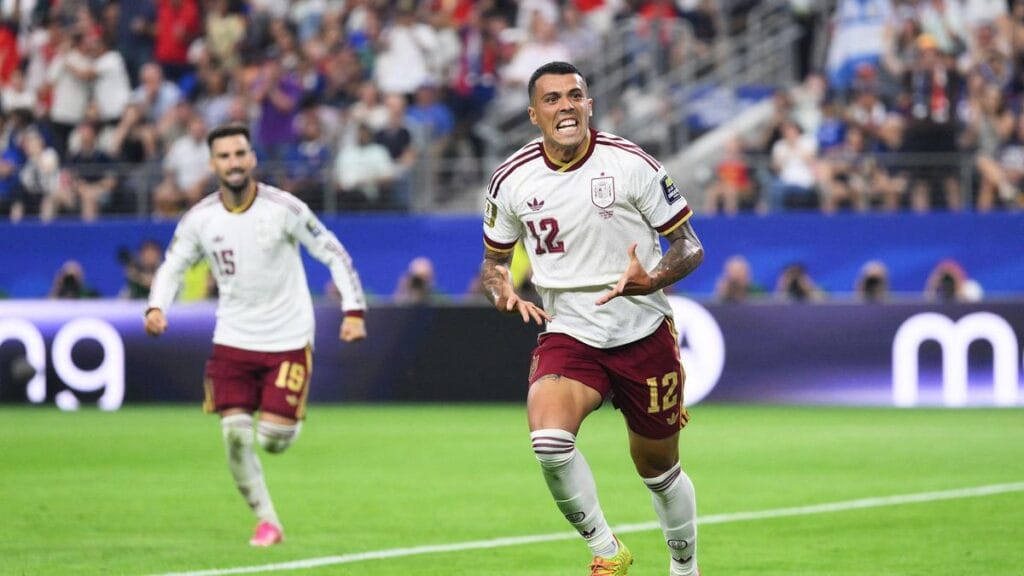
Spain celebrates after defeating France 2-0 in the FIFA World Cup semi-final. Image Credit: The Hindu
Spain defeated France 2-0 in the FIFA World Cup semifinal on Tuesday, July 14, 2026, to reach the final for the first time in 16 years. Mikel Oyarzabal converted a penalty before Pedro Porro added a second goal, sealing a deserved win over a French side that looked error-prone at key moments.
The victory puts Spain one step away from winning the World Cup for only the second time in their history. For France, the semifinal was a painful reminder that even the strongest teams can unravel when concentration drops at the wrong time. Yeh result kaafi important hai because it is not just a semifinal win; it is a statement that Spain are back at the very top of world football.
How Spain Won
Spain’s success came from a mix of composure, discipline and sharp finishing. They did not need to dominate every minute to control the match. Instead, they stayed organised, punished France’s mistakes and maintained the sort of calm that knockout football demands. This story was also covered by The Hindu.
The opening goal came from Mikel Oyarzabal’s penalty, and that mattered because semifinal matches often swing on one decisive moment. Once Spain took the lead, they were able to play with more freedom and confidence. France, meanwhile, looked unsettled and struggled to recover their rhythm.
Pedro Porro’s goal then gave Spain the cushion they needed. A second goal in a tight semifinal changes everything because it forces the opposition to chase the game and exposes gaps at the back. Spain understood that and kept France under pressure. Their defensive structure also mattered, because no semifinal victory is complete without control at the back.
France, described in the match report as error-prone, could not match Spain’s cleaner approach. In a game like this, mistakes are expensive. Misplaced passes, hesitation in defence and poor decision-making can turn a balanced contest into a one-sided one within minutes. Spain were the better side in those crucial moments and that was enough.
Why This Victory Is So Significant
This is Spain’s first World Cup final in 16 years, which is a major milestone for a football nation that has spent years trying to reproduce its golden era. Spain has often been admired for possession football, technical quality and tactical intelligence, but major tournament success has not always followed. Reaching the final again restores their place among the elite.
For a team and fan base that values style as much as winning, this semifinal felt like both. Spain were efficient, not just elegant. They showed the kind of maturity that is often missing in knockout games. That is why this victory will be remembered not only as a result but also as proof that Spain’s current generation can handle pressure.
For France, the defeat will sting because they came in as favourites and still could not get the job done. That makes the loss bigger than a single bad night. It becomes a question of missed opportunity, tactical errors and mental lapses at the worst possible time. In football, that is often the difference between a champion team and a team that merely looks like one.
Background and Context
Spain’s history in major tournaments has always been rich with expectation. Their 2010 World Cup win remains one of the defining achievements in modern football, and the years since then have been a mix of transition, rebuilding and occasional frustration. Reaching a final again after 16 years gives this team a chance to write a new chapter.
France, on the other hand, have been one of the most consistent powerhouses in international football. They have produced deep tournament runs, elite individual talent and championship-level squads. That is why their semifinal defeat is so surprising. On paper, they had the quality to go all the way. On the pitch, however, quality only matters if the team executes it properly under pressure.
This match also reflects a larger World Cup trend: the knockout stages often reward the team that is less careless rather than the one that is more glamorous. Spain was not perfect, but they were efficient. France had more mistakes in them, and in a semifinal that can be fatal. That is the sort of fine margin that defines tournament football.
Timeline
Tuesday, July 14, 2026: Spain face France in the FIFA World Cup semifinal.
First major breakthrough: Mikel Oyarzabal scores from the penalty spot.
Later in the match: Pedro Porro adds Spain’s second goal.
Final whistle: Spain win 2-0 and reach the World Cup final.
Next stage: Spain will face the winner of England vs Argentina.
Why This Matters
This matters because World Cup semi-finals are about legacy, not just a single game. A place in the final changes how a team is remembered, how a generation is judged and how a footballing identity is viewed globally. Yeh issue kaafi important hai because Spain are no longer just a team with good players; they are now a team one win away from a second world title.
It also matters because it shows how quickly tournament favourites can fall if they lose focus. France was expected to go deep, but big-name status does not guarantee a result. In knockout football, the side that makes fewer errors usually survives. That is a lesson fans, coaches and analysts repeat every World Cup, and this semifinal reinforced it again.
For supporters around the world, this is the kind of game that makes the World Cup special. It mixes pressure, history and national pride in one match. Spain’s win keeps the tournament compelling and sets up a final with huge global attention.
India Angle
For Indian football fans, this result will be watched closely because the FIFA World Cup has a massive audience in India, especially during the knockout rounds. In Hinglish, seedhi baat yeh hai: jab aise big teams semifinal mein takkar leti hain, Indian fans bhi full interest ke saath dekhte hain because the World Cup is one of the few events that cuts across all sports audiences. Spain’s disciplined win gives fans another reminder of how knockout football is decided.
The match also has value for Indian viewers who follow tactical football and youth development. Spain’s style has long been studied by coaches and academies around the world. Their ability to stay calm, use the ball wisely and punish errors offers useful lessons for anyone interested in modern football. That makes the result relevant even outside Europe.
There is also a broader emotional angle. Indian fans often connect with teams that play attractive football, and Spain have historically had that kind of appeal. This win will likely draw a lot of attention on Indian TV and digital platforms, where World Cup traffic always rises sharply during the semifinals and the final. That is a strong sign of how global football narratives resonate here.
Analysis
My opinion is that Spain’s win was built on game management more than flair alone. That is often the hidden strength of elite tournament teams. They did not chase chaos. They stayed composed, took advantage of France’s mistakes and protected their advantage. In knockout football, that is often the smartest path.
I also think the phrase “error-prone French side” tells us a lot about the match. France may have had the bigger reputation in some circles, but reputation does not defend a semi-final. Spain was sharper, more disciplined and more ruthless. That combination wins tournaments. It is not always the most exciting formula, but it is the most effective one.
Another key point is the psychological boost this gives Spain. Reaching a final after 16 years changes the mood around a team. It energises supporters, raises belief in the squad and adds historical weight to the final. That kind of momentum can be powerful in football, especially when a squad starts to feel that the tournament is theirs to lose.
For France, the analysis is harsher. A semifinal exit usually triggers reflection on tactical structure, concentration and big-match mentality. With so much talent, the expectation is always higher. If they made errors at crucial moments, that will dominate the post-match discussion.
What Next
Spain now moves on to the World Cup final, where they will face the winner of the England vs Argentina semi-final. That final will bring a very different tactical challenge, because Spain will need to adjust based on the strengths of whichever side emerges from the other bracket. The preparation now shifts from celebrating the semifinal to planning for one last, decisive match.
The final will also test Spain’s ability to repeat the discipline they showed against France. One great semifinal does not win a World Cup; it only creates the chance to do so. The final will require the same calm, the same defensive focus and possibly even more attacking sharpness.
For France, the next step will be recovery and analysis. Teams of their calibre do not remain down for long, but this defeat will certainly lead to questions about execution and decision-making. Their response in the coming months will matter as they look to rebuild for future tournaments.
Conclusion
Spain’s 2-0 semifinal win over France was a major World Cup statement, sending them into the final for the first time in 16 years. Mikel Oyarzabal’s penalty and Pedro Porro’s goal gave Spain a deserved victory over an error-prone French side that could not recover once the match slipped away. The result has set up a high-stakes final and restored Spain’s place among football’s biggest contenders. For fans, this was more than just a semi-final — it was a reminder that in knockout football, calm, control and ruthlessness often matter more than reputation.
Written By A. Jack