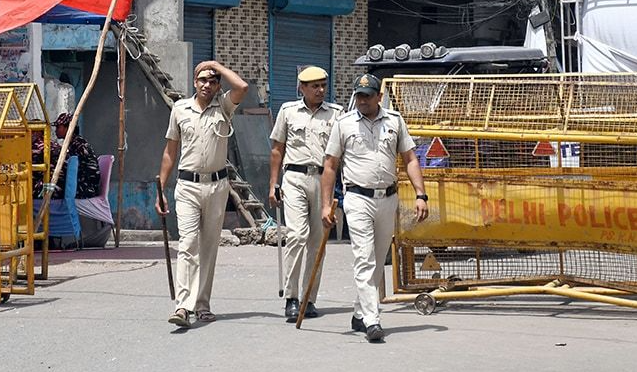
The two-year Naya Safar Yojana will provide loan interest subsidy, fuel vouchers, tax concessions and scrappage-linked incentives to remove older diesel vehicles from Delhi-NCR roads. Officials say the move could lead to a greater improvement in air quality than targeting the same number of private cars.
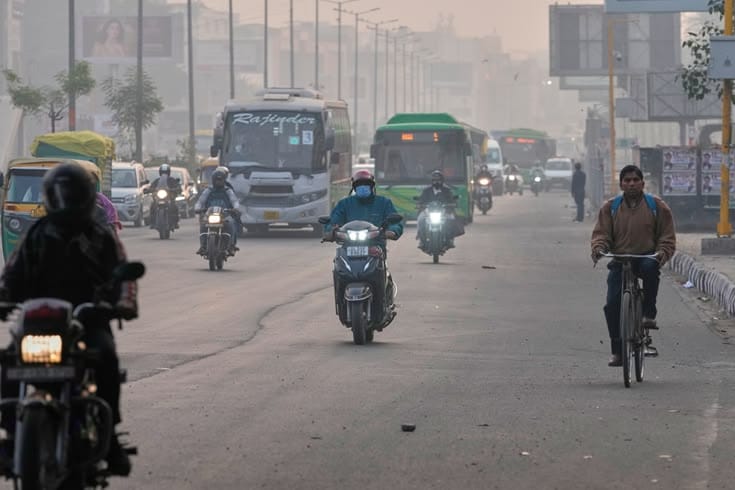
Delhi’s new clean-transport push aims to replace ageing trucks and buses with BS-VI and electric vehicles under the Rs 9,585 crore Naya Safar Yojana. Image Credit: PTI
Delhi is again taking a big step in its long battle against air pollution, this time by targeting one of the most stubborn sources of emissions: old commercial vehicles. The Centre has approved the Rs 9,585 crore Naya Safar Yojana, a two-year scheme that will help replace around 2.07 lakh ageing trucks and buses across Delhi-NCR with cleaner vehicles.
The scheme arrives at a time when Delhi remains the country’s pollution hotspot despite years of policy action, from cleaner fuel adoption to electric public transport and restrictions on older vehicles. This latest move is designed to cut transport pollution at its source by focusing on commercial vehicles that emit disproportionately high levels of PM2.5. Yeh step kaafi important hai because it attacks the pollution problem where the damage is biggest, not just where the numbers look large.
Why the Scheme Was Needed
Delhi’s air quality challenge has never been only about one source. Crop burning, dust, industry, construction and weather conditions all play a role. But transport remains a major and visible contributor, especially in a city where traffic congestion and freight movement are constant. Within transport, commercial vehicles are especially important because they operate for longer hours, carry heavier loads and often use older engines. This story was also covered by NDTV.
That is why the government has focused on trucks and buses rather than private cars first. Commercial vehicles are only about three per cent of the vehicle fleet in Delhi-NCR, but they account for 36 per cent of PM2.5 emissions from the transport sector. In pollution policy, that is a huge gap between share and impact. In simple terms, a small slice of vehicles is doing a much larger share of the damage.
The logic of the scheme is clear: if Delhi wants faster air-quality gains, it should target older commercial vehicles that burn dirtier fuel and emit more particulates. Replacing them with BS-VI or electric vehicles should help reduce emissions more efficiently than trying to remove the same number of lower-emitting private vehicles. This is why the policy is being described as a high-impact intervention rather than a routine replacement plan.
What the Scheme Offers
The Naya Safar Yojana is structured to make replacement financially attractive for vehicle owners. It includes a five per cent interest subsidy on vehicle loans for five years, monthly fuel vouchers of up to Rs 4,800, registration fee waivers and motor vehicle tax concessions. These incentives are meant to reduce the upfront pressure on owners who may otherwise delay replacing older vehicles because of cost.
State governments are also expected to play a strong role. According to the plan, they will offer 100 per cent tax concessions on new vehicles and 50 per cent on used vehicles for 10 years. Pending dues on participating old vehicles will also be waived. That combination of relief measures is significant because it lowers both the immediate purchase burden and the long-term ownership cost.
The scheme also sets out clear replacement rules. BS-III and older vehicles must be scrapped, while BS-IV vehicles can either be scrapped or sold outside NCR and non-NCAP cities. This matters because the policy is not only encouraging cleaner purchases but also controlling where dirtier vehicles can go after they are phased out of Delhi-NCR.
In Delhi, the rules are even sharper for specific vehicle types. New buses purchased under the scheme must be BS-VI CNG or electric, while new light goods vehicles must be electric. That is a strong signal that the government is not looking for a halfway solution. It wants the cleanest option available for the city’s transport future.
What the Truck Data Shows
The scheme’s focus becomes even clearer when you look at truck data. A recent study by the Air Pollution Action Group, IIT Delhi and TERI estimates that 16,900 heavy-duty trucks enter Delhi every day. Of these, around 92 per cent have Delhi as their destination, while only eight per cent are merely passing through.
Most of these trucks already comply with modern emission norms. Around 62 per cent are BS-VI vehicles, 28 per cent are BS-IV and 10 per cent are BS-III or older. So, the real pollution problem is not every truck. It is the older portion of the fleet that continues to pollute far more than its share would suggest.
The study estimates that trucks entering Delhi emit about 52.18 kg of PM2.5 every day. BS-III trucks emit 17.9 kg and BS-IV trucks emit 14.47 kg, together accounting for nearly 62 per cent of total PM2.5 emissions from trucks entering Delhi even though they make up only 38 per cent of the fleet. BS-VI trucks, which form 62 per cent of the fleet, contribute 19.81 kg or about 38 per cent of total emissions.
On average, an older BS-III or BS-IV truck emits about 2.7 times more PM2.5 than a BS-VI truck in the surveyed fleet. That is the key policy insight behind Naya Safar Yojana. If the government can phase out that older segment, it can get a much bigger pollution reduction than the same investment in cleaner vehicles would achieve elsewhere.
Background and Context
Delhi has spent years trying to improve air quality through a wide range of measures. Authorities have promoted cleaner fuels, expanded CNG and electric public transport, pushed ethanol-blended petrol, tightened industrial norms and restricted older vehicles. Yet the city continues to rank among the worst in India for air pollution, which suggests that piecemeal efforts alone are not enough.
That is why the shift to commercial vehicles makes sense. Unlike private vehicles, trucks and buses often run for long hours and cover heavy-duty routes, making them high-emission workhorses of the urban economy. If those vehicles are old, the pollution impact becomes even more severe. So the new scheme is really an attempt to make pollution control more strategic.
This also fits into a broader Indian trend. Cities are increasingly trying to use targeted incentives instead of broad bans alone. The idea is to make cleaner choices financially easier rather than just politically mandatory. That approach can work better if the incentives are large enough and the transition rules are enforced consistently.
Timeline
Over the years, Delhi has introduced cleaner fuels, CNG and electric transport, and restrictions on older vehicles.
Recent period: Air quality remains a major challenge despite these measures.
Latest step: The Centre approves the Rs 9,585 crore Naya Safar Yojana.
Scheme period: The plan will run for two years.
Implementation focus: Around 2.07 lakh old commercial vehicles will be targeted for replacement.
Also Read: One Tunnel, One Highway: Rs 14,115-Crore Bet to Transform UP and Delhi-NCR
Why This Matters
This matters because Delhi’s air pollution problem cannot be solved by symbolic measures alone. If a small number of high-emitting vehicles are responsible for a large share of particulate pollution, then targeting them first is the smartest way to get faster results. Yeh issue kaafi important hai because every improvement in PM2.5 can have a direct impact on public health, especially for children, older adults and people with respiratory conditions.
It also matters for the transport industry. Truck and bus owners often operate on thin margins, and old vehicles are expensive to maintain even if they are cheaper to keep running in the short term. The subsidy, fuel vouchers and tax relief are meant to smooth that transition. If the scheme works, it could accelerate fleet renewal without hurting logistics too badly.
There is also a public policy lesson here. Pollution control is most effective when it is tied to actual emissions data. The scheme shows that the government is using evidence to decide where the biggest gains lie. That is a good sign for long-term city planning and transport reform.
India Angle
For Indian readers, this scheme matters beyond Delhi because many cities face the same pattern: a relatively small number of older commercial vehicles generate a large pollution burden. In Hinglish, seedhi baat yeh hai: agar Delhi old trucks aur buses ko replace karke cleaner transport ki taraf ja rahi hai, toh dusre cities bhi yeh model dekh sakte hain. Cities like Mumbai, Kolkata, Lucknow and Kanpur could learn from this approach if they want cleaner air.
The move also has a national relevance because freight movement is central to India’s economy. Trucks are the backbone of goods transport, so cleaner freight policies can affect both public health and business efficiency. If a major market like Delhi-NCR can transition some of its fleet, that could encourage wider adoption of cleaner technologies across India.
There is also a social angle. Pollution is not just an abstract environment issue; it is a daily health burden. For millions of Indians living in and around NCR, cleaner commercial vehicles could mean fewer toxic emissions on the roads they use every day. That makes the policy practical, not just political.
Analysis
My opinion is that the strongest part of the scheme is its precision. Instead of trying to tackle every vehicle category equally, the government is targeting the segment that causes the most harm per vehicle. That is smart policy design. It is also easier to justify publicly because the data clearly show why commercial vehicles are being prioritised.
I also think the combination of scrappage rules and financial incentives is important. If the government only imposed restrictions, owners might resist or delay compliance. If it only offered subsidies, some may still keep older vehicles on the road. By pairing both, the scheme creates a push-and-pull effect that may be more effective. That said, implementation will be the real test. Incentives must reach owners quickly, and enforcement must be strong enough to prevent old vehicles from continuing to pollute within the NCR.
Another key point is the role of buses. The rule that new buses in Delhi must be BS-VI CNG or electric is especially noteworthy. Public transport can set the tone for cleaner mobility, and buses are highly visible. If those fleets modernise successfully, it can influence both public perception and private investment in cleaner transport.
What Next
The next step will be implementation: identifying eligible owners, processing applications, scrapping old vehicles and approving loans for replacements. The scheme’s success will depend on how smoothly those administrative steps move. If the process is too slow or confusing, vehicle owners may hesitate to participate.
There is also likely to be closer monitoring of commercial vehicles entering Delhi, especially older trucks. Since the policy is built around reducing high-emission vehicles, enforcement and compliance checks will be essential. Without that, the emissions benefit may fall short of expectations.
Over time, the government may use the scheme’s results to decide whether similar incentives should be expanded or modified. If pollution levels improve meaningfully, the model could influence future urban transport policy across India. That would make Naya Safar Yojana more than a local scheme; it would become a possible template.
Conclusion
Delhi’s Rs 9,585 crore Naya Safar Yojana is a major attempt to reduce pollution by replacing 2.07 lakh old commercial vehicles with cleaner alternatives. By focusing on trucks and buses, the government is targeting a small part of the fleet that produces a disproportionately large share of transport emissions. The scheme’s financial incentives, tax relief and scrappage rules are designed to make the transition easier while delivering real air-quality gains. For Delhi, this is not just a transport policy; it is a public health intervention, and its success will depend on how quickly and effectively it is implemented.
Written By A. Jack