Gautam Adani met Vietnamese President To Lam in Mumbai on Thursday, shortly after the India-Vietnam Business Forum, in a development that underlines rising economic and strategic engagement between India and Vietnam. The meeting reportedly lasted about 15 minutes at a south Mumbai hotel, with details of the discussion not disclosed immediately.
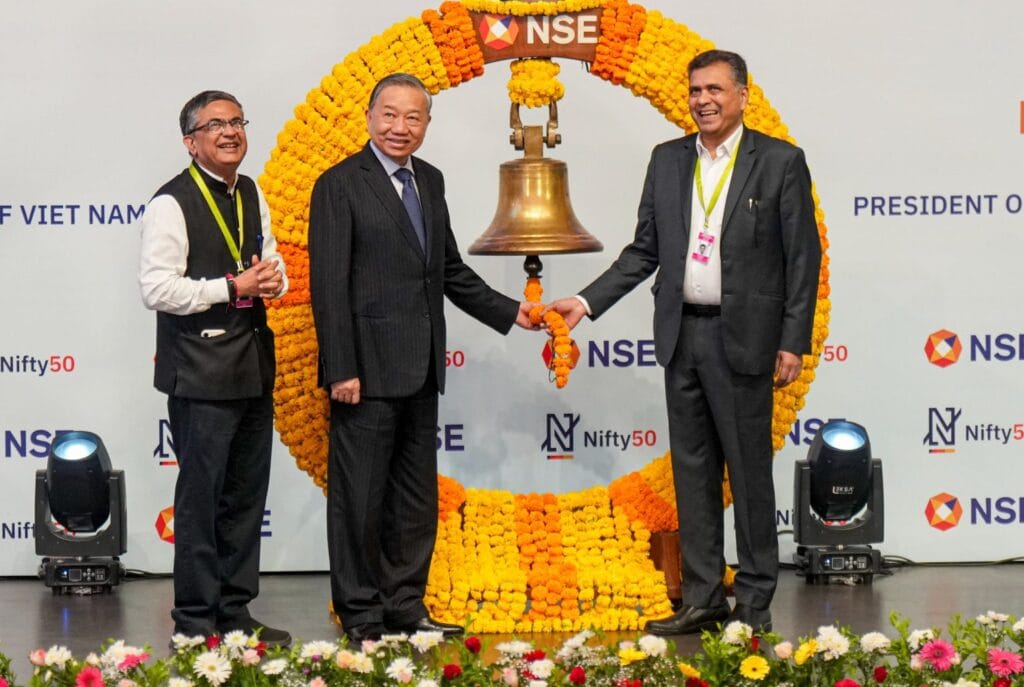
Gautam Adani meets Vietnamese President To Lam in Mumbai after the India-Vietnam Business Forum, as business and diplomatic ties between India and Vietnam gather momentum.
The visit comes at a time when Vietnam’s President To Lam is in Mumbai for a day-long diplomatic and business-focused trip. Alongside meeting business leaders, he also attended the National Stock Exchange bell-ringing ceremony and later held scheduled interactions with Maharashtra’s top leadership, making the Mumbai leg of the visit especially significant.
What Happened
According to reports, Adani met President To Lam right after the conclusion of the India-Vietnam Business Forum in Mumbai. The meeting took place at a hotel in south Mumbai and lasted around 15 minutes, making it a brief but symbolically important interaction between one of India’s biggest business figures and Vietnam’s top political leader. NDTV has covered the full story.
Adani heads a diversified conglomerate with major interests in ports, energy, cement, and semiconductors, sectors that overlap with Vietnam’s own growth priorities. That overlap is likely why the meeting drew attention, even though the precise agenda was not made public. In diplomatic and business terms, such meetings often signal intent more than detail, and that intent appears to be stronger cooperation across trade and investment channels.
Why The Meeting Matters
This meeting matters because it sits at the intersection of business diplomacy and international economic strategy. India and Vietnam have been steadily strengthening ties in trade, logistics, manufacturing, technology, and infrastructure, and a face-to-face interaction between a major Indian industrialist and the Vietnamese President adds another layer to that relationship.
It also matters because private-sector leaders like Adani often play a role in translating diplomatic goodwill into real-world projects. When a country like Vietnam is seeking infrastructure, energy, and technology partnerships, and a conglomerate like Adani already has global ambitions, the conversation becomes relevant far beyond a photo-op. Yeh sirf ek meeting nahi thi—it reflects broader economic signaling.
Context Of The Visit
President To Lam’s Mumbai visit included a bell-ringing ceremony at the NSE, where he was welcomed by NSE MD and CEO Ashish Kumar Chauhan and business leaders. Reports say he acknowledged the strength of India’s stock market during the ceremony, which highlights the importance of capital markets in the wider India-Vietnam partnership.
Later in the day, To Lam was scheduled to meet Maharashtra Chief Minister Devendra Fadnavis and attend a business forum interaction, followed by a reception with Governor C P Radhakrishnan at Raj Bhavan in Mumbai. The visit therefore had both diplomatic and commercial layers, with Maharashtra positioned as a key economic gateway. For Mumbai, this is another reminder that the city remains a major stage for international business outreach.
Background And Investment Angle
This is not the first time Adani’s name has surfaced in the India-Vietnam context. Last year, he announced a USD 10 billion investment in Vietnam across infrastructure, renewable energy, and new technologies. That context gives the current meeting more weight, because it suggests the relationship is not just ceremonial but potentially tied to long-term business plans.
Vietnam has emerged as an increasingly important destination for Asian investment because of its manufacturing strength, export orientation, and growing infrastructure needs. India, meanwhile, is looking to expand its regional economic footprint, especially through partnerships that support supply chains, ports, clean energy, and digital growth. On paper, this is a strong fit.
Timeline
Earlier on Thursday: President To Lam visits the NSE and takes part in the bell-ringing ceremony.
After the India-Vietnam Business Forum: Gautam Adani meets To Lam in a south Mumbai hotel.
Later in the day: To Lam is scheduled for meetings with Maharashtra’s leadership and a banquet at Raj Bhavan.
The sequence matters because it shows the Mumbai visit was tightly planned around business, finance, and policy engagement. The Adani meeting came at a time when the broader diplomatic environment was already set for economic discussion.
Also Read: Nida Khan Arrested in Maharashtra in Nashik TCS Conversion Case
Why This Matters For India
For India, especially Maharashtra and Mumbai, the visit reinforces the city’s role as a financial bridge between global capital and Indian enterprise. When foreign leaders meet major Indian business houses in Mumbai, it often points to a larger commercial roadmap involving ports, shipping, manufacturing, capital markets, or green energy.
There is also a local angle that matters for Indian readers: such high-level meetings can eventually influence jobs, investment flows, and industrial activity. If partnerships expand into logistics, infrastructure, or technology, the benefits can trickle down into employment and supply chains. In simple terms, yeh type ki diplomacy ka real-world impact kaafi bada ho sakta hai.
Analysis
My assessment is that the meeting is likely part of a larger economic outreach effort rather than a standalone event. When a visiting head of state meets a major industrialist so soon after a business forum, it usually suggests there is already a policy and business framework in motion. The key question now is whether the symbolism turns into announcements, joint ventures, or sector-specific investment updates later on.
What Next
The next step will be to watch for any formal business announcements, MoUs, or public comments from either side. If the India-Vietnam Business Forum leads to concrete investment or trade commitments, this meeting could be remembered as one of the connecting moments that helped move those talks forward.
It will also be important to track how Maharashtra positions itself in this engagement. With the state government involved and Mumbai serving as the setting for business diplomacy, the region may seek to attract more Vietnam-linked investment in ports, logistics, clean energy, and technology. That could create a strong pipeline for future cooperation.
Conclusion
Gautam Adani’s meeting with Vietnamese President To Lam in Mumbai is more than a brief encounter at a hotel; it reflects the growing seriousness of India-Vietnam economic ties. Coming right after the India-Vietnam Business Forum and alongside high-level NSE and state-government engagements, the meeting fits into a wider diplomatic and business push.
While the exact discussion remains undisclosed, the broader signal is clear: India and Vietnam are deepening their relationship, and Mumbai is once again acting as a major stage for that conversation. In today’s global economy, even a 15-minute meeting can carry significant strategic meaning.
Written By A. Jack