Delhi Police has busted an interstate racket that allegedly stole life-saving medicines meant for free distribution to the poor, relabelled them with fake packaging and sold them in the black market across Delhi-NCR and northeastern states. Four men have been arrested, and the case has exposed how critical medicines like insulin, rabies vaccines and Hepatitis B shots were being diverted from the public healthcare chain.
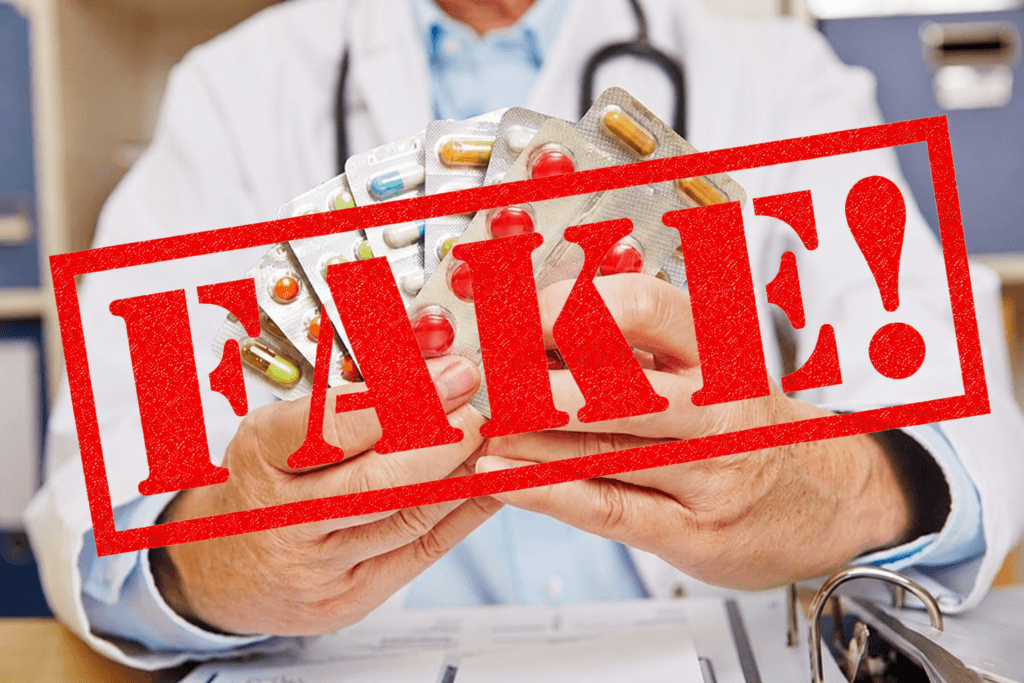
Delhi Police announces the bust of a ₹6 crore illegal medicine racket in Mukherjee Nagar, where free government-supplied drugs were allegedly relabelled and pushed into the black market. [This image only for representation.]
The operation is a sharp reminder that medicine theft is not just a crime against the state — it is a crime against patients who depend on free, life-saving treatment. The accused allegedly ran a hidden manufacturing and relabelling setup out of north Delhi’s Mukherjee Nagar, turning medicines meant for the poor into profit-making black-market stock.
What Happened
According to police, four men—Manoj Kumar Jain (56), Raju Kumar (57), Vikram Singh alias Sunny (32), and Vatan (35)—were arrested for their alleged role in an interstate medicine racket. The network is said to have diverted government-supplied drugs, removed the original labels, placed fake ones on the packaging, and redistributed the medicines illegally in Delhi-NCR, West Bengal, and northeastern states. The Indian Express has covered the full story.
Police said the recovered stock was worth around Rs 6 crore and included critical medicines such as rabies vaccines, insulin, human albumin, Hepatitis B vaccines, anti-snake venom, and antibiotics. Investigators believe the racket posed a direct public-health threat because these medicines are often needed urgently and are supposed to reach patients free of cost through government systems.
How The Racket Worked
The alleged operation appears to have been built on a supply chain that started outside Delhi and ended inside the capital’s black market. Vikram, who works as a lab technician and runs a diagnostics center in Prayagraj with Vatan, is accused of sourcing surplus or diverted medicines from hospitals and community health centers in Uttar Pradesh.
Police said these medicines were originally meant for free distribution to patients in government hospitals but were siphoned off through local contacts and sent to Delhi. Manoj Kumar Jain allegedly ran the relabelling unit from his residence in Indra Vikas Colony, where officers found syringes, labels, and bottles during a raid. From there, the drugs were stripped of their original identity and repackaged to hide their government-supply trail.
An officer said the gang avoided sending consignments directly from Uttar Pradesh to Delhi because that would make tracking easier. Instead, Vikram allegedly routed the stock through Guwahati so the movement looked less suspicious before it was brought to Delhi for relabelling and redistribution. That kind of routing suggests planning, not random theft.
Who Was Behind It
Police described Manoj Kumar Jain as the alleged mastermind of the operation. According to investigators, he originally came from Rajasthan, his family later migrated to Manipur, and they were earlier in the construction business before suffering losses during the Covid-19 pandemic. Police say the loss pushed the family toward other ventures, including masks and sanitizers, before Manoj eventually entered the medicine trade.
Raju Kumar is said to be a veteran in the pharmaceutical business and allegedly helped establish a parallel counterfeit manufacturing unit in Punjab. Officers said this unit may have even produced human albumin, a critical drug used in emergency and trauma care. If true, that makes this racket far more serious than ordinary medicine resale because it touches the most sensitive parts of emergency healthcare.
Why This Is Serious
This case is serious because the drugs involved are not ordinary over-the-counter items. Insulin, the rabies vaccine, anti-snake venom, and the Hepatitis B vaccine are all medicines where delay, fake packaging, or poor storage can have life-threatening consequences. In simple words, yeh ek normal smuggling case nahi hai—it is a direct threat to public health.
When medicines marked for free distribution are stolen and resold, the first victims are poor patients who rely on government hospitals. The second victims are ordinary buyers who may unknowingly purchase compromised products, believing they are genuine. And the third victim is the entire healthcare system, because public trust gets damaged when “free supply” medicines enter the market illegally.
Background And Context
India has seen repeated cases of diverted or counterfeit medicines in recent years, but this case stands out because of its scale and the range of drugs involved. Police also found preliminary signs of hawala-linked financial routing, which suggests the racket may have been handling cash outside normal banking channels to hide profits. That makes the probe not just a medicine case, but also a financial-crime investigation.
The Mukherjee Nagar unit also shows how residential areas can be misused as covert processing points. Delhi has dealt with medicine diversion before, but the combination of fake labels, multiple state links, and a possible counterfeit manufacturing layer makes this operation more structured than a typical street-level black market setup. The scale points to an organized syndicate, not a one-off theft ring.
Timeline
April 22, 2026: Police first reach Manoj’s residence and find syringes, labels, and bottles.
April 23, 2026: A raid is conducted in Mukherjee Nagar after intelligence inputs are gathered.
Following days: Police trace the wider network across Delhi, Uttar Pradesh, West Bengal, and the Northeast.
May 7, 2026: Delhi Police publicly confirms the arrest of four men and the seizure of medicines worth around Rs 6 crore.
This timeline shows how quickly a hidden local unit can open into a multi-state investigation once the first link is found. It also shows why medicine supply chains must be monitored closely at every stage, from hospital stockrooms to final distribution.
Also Read: Delhi Horror: Two Minors Detained in Bhati Mines Strangling Case of 13-Year-Old Boy
What Police Found
Officials said the seized items included medicine stock, packaging materials, labels, and the equipment used for relabelling. During the raid at Manoj’s residence, investigators found items valued at around Rs 6 crore, suggesting a large volume of stock was being processed. The network is also believed to have had distribution links in Delhi, West Bengal, Assam, and Manipur.
Deputy Commissioner of Police (Crime) Pankaj Kumar said more arrests and recoveries are likely, which means the present arrests may only be the first phase of the probe. That is important because in organized rackets, the visible operators are often only part of the chain.
Why This Matters
This matters because free medicines are a lifeline for poor families. If drugs meant for government hospitals are diverted, then patients who cannot afford treatment are forced to go without essential care. For many families, even one missed vaccine or one unavailable insulin dose can become a medical emergency.
It also matters because black-market medicines can weaken confidence in public health programs. If patients begin to believe that “government supply” medicines are being stolen, they may lose trust in hospitals and pharmacies. That trust, once broken, is difficult to rebuild, and that is why this issue has both health and governance consequences.
India Angle
For Indian readers, this is a deeply relevant case because it affects the country’s public-health system, especially in states where government hospitals serve a very large population. Uttar Pradesh, Delhi, West Bengal, Assam, and Manipur are all part of this probe’s footprint, showing how one racket can span regions and exploit gaps in supply chains.
There is also a middle-class angle here. Even people who do not receive free medicines are impacted when fake or diverted drugs circulate in the market. A black-market system that begins with stolen government stock can eventually affect private pharmacies too, which means the risk spreads far beyond one neighborhood or one hospital network.
Analysis
My reading is that this case highlights a weak point in India’s medicine distribution chain: traceability. Once drugs are moved out of hospital stock and labels are removed, it becomes much harder to prove where they came from. The alleged use of Guwahati as a transit point is especially telling, because it suggests an attempt to obscure the path and reduce suspicion. Police may solve the case, but the system lesson is that tracking, packaging audits, and digital inventory controls need to be stronger.
What Next
The next step will likely be a financial probe into hawala links, plus efforts to identify the wider network and all end buyers. Police will also want to know how the medicines left government channels in Uttar Pradesh and whether any hospital staff, supply intermediaries, or pharmacists were involved.
If more evidence is found, additional arrests are likely, as the DCP has already suggested. The case may also lead to tighter inspections of medicine transport and storage, especially for drugs supplied free through government healthcare systems. That would be a positive outcome, because the bigger goal is not only to punish the accused but also to stop such diversion from happening again.
Conclusion
The Delhi Police bust of a Rs 6 crore free-medicine racket is a major reminder that healthcare crime can be as dangerous as any other organized illegal trade. The accused allegedly stole life-saving drugs meant for the poor, relabeled them, and sold them across multiple states, putting vulnerable patients at risk.
This case is important because it shows how public-health supply chains can be exploited when monitoring is weak. As the probe expands, the hope is that more links will be exposed and the distribution network will be broken before more compromised medicines reach patients. Yeh sirf crime story nahi hai—it is a public health warning that India cannot ignore.
Written by A. Jack