The main accused in the stabbing of 17-year-old Surya Pratap Chauhan was killed in a late night encounter with the police in Ghaziabad on Saturday. Asad shot during a joint operation and one officer was also wounded in the exchange, police said.

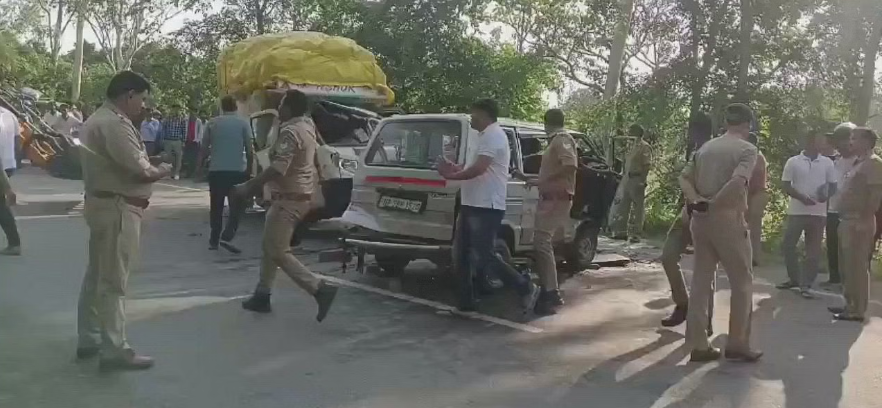
Police personnel at the encounter site in Ghaziabad after the main accused in the Bakrid stabbing case was shot dead during retaliatory firing. [This Image only for representation.]
Ghaziabad saw a dramatic turn in a case that had already triggered anger, protests, and political reaction after the killing of 17-year-old Surya Pratap Chauhan. On Saturday night, police said the main accused, Asad, was shot dead in an encounter during a joint operation by the Khoda and Indirapuram police teams.
Asad had been on the run and carried a reward of Rs 50,000 on his arrest after Chauhan was allegedly stabbed on May 28, the day of Bakrid. Police said the accused opened fire when officers tried to intercept him, leading to retaliatory firing in which he was critically injured and later declared brought dead at a hospital. Yeh case kaafi sensitive hai because it has combined crime, communal tension, public anger, and the question of how quickly justice should move.
What Happened
According to police, Surya Pratap Chauhan was attacked with a knife in the Khoda area on May 28 by Asad and his aides. The teenager was critically injured and later died during treatment. The killing sparked outrage in the area, with protests from family members and several Hindu organizations demanding immediate arrests and strict action. NDTV has covered the full story.
Police said five people were named as accused in the case. Three were arrested soon after the incident, but Asad remained absconding. In response, several police teams were formed, raids were carried out, and a cash reward was announced for his capture. The pressure on law enforcement increased significantly because the case had become a matter of public outrage, not just a criminal investigation.
On Saturday night, police said they received intelligence that Asad was preparing to flee after collecting money from associates. Acting on that input, police set up barricades and began intensive checking. During the operation, Asad was reportedly spotted on a motorcycle with an aide. When police tried to stop him, he allegedly opened fire. Officers returned fire, and Asad sustained serious gunshot injuries. He was taken to a hospital, where doctors declared him dead.
Police also recovered a motorcycle and a weapon from the encounter site. The aide managed to escape, and a combing operation is underway to trace him. That detail is important because it suggests the case is not over yet. One suspect is dead, but the network around him may still be active.
Why Police Say the Encounter Was Necessary
From the police version, this was a retaliatory firing situation after the accused allegedly shot at officers first. In such cases, the police often present the encounter as a result of an immediate threat to life. The fact that one police officer was injured during the exchange reinforces the seriousness of the operation.
Deputy Commissioner of Police Dhaval Jaiswal said the police had already made sustained efforts to arrest Asad, including repeated raids and reward-based tracking. According to him, the accused was preparing to leave the area when police moved in. The official account is that the firing happened only after Asad attempted to resist arrest through armed violence.
Encounters in Uttar Pradesh often become highly debated events because they are seen by some as swift justice and by others as a sign of extralegal punishment. In this case, the police are likely to defend the action as self-protection during a dangerous arrest operation. At the same time, the broader public response will depend on how much trust people place in the official investigation.
Family Reaction and Public Anger
Chauhan’s family had already been demanding strict punishment after the stabbing. Following Asad’s death, the victim’s mother made an emotional demand for similar action against the others involved. She said she wanted to see Asad’s picture and would only feel satisfied after seeing the remaining accused face the same fate.
Her words reflect the raw grief and anger that continue to surround the case. When a young person dies in a violent attack, families often want punishment to be immediate and visible. That emotional response is understandable, though the legal process must still determine what happens next to the remaining accused.
The case also drew political attention. Uttar Pradesh Deputy Chief Minister Keshav Prasad Maurya had earlier said the killers would not be spared and would face the strictest punishment under law. BSP chief Mayawati also called the incident extremely tragic and worrying, urging strict action. That kind of political response shows how quickly a local crime can become a state-level issue in Uttar Pradesh.
Background and Context
The stabbing allegedly took place on Bakrid, a day that already carries social sensitivity in many parts of the country. The incident in Khoda triggered immediate outrage because a minor was among the victims’ family’s main concerns and because the attack appeared to have taken place in a tense social atmosphere. Such cases often take on a larger meaning beyond the individual crime.
Ghaziabad and other parts of western Uttar Pradesh have seen repeated debates over law and order, police action, and communal sensitivity. When an incident involves a teenager, multiple accused, and public protest, pressure on police increases sharply. Authorities are then expected to show quick results while also ensuring the investigation remains legally sound.
In this case, the timeline moved quickly from stabbing to arrests to a reward announcement to an encounter. That speed is one reason the story has attracted so much attention. It reflects the immediate pressure police faced after the killing and the strong public demand for visible action.
Timeline
May 28: Surya Pratap Chauhan is allegedly stabbed in Khoda on Bakrid.
Soon after: He is taken to the hospital but dies during treatment.
Following days: Protests erupt and police launch raids.
Police response: Three accused are arrested, Asad remains absconding, and a Rs 50,000 reward is announced.
Saturday night: Police say Asad opens fire during a joint operation and is killed in retaliatory firing.
After the encounter: Police begin a combing operation to trace the fleeing aide and continue legal proceedings.
Why This Matters
This matters because it shows how quickly a local murder case can escalate into a law-and-order flashpoint. For residents of Ghaziabad, the case is not just about one death. It is about safety, police response, and whether the system can act fast enough when violent crime shocks a neighborhood.
It also matters because encounters always raise bigger questions in India about justice, due process, and the use of force. Some people see them as a sign that police are taking crime seriously. Others worry that they can bypass deeper legal scrutiny. Yeh issue kaafi important hai because it sits right at the intersection of public fear, legal rights, and state power.
India Angle
The India angle is strong because this is the kind of case that resonates far beyond Ghaziabad. Across the country, people closely follow encounter cases because they often reflect public frustration with delayed justice. At the same time, the law requires that every death in police firing be investigated carefully.
In Hinglish, seedhi baat yeh hai: log chahte hain ki crime ka jawab turant mile, but system ko phir bhi rule of law follow karna padta hai. That tension is central to many Indian policing debates. In cities like Ghaziabad, where local crime can quickly become politically and socially sensitive, the police are under constant pressure to show control without crossing legal boundaries.
Analysis
My opinion is that the case will remain controversial even after Asad’s death because the public response is split between anger at the original crime and questions about the encounter itself. The police version paints the action as defensive and necessary. The victim’s family wants the remaining accused punished as well. But the larger issue is that such cases often become symbolic: one side sees quick justice, while another sees unresolved questions about procedure and accountability. The real test will be whether the remaining accused are caught, whether the investigation stays transparent, and whether the police can sustain public trust after such a high-profile operation.
What Next
The next step will be the arrest of Asad’s fleeing aide and the continuation of legal proceedings against the remaining accused. Police are likely to intensify combing operations and gather more forensic and witness evidence from the encounter site and the original stabbing case.
Authorities may also face scrutiny over the encounter itself, especially if questions arise about how the firing unfolded. That is standard in such cases, even when the police claim retaliatory fire. Meanwhile, the victim’s family and local organizations are likely to continue pushing for strict punishment of everyone involved. The case is therefore not over; it has simply entered a new phase.
Conclusion
The killing of Asad in a police encounter has brought a dramatic turn in the Ghaziabad Bakrid stabbing case, but it has not brought closure. The original crime, the public anger, and the continuing demand for justice all ensure that the story will remain in focus.
Police say Asad fired first and was killed in retaliatory action during a joint operation. The victim’s family, meanwhile, is still demanding harsh punishment for the others involved. As the investigation continues, this case will keep testing the balance between public demand for swift action and the need for legal accountability.
Written By A. Jack