The Centre has given the green signal to a Rs 1,570 crore ship repair facility at Vadinar and a greenfield shipbuilding cluster at Porbandar in Gujarat. The projects are expected to enhance India’s maritime manufacturing base and reduce dependence on overseas repair yards.
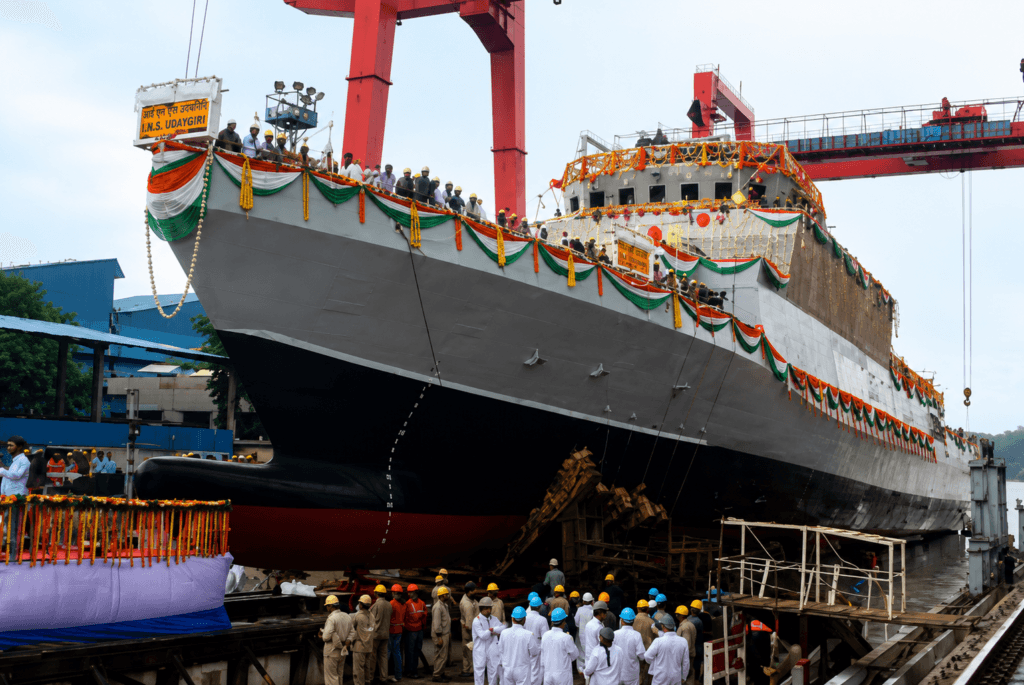
A conceptual view of a modern shipbuilding cluster and repair facility in Gujarat, a big push for India’s maritime sector.
The Union government has approved a major thrust for maritime development in Gujarat with a greenfield shipbuilding cluster in Porbandar and a major ship repair facility at Vadinar. The initiative is aimed at strengthening India’s domestic shipbuilding capability, building industrial infrastructure and making Gujarat a vital hub in the country’s maritime future.
The Porbandar project is being developed under the Greenfield Shipbuilding Development Scheme and will be implemented through the National Shipbuilding and Heavy Industries Park-Gujarat, a Special Purpose Vehicle promoted jointly by the Ministry of Ports, Shipping and Waterways and the Gujarat Maritime Board. Meanwhile, the Vadinar plant is being marketed as a strategic repair hub that could cut India’s reliance on foreign shipyards. Yeh development kaafi important hai because it brings manufacturing, jobs aur strategic capacity ko ek saath le aata hai.
What The Porbandar Cluster Includes
The Porbandar cluster for shipbuilding will come up on around 2,000 acres of land at Kuchhadi in Gujarat’s Porbandar district. The integrated maritime manufacturing zone will have modern shipyards, ancillary manufacturing units, common infrastructure and capability development centers, the ministry said.
It is not only a question of building ships. It’s about building a whole ecosystem where vessel construction, technical support, component manufacturing, and workforce training are all done together. Such a cluster-based model can improve efficiency and reduce costs over time, which is exactly what India needs to be competitive at the global level in heavy industry.
The project has been designed to produce large commercial vessels of 1.2 million to 1.5 million gross tonnage per annum. Thus, the site may emerge as a major player in the building of large ships, helping India to expand its industrial base in an area where there is still plenty of room for growth.
Vadinar Ship Repair Facility
The second big nod is for a Rs 1,570 crore ship repair facility in Vadinar. The project, which has already been cleared by the Union Cabinet, will be jointly developed by Deendayal Port Authority and state-owned Cochin Shipyard.
The scheme provides for government support at 25 percent of the capital infrastructure cost, making it a major policy-backed industrial investment. When it opens, the facility will be able to repair vessels up to 300 meters in length, putting it among the country’s top ship repair centers.
This is particularly important because large commercial vessels often need to be shipped overseas for repair. India can do those jobs at home, saving time and cost and building domestic maritime capability. That is a big step for a country that wants to be more self-reliant in strategic infrastructure.
Why The Projects Matter
The approval of these projects is important, because maritime manufacturing is an important but often overlooked part of national development. Ships are important for trade, energy transport, logistics and defense support, so improvements in this sector can have benefits far beyond Gujarat. Check out here for more latest news from all over india.
A strong cluster of shipbuilding can generate direct jobs in engineering, fabrication, logistics, design and support services. It also indirectly creates employment for suppliers, transporters and service providers in neighboring towns. That means more business activity and more opportunities for local communities over time. Yeh sirf ek industrial project nahi hai, बल्कि ek larger economic ecosystem create karne ki कोशिश hai.
Ministerial View
The next phase is to unleash the entire potential of India’s maritime industry with minimum governance, better competitiveness and enhanced efficiency so that the sector can be a key driver of Viksit Bharat, Shipping Minister Sarbananda Sonowal said.
That statement reflects the government’s broader ambition. Maritime infrastructure is increasingly not just a port issue but a national growth issue. In this sense, when the government speaks of Viksit Bharat, it is basically connecting shipbuilding to manufacturing, exports, supply chains and long-term industrial strength.
Background And Context
India has traditionally relied on a combination of domestic and overseas maritime support systems. The country has strong ports and a growing shipping network but needs to expand its shipbuilding and repair capacity to become more competitive globally. That bigger push includes projects such as in Vadinar and Porbandar.
Given its coastal advantage, industrial base and port connectivity, Gujarat has emerged as a natural location for such investments. The state is already a significant player in India’s logistics economy with its strong maritime geography and port-linked infrastructure. These new approvals add to that existing strength and could make Gujarat even more central to India’s maritime strategy.
How the Porbandar Shipbuilding and Vadinar Repair Projects Will Roll Out
Recently, the Ministry of Ports, Shipping and Waterways approved the greenfield shipbuilding cluster in Porbandar.
Alongside this, the Rs 1,570 crore ship repair facility in Vadinar receives support under the same scheme.
Next phase: Infrastructure development, land planning, and project execution begin through the SPV and partner agencies.
Future stage: The facilities are expected to contribute to domestic shipbuilding, repair capacity, and maritime manufacturing.
This timeline suggests that the projects are the start of a larger industrial cycle. Approvals are the beginning, but it will be execution that determines the real impact.
Why This Matters
This is important because India’s maritime sector is a direct link between industrial growth and national self-reliance. The ability to build and repair ships locally saves foreign exchange, improves turnaround time and creates skilled jobs in the country.
It matters, too, because big infrastructure projects like these often have a multiplier effect. Once a shipbuilding cluster is formed, it tends to attract vendors, training institutions, logistics services and allied industries. That means the economic impact can spread far beyond the project site itself. Yeh issue kaafi important hai because strong maritime capacity is essential for a trading nation like India.
Gujarat’s Role in India’s Maritime Manufacturing Push
For Indian readers, the primary takeaway is that this project reinforces one of the country’s most strategic industrial sectors. India is a major maritime country with a long coastline, and the need for domestic ship-building and ship-repair facilities continues to be pressing. The approvals are an indication that the government is trying to bridge that gap. My external source has covered this story before.
For Gujarat in particular, the development adds another layer to the industrial identity of the state. Beyond ports, logistics and petrochemicals, the state is now being projected more visibly as a maritime manufacturing hub. That can add jobs and better connectivity in coastal districts, always welcome in a state with such strong industrial aspirations.
What the Shipbuilding Push Means for India’s Maritime Future
The Porbandar and Vadinar projects are linked strategically. One adds to the shipbuilding capacity; another adds to the repair capability. Together they create a more comprehensive maritime industrial chain – exactly what India needs if it is to lessen its reliance on external service providers.
The cluster model is important too. The government is encouraging an integrated ecosystem, not stand-alone factories or facilities. That tends to work better, as it reduces duplication, improves coordination and helps smaller suppliers integrate into the bigger value chain. This is a smarter and more sustainable approach in terms of industrial policy.
There’s also a geopolitical angle. Maritime capability is crucial not only for commerce but also for strategic autonomy. A country that can build and repair large vessels on a large scale is in a better position to support its trade and logistics networks. In that sense these approvals are not simply about ships; they are about industrial resilience.
What Happens Next for Gujarat’s Shipbuilding Push
Next up is project planning and coordination of land use and infrastructure development at the two sites. The NSHIP-Gujarat SPV is likely to be instrumental in taking the Porbandar cluster from approval to physical reality.
For Vadinar, execution with Cochin Shipyard and Deendayal Port Authority would be the key focus. If built as designed, it could quickly become a major center for large vessel repair. In the long run, allied industrial investment in India and greater private participation in these maritime zones could also be on the cards.
Conclusion
The Centre’s nod for a greenfield shipbuilding cluster in Porbandar and a major ship repair facility in Vadinar is a big leap forward in India’s maritime future. Such projects will enhance the domestic manufacturing, reduce the dependence on foreign repair yards and build up the long-term industrial capacity in Gujarat.
More importantly, they mark a wider shift in the nation’s perception of maritime infrastructure—not just a narrow port issue but a strategic engine for growth. Done right, these projects could be major anchors in India’s drive for a more muscular, more self-reliant industrial economy.
–Written by A. Aisha–