
An outbreak of hantavirus on a cruise ship has killed three passengers and made others ill. Officials are tracing contacts made by about 40 passengers who got off the ship on the island of St. Helena in the South Atlantic. Dutch officials say the investigation is expanding as more information emerges about who left the vessel and where they went next.
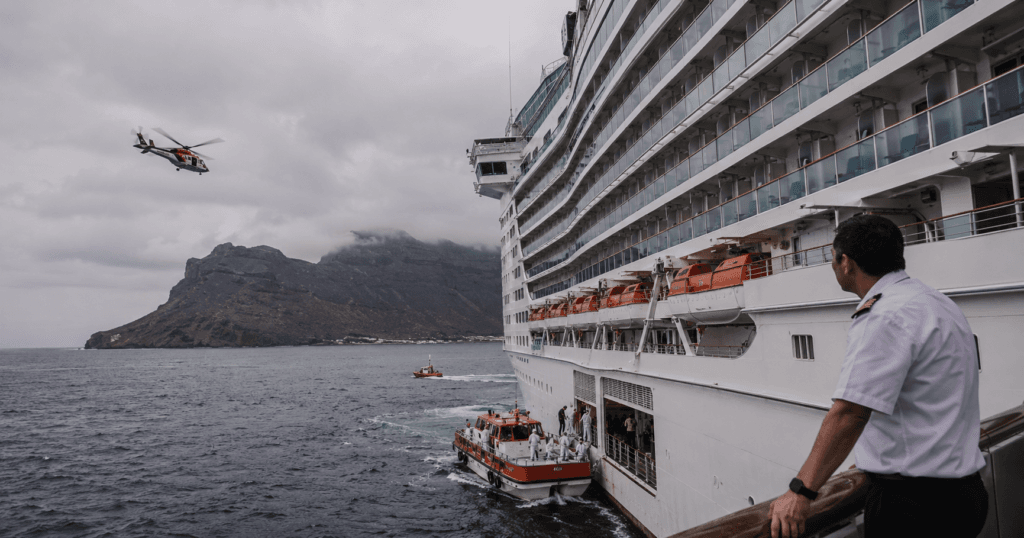
A cruise ship is under investigation after a hantavirus outbreak caused passenger deaths, medical evacuations, and disembarkations at St. Helena and other ports.
Dutch officials said about 40 passengers got off at the remote South Atlantic island of St. Helena during the voyage, bringing international attention to a deadly hantavirus cruise ship. That comes on the back of the death of the first passenger, with authorities still tracking down possible contacts and trying to establish the whereabouts of any travelers who may have been affected.
The situation is now even more worrying because several passengers disembarked at different ports, and some have since traveled to other countries. That means health officials are now dealing with not just an outbreak at sea, but a potential scenario of cross-border spread that makes contact tracing a lot more complicated.
How the Hantavirus Outbreak Unfolded on the Cruise Ship
Among those who disembarked at St. Helena was the wife of a Dutch man who died during the outbreak, Dutch officials said. The cruise company had earlier said she left the ship there with her husband’s body, then flew to South Africa on a commercial flight, where she died after collapsing at an airport in Johannesburg.
The company did not immediately say whether other passengers also got off at St. Helena. But Dutch authorities later said that about 40 passengers had actually disembarked on the island after the first death, suggesting the outbreak may be wider than originally reported. Times of India has also covered this story.
A separate case has also surfaced involving a man who later tested positive for hantavirus in Switzerland after disembarking at St. Helena and flying home. His exact travel route remains unclear, but the case adds to concerns that infected passengers may have traveled widely before the outbreak was fully understood.
How The Situation Escalated
“As the ship continued its journey, the outbreak seemed to have unfolded in stages. Then the first fatality, alarming. Then there were a number of disembarkations, including passengers who went ashore at St. Helena, a British territory in the South Atlantic.
A British man was evacuated from the ship to South Africa from Ascension Island a few days later, the cruise company said. Three more people, including the ship’s doctor, were also evacuated near Cape Verde and flown to Europe for treatment Wednesday.
This pattern demonstrates how quickly a medical problem at sea can become an international public health issue. Once passengers disembark from a ship and travel through multiple airports and countries, it’s a lot harder to track the chain of exposure. This is very important because it shows how one outbreak can cross borders in a matter of days.
Hantavirus Outbreak Background and Timeline
Hantavirus is a serious viral infection that can be deadly, depending on the strain and how quickly it is treated. It is often associated with rodents, though the exact source in this cruise outbreak has not yet been publicly confirmed in the information provided.
So here’s the timeline so far:
Earlier in the voyage: The first passenger to die, on board the ship.
A stop at St. Helena: Some 40 passengers disembarked, including the wife of the dead Dutch passenger.
Later: The woman flew to South Africa and died after collapsing at Johannesburg airport.
Later: Hantavirus diagnosed in Switzerland in a man who, like the others, had also come off at St. Helena.
A few days later: A British passenger was flown from Ascension Island to South Africa.
On Wednesday, three more people, including the ship’s doctor, were evacuated near Cape Verde and taken to Europe.
This timeline suggests a spreading outbreak with many locations being impacted, which is why officials are now frantically trying to trace passengers and contacts.
Read Also: Hantavirus Infection: Symptoms, Risks, Prevention and Medical Facts You Must Know
Authorities Trace Passengers as Hantavirus Probe Widens
Dutch authorities are now trying to trace the whereabouts of passengers who disembarked from the ship to see if they may have infected others. This step is critical as the ship’s route crosses multiple jurisdictions, each of which may need to coordinate testing, monitoring, and travel history review.
The cruise company has also been issuing updates on evacuations and passenger movements, but some details remain unclear. Outbreaks, particularly at sea, often mean the public gets partial information first, followed by more complete information as authorities and operators put together what happened.
From a public health standpoint, officials are likely to examine contact tracing, medical monitoring, and any links between the confirmed deaths and the infected passengers. Containment, though, is the immediate priority—not just on the ship, but in the countries to which disembarked travelers went.
Why the Hantavirus Cruise Outbreak Matters
This outbreak is important because it shows how quickly a disease event on a cruise ship can become a global health concern. Many cruise passengers pass through airports, hotels, and other transit hubs after disembarking a ship, so one infection could spread to many more people.
It is also important because the illness has already resulted in three deaths, making this more than a routine onboard medical incident. When deaths occur, public attention rises sharply, and so does the need for transparency from both the cruise operator and health authorities.
This serves as a reminder to travelers that cruise holidays are not exempt from public health risks. Many Indian travelers take international cruises, and such outbreaks can affect returning passengers, airport screening, and travel advisories. The story is relevant for India.
India-Focused Travel Alert
Such warnings should be of particular interest to Indian travelers who use cruise services in Europe, the Middle East, or on the high seas. But even if the outbreak is far from India, the ripple effects can still matter since passengers often connect through major airports and long-haul routes.
It’s not only a cruise problem, in simple terms. It is also a reminder that global travel is closely connected and a health issue in one region can quickly raise concern elsewhere. Indian families planning for cruise holidays may now pay more attention to health protocols, onboard medical support, and evacuation readiness.
The story also highlights the increasing significance of travel medicine and public health awareness. Passengers should be told what symptoms to look for, and operators should have clear procedures to isolate sick travelers without causing panic.
Outbreak Analysis and Passenger Tracking
What is most striking about this case is not just the number of deaths, but how far the passengers moved after the first death. Once a person lands in a remote territory and then moves on to another country, the investigation becomes much more difficult.
This kind of issue particularly affects cruise ships due to the close quarters, shared facilities, and multiple ports of call. If an infectious disease is not identified early, the ship can become a moving chain of exposure. That’s why public health experts tend to emphasize early reporting, quick testing, and tight medical controls on board.
This case also illustrates the difficulties of communication. The cruise company did not specify in an earlier description that everyone disembarked at St. Helena, but Dutch officials later said about 40 passengers disembarked there. Such gaps can create confusion in the coverage of outbreaks, so clarity and speed are very important.
What’s Next for the Cruise Ship Hantavirus Epidemic
The next step will likely be a full tracing operation involving passengers, crew, and anyone who came into contact with the disembarked travelers. Authorities may also expand testing and monitoring in countries where passengers landed after leaving the ship.
Officials are examining travel records and lab results, and more medical evacuations or more confirmed cases could come. “Having full details of the ship’s route and stopovers could give some insight into the timeline, which could then help determine how the outbreak spread and where exposure may have occurred.”
Follow-up also can include a review of the cruise line’s health protocols. If the outbreak wasn’t detected quickly enough, operators and regulators could be challenged on onboard screening, reporting and communication with passengers
Conclusion
The hantavirus outbreak aboard the cruise ship has become a major international health story, with three deaths, a number of illnesses, and a complex trail of passenger disembarkations in several countries. The tracing of these 40 or so passengers who disembarked at St. Helena has become much more urgent.
Officials are now working to locate passengers and assess contacts, with the emphasis on containment, clarity, and medical follow-up. The episode serves as a stark reminder that in an age of travel, a health crisis at sea can rapidly become a cross-border public health challenge.