
Iranian commandos have seized the sanctioned oil tanker Ocean Koi in the Gulf of Oman following escalating military tensions with the United States near the Strait of Hormuz. The incident has pushed global oil prices higher and raised fears of a wider Middle East conflict.
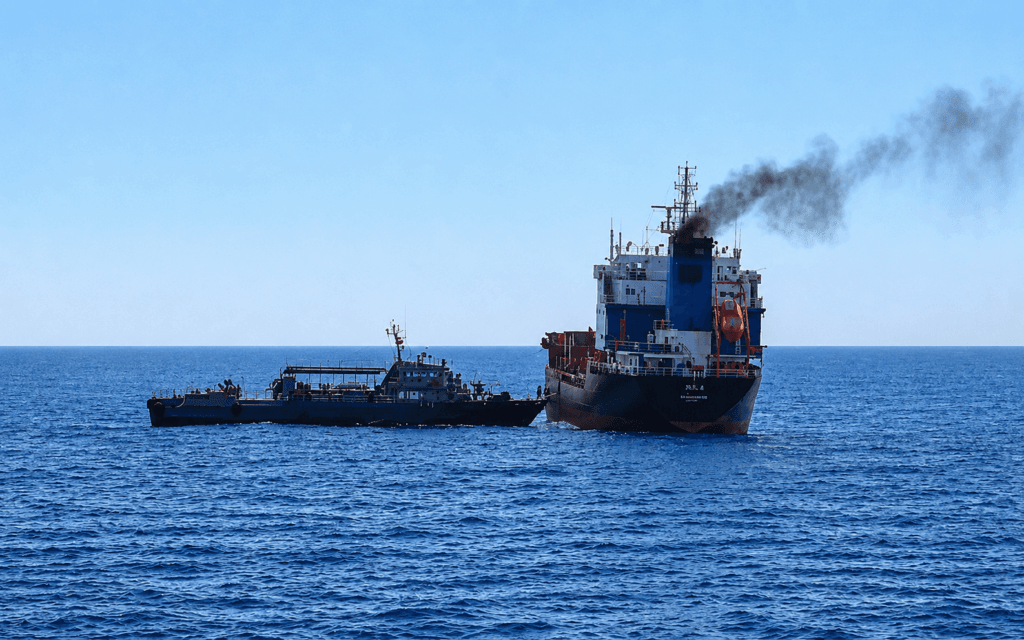
Iran has seized an oil tanker flying the Barbados flag in the Gulf of Oman, which is called “Ocean Koi” or “Jin Li.” A major geopolitical crisis is brewing in the Middle East. Iranian sources said the ship was involved in efforts to disrupt Iran’s oil exports amid rising tensions in the region. The ship has been sanctioned by the U.S. OFAC since February, according to reports.
This has occurred at a time of direct military clashes between the Iranian military and US forces in the vicinity of the strategic Strait of Hormuz. Iran’s military reportedly launched missiles and drones at three US warships in the region, prompting counterstrikes by US forces on Iranian military bases.
The immediate effect of the situation is being felt across the global energy markets. Brent crude oil prices are on track to top $100 a barrel as fears mount over disruptions to one of the world’s busiest shipping lanes.
Iss se yeh kaafi important ho gya hai kyunki yeh shakhsiyat mein Iran aur US ke beech kii baat nahiiN hai, balkii iss se fuel prices mein badloot ho saktii hai aur bhi sab jagahon mein.
What Happened?
As per the reports released by the local media, the Iranian Army Commandoes detained the Ocean Koi that was sailing through the Gulf of Oman during the event. Additionally, the Iranian government claims that the ship was engaged in acts involving sanction violation and disruption of oil business in Iran.
The authorities said their measures were a response to what they called “economic aggression” against Iranian. The ship was sanctioned by the US for transporting oil in networks where the trade was illegal.
The incident occurred in the vicinity of the Strait of Hormuz, a strategically vital area through which as much as 20 percent of the world’s daily oil production passes.
How did this crisis develop and why?
Military Conflict Between US and Iran
Tensions further escalated after reports said the military clash between the two nations had become more serious. Iran fired drones and missiles at US navy ships near Hormuz.
The US retaliated with counterattacks, bombing Iranian bases believed to be used for missile launches and their radar system. The exact number of casualties is still unclear, but many observers consider this the most serious conflict in recent times.
The importance of Hormuz.
Hormuz is one of the world’s most strategically important straits. This water body is a major source of water to oil-producing countries like Saudi Arabia, Iraq, Kuwait, and the UAE.
Should shipping activities be delayed or stopped, this may lead to:
Increasing oil prices
Lack of fuel
Rising transport costs
world market inflation
Statements
The Iranian state-controlled press made a justification of the tanker arrest, saying that Iran has a right to secure its own economy against sanctions imposed by other countries.
A Middle East security expert said:
“Iran wants to make it clear that pressure on its oil exports may lead to certain consequences for international shipping in the region.”
At the same time, international ship owners are growing more apprehensive regarding their security in the Gulf region.
As one of the maritime experts put it:
“The costs of insurance of tankers traveling near Hormuz may go up dramatically if things keep deteriorating.”
Background and Context
Historic Rivalry between Iran and the US
There has always been political and military rivalry between the US and Iran for several decades. The relations got worse following the decision of America to pull out from the Iran nuclear agreement and impose harsh sanctions on Iran’s oil and financial sector.
Iran has often complained about the attempts by the US to damage its economy using such methods as economic sanctions and energy embargo.
History of Tanker Seizures in the Gulf Region
The seizing of oil tankers is nothing new to this region. It was observed previously when there were differences among nations on sanctions against certain countries or issues like oil exports and regional stability.
Some examples of these incidences are the following:
Seizing of foreign oil tankers
Attacks by drones on oil facilities
Conflicts between navies in the Gulf waters
Sabotage activities
Also read : ICE Arrests Shocker: Indian Man In Child Abuse Case, Another In $60,000 Theft; Both In US
Timeline of Events
| Date | Development |
|---|---|
| February 2026 | Ocean Koi reportedly placed under US sanctions |
| Early May 2026 | Increased naval activity observed near Hormuz |
| Recent Days | Iranian missiles and drones reportedly target US warships |
| Following Retaliation | US strikes Iranian launch sites |
| Latest Development | Iran seizes Ocean Koi in Gulf of Oman |
Why This
Concerns
Increasing Costs of Oil
A direct and immediate result is an increase in the prices of oil across the world. The price of Brent crude hovering around the level of $100 per barrel creates anxiety in both governments and industries.
Higher cost of oil will result in the following:
High price of petrol/diesel
Increasing transportation costs
Higher ticket prices for airlines
Pressure on inflation for consumers
Threat to Global Trade
The Gulf region is one of the major shipping routes in the world. An escalation in tensions would cause a decline in global cargo traffic.
Danger of Wider War
Another danger is that an actual fight between Iran and the United States could lead to wider war involving other Gulf nations and international alliances.
Yeh situation dangerous isliye bhi hai that even a minor military escalation in the Gulf could cause trouble in the world economy.
India Point of View
India has close economic ties with the Gulf region through imports and commerce. A significant amount of oil consumed by India is imported from Middle Eastern countries.
If the crisis persists:
Prices of petrol/diesel in India would increase
Higher risk of inflation
Pressure on aviation and transportation sector
Fluctuation in Indian stock market
Analysis
Taking an international relations view of the issue, it is apparent that the action by Iran is a strategy to put more pressure on America and its allies.
Some of the key issues here include the following:
First, Iran is displaying power strategically.
Iran’s action regarding the shipping route near Hormuz sends a message that Iran holds significant influence over a vital global passage.
Second, oil markets are very sensitive.
Just the mere thought of any potential disruption in the area sends ripples across crude oil markets.
Third, the economies of nations could be affected.
There could be repercussions to the economy of nations relying on imports of their fuel sources, such as India.
Fourth, there is increased risk diplomatically.
Failure of diplomacy would only escalate into further military conflict.|
What Happens Next?
A few possible scenarios that might unfold in the coming weeks include:
The US is increasing its naval presence in the Gulf area.
Iran might decide to enforce maritime law.
Oil prices could stay unpredictable.
Diplomacy might come into play with international mediators stepping up.
Shipping companies might alter shipping lanes or hike their prices.
All this depends on the decisions that each side makes.|This story also covered by oilprice.com
Conclusion
The seizure by Iran of the Ocean Koi, a sanctions-hit tanker ship, has added more fuel to the dangerous tensions already existing between Tehran and Washington. In the wake of missiles and drones being shot near the Strait of Hormuz, the situation has caused concerns about an escalated conflict as well as major upheavals in international oil markets.
Gulf countries continue to be among the strategically vital regions in the world; therefore, anything that happens there immediately impacts global oil markets.
The current crisis has special relevance for India because of its high reliance on crude oil from the Gulf as well as close economic relations with Gulf states.
At this stage, all eyes are keenly fixed on how things will unfold; whether the situation will settle down peacefully or worsen is going to determine future trends in the oil market in the months ahead.
“Yeh sirf regional tension nahi hai — this has now turned into a global economic issue involving millions of people around the world.”
Written by M.A.Arif