As due to heatwave temperatures soar past 44°C, states across the country are taking urgent measures to safeguard students, ranging from early morning shifts to complete temporary closures.
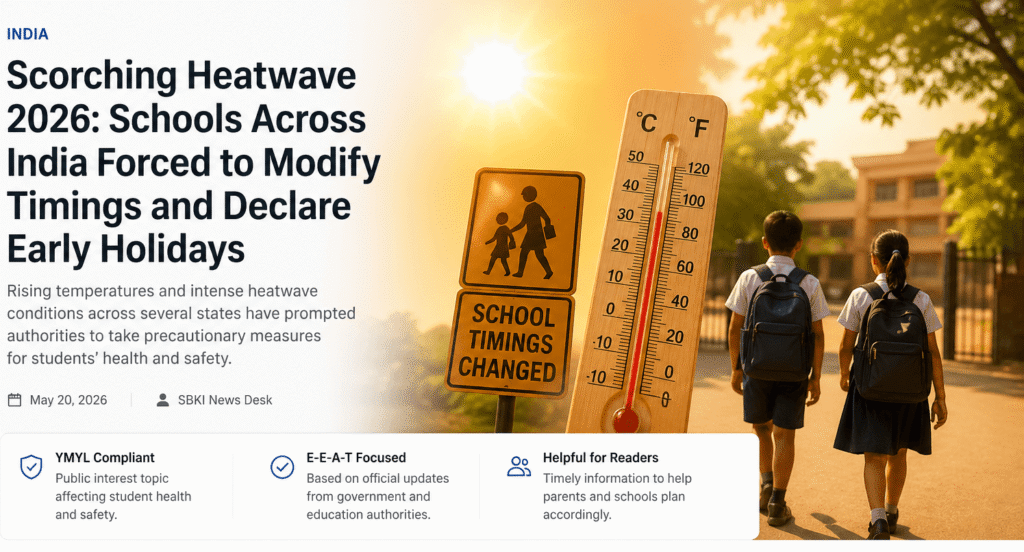
Students facing the brunt of the record-breaking 2026 summer heatwave as schools implement urgent safety modifications.
Summer 2026 has turned out to be among the toughest that we have had recently. In a major portion of the country, temperatures seem to be persistently sticking over 44 degrees, making life tough for everyone, especially school-going kids.
With conditions worsening day-by-day, all state and district governments are making desperate attempts to ensure the safety of students. Whether it means rescheduling class timings, providing ORS, or even closing down the school in certain areas, efforts are being made to ensure that there are no heat-induced illnesses.
Right from Delhi NCR, Patna, and Dehradun, the aim is the same: बच्चों की सुरक्षा सबसे पहले.
Why Schools Are Changing Their Routine
The reason behind these sudden changes is simple—extreme heat is dangerous, especially for children.
Young students are more vulnerable to dehydration, heat exhaustion, and even heatstroke. When temperatures cross 44°C, sitting in classrooms without proper cooling becomes risky. That’s why many states have decided to act early instead of waiting for emergencies.
In states like Uttar Pradesh, Rajasthan, Jharkhand, Maharashtra, and Odisha, schools have shifted to early morning schedules. Many are now operating between 6:30 AM and 11:30 AM so students can return home before the afternoon heat peaks.
In Delhi-NCR, authorities are following the Heat Action Plan 2026. Schools are introducing simple but effective steps like the following:
“Water Bell” systems to remind students to stay hydrated
Strict ban on outdoor activities between 11 AM and 4 PM
Meanwhile, places like Dehradun have taken a stricter route by shutting schools and Anganwadi centers until conditions improve.
What Experts Are Saying
Officials and experts are united on this issue—no learning is more important than a child’s health.
A district official recently said,
“The safety of our children is our top priority.”
Education experts also believe that studies cannot continue properly if students are physically uncomfortable or at risk. Health professionals strongly advise avoiding direct sunlight during peak hours, especially for kids.
Also read : Food Poisoning in Mumbai Claims 4 Lives from One Family After Biryani and Watermelon Meal
A Trend That’s Starting to Worry Everyone
Schools have always faced the brunt of bad weather before, but this year is shaping up to be unique.
The impact of this heatwave has brought about some of the toughest climate-related problems of recent times. There have been increasing disruptions in the calendar for educational institutions.
Quick Timeline of Recent Decisions
April 20, 2026: Chhattisgarh extends summer vacation till June 15.
April 22, 2026: West Bengal announces early summer holidays
April 24, 2026: Tripura declares a school break till May 1.
April 27, 2026: Patna schools (Classes 1–8) shift timing till 11:30 AM.
April 28, 2026: Multiple states continue emergency heat measures
Ground Reality: Not All Schools Are Equal
One big challenge is infrastructure.
While the private schools in urban centers might do well without air conditioning with fans and coolers, many of the government schools, particularly in rural and semi-urban regions, don’t enjoy the same comfort.
Going to school in such conditions is not just difficult but also dangerous for the children.
Therefore, there should also be focus from the local authorities on:
Provision of drinking water and ORS
Creating awareness through WhatsApp groups and social media
Informed parents through clear communication
Why This Situation Matters
This heatwave is not just a weather issue—it’s a wake-up call.
It highlights the urgent need to upgrade school infrastructure across India. Better ventilation, cooling systems, and climate-ready buildings are no longer optional—they are necessary.
Otherwise, every year we may end up relying on early closures and disrupted schedules.
What Could Happen Next?
All eyes are now on the India Meteorological Department (IMD). If temperatures continue to rise, a few things are likely:
More states may announce full school closures.
Schools might shift towards hybrid or online learning during peak heat.
There could be serious policy discussions about climate-proof school infrastructure before the next academic year.
Final Thoughts
The 2026 heatwave is testing how prepared we are for extreme climate conditions. While the situation is tough, the quick response from authorities shows a strong commitment to student safety.
Yes, school routines are being disrupted—but these decisions are being made to protect lives.
Because at the end of the day, no lesson is more important than a child’s well-being. A Trend That’s Starting to Worry Everyone
Schools have always faced the brunt of bad weather before, but this year is shaping up to be unique.
The impact of this heatwave has brought about some of the toughest climate-related problems of recent times. There have been increasing disruptions in the calendar for educational institutions. As communities grapple with these challenges, educators and parents alike are seeking innovative solutions to ensure that learning continues uninterrupted. The focus is shifting towards creating more resilient infrastructures and adapting curricula to better prepare students for the realities of a changing climate. This story is also covered by education. sakshi
Written by M.A. Arif