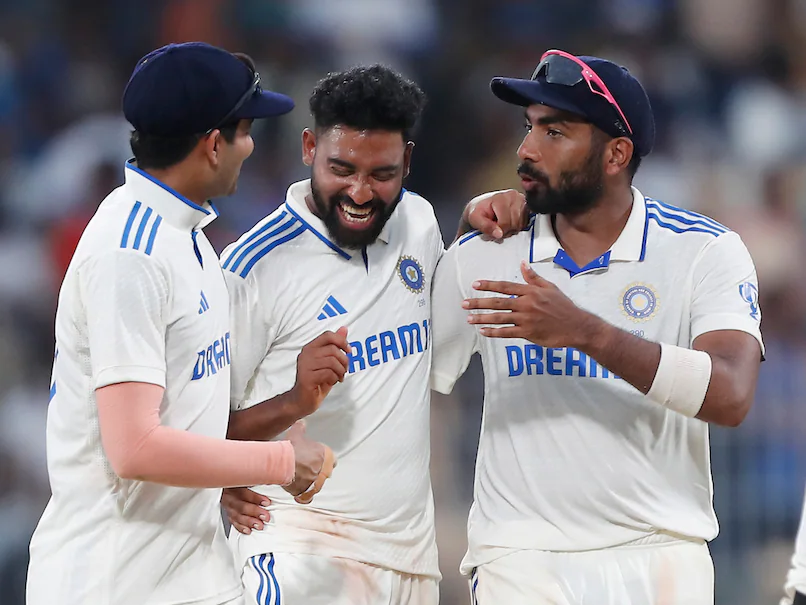
Ireland recovered from a collapse of 51 for 4 to post a competitive total and kept pecking away at regular intervals as India buckled under the pressure. It was a famous win for the hosts and brought up fresh questions about India’s batting balance in the series opener.
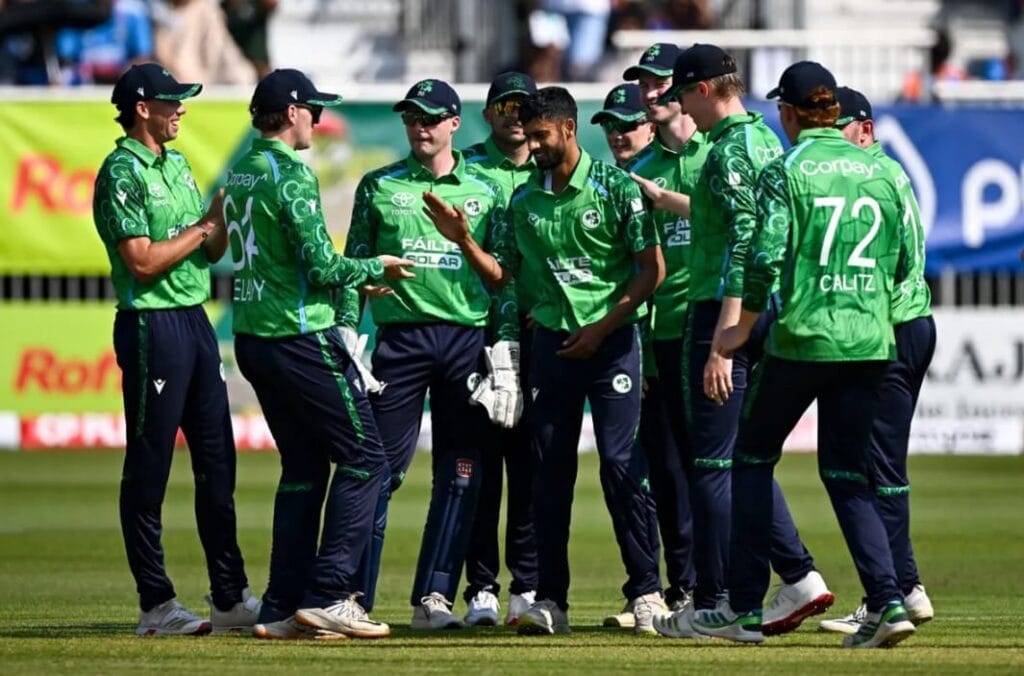
Ireland players celebrate after pulling off a historic 34-run victory over India in the first T20I in Belfast. Image Credit: ESPNcricinfo
Ireland produced a landmark performance on Friday in Belfast, defeating India by 34 runs in the opening T20I of the two-match series and registering their first-ever win over India in men’s international cricket. The match was played at the Civil Service Cricket Club, where Ireland overcame a shaky start with the bat to reach 182-9 before bowling India out for 148 with seven balls remaining. For India, it was a disappointing return to bilateral action after winning a second successive T20 World Cup in March, while for Ireland, it was a night of history, resilience and belief.
This was not just another upset. It was a reminder that in T20 cricket, momentum can shift quickly and reputation alone does not win matches. Ireland stayed alive after early damage, kept the pressure on with the ball, and capitalized on India’s collapse when it mattered most. Yeh result kaafi important hai because it shows how a smaller cricketing nation can still beat a heavyweight if it stays disciplined and fearless.
How Ireland Won the Match
Ireland’s victory was built on two key phases: recovery with the bat after early trouble and relentless wicket-taking with the ball. After slipping to 51-4, they were in danger of being bowled out cheaply. Instead, they regrouped and reached 182-9, a total that proved far more competitive than it first seemed. NDTV Sports has covered the full story.
The recovery was driven by contributions from Ireland’s middle and lower order, especially Gareth Delany, who finished with a powerful 49 off 32 balls, and captain Lorcan Tucker, who made 50 off 35. Tucker’s innings was particularly important because it stabilized the innings after the early wickets and gave Ireland a platform. Delany then provided the late surge, including three consecutive sixes off Prasidh Krishna, which changed the tone of the innings in the final overs.
With the ball, Ireland stayed disciplined and attacked India’s top order at regular intervals. India lost three wickets in the powerplay, and although Abhishek Sharma played a blazing cameo of 49 off 20 balls, the rest of the batting order could not keep up the scoring rate. No other Indian batter crossed 25, which tells the story of a batting unit that depended too heavily on one aggressive start.
Ireland’s bowlers were the real story. India-born left-arm quick Jai Moondra and medium-pacer Matt Hollard shared five wickets and triggered major damage. Moondra removed Sanju Samson with his first delivery and later dismissed Shivam Dube, while Hollard struck with his second delivery to get Ishan Kishan and later removed Shreyas Iyer and Washington Sundar. Matthew Humphreys added three wickets and even finished the game despite injuring his hand while attempting a difficult catch-and-bowl chance. That kind of effort sums up the spirit Ireland brought into the match.
India’s Collapse and Key Missed Moments
India’s chase started with energy but did not sustain itself. Abhishek Sharma’s explosive 49 off 20 balls kept the chase alive for a while, but once he fell, the innings lost shape. India were unable to build partnerships, and wickets kept falling at the wrong time.
That is the big tactical lesson from the match: one good powerplay does not guarantee a successful chase if the middle order fails to absorb pressure. India’s top and middle order were repeatedly disrupted by Ireland’s mix of pace, movement and smart field placements. The scoreboard pressure grew quickly because the required rate kept climbing while wickets kept falling.
There were also a few fielding lapses that mattered. Axar Patel had chances to remove Lorcan Tucker and Gareth Delany earlier, but both were dropped. Those missed opportunities proved expensive because Tucker went on to score 50 and Delany nearly pushed Ireland beyond 180 on his own. In T20 cricket, one dropped catch can be the difference between chasing 165 and 183. Here, that difference was huge.
India’s effort was also affected by a somewhat experimental team combination. The side rested 15-year-old wonderkid Vaibhav Sooryavanshi, whose debut had been heavily anticipated after his standout IPL performances. Shreyas Iyer explained that India were backing players who had already done well and said Sooryavanshi would get his chance. That decision was understandable, but it also meant India were not fielding their most explosive possible combination in a match that still required strong finishing power.
Background and Context
This was India’s first match since their second successive T20 World Cup triumph in March, so expectations were high even before the first ball. The return to bilateral cricket always brings fresh scrutiny because the focus shifts from tournament success to rebuilding rhythm, experimenting with combinations and maintaining winning standards.
For Ireland, this match carried a completely different emotional charge. The side was missing five front-line players through injury, and Lorcan Tucker had to lead them in difficult circumstances. Despite that, they remained brave, stuck to their plans and produced one of the biggest wins in their recent history.
The significance of the result is even greater because it was Ireland’s first-ever win over India in men’s international cricket across formats. That alone makes it a landmark result, not just a strong one. In cricket, some wins become part of national memory, and this one will be remembered in Ireland for a long time.
Timeline
Toss and start: Ireland bat first in Belfast.
Early innings: Ireland slips to 51-4 after India makes early inroads.
Middle and late overs: Tucker and Delany rebuild and push the total to 182-9.
India’s chase begins: India loses wickets in the powerplay despite a quick start.
Abhishek Sharma’s cameo: He scores 49 off 20 and keeps India in touch.
Middle-order collapse: Ireland’s bowlers keep striking, with Moondra, Hollard and Humphreys sharing the damage.
Final overs: India are bowled out for 148 with seven balls left.
Result: Ireland wins by 34 runs and makes history.
Also Read: Vaibhav Sooryavanshi’s 11-Ball Fifty and 29-Ball 94 Power India A to Tri-Nation Series Glory
Reported Quotes and Statements
Shreyas Iyer said after the match that India would not forget what happened and that there was a lot to learn from the game. He also promised that the team would come out “all guns blazing” in the next match. That is the kind of response fans usually want after an upset — honest, direct and focused on improvement.
Iyer also defended the decision to leave out Vaibhav Sooryavanshi, calling him a “gun player” while saying India were backing the players who had already delivered and that the youngster would get his chance. That statement matters because it shows the management is still managing expectations around a highly hyped teenager.
Ireland captain Lorcan Tucker described the win as “pretty special” because it came against the world champions at home. He said his team had scrapped through tough periods but stayed diligent. That quote captures exactly what the match was about: not perfection, but persistence.
Why This Matters
This matters because it is one of the biggest upset results in recent T20 cricket involving a top-ranked side and a developing cricket nation. India does not lose to Ireland often—in fact, this was their first defeat to them in men’s international cricket—so the result will attract attention well beyond the scorecard.
It also matters because it reminds everyone that T20 cricket is brutally unforgiving. A strong start, a famous name or a recent trophy does not guarantee success. Yeh issue kaafi important hai because one poor middle-order phase or one missed catch can change an entire match.
For Ireland, this win is a confidence booster and a statement that they can compete with major teams when they play smart, fearless cricket. For India, it is a useful wake-up call at a time when they are expected to dominate more often than not. In global cricket, these moments shape selection debates, strategy and public expectations.
India Angle
For Indian fans, this loss will feel especially frustrating because the team had just come off a major T20 World Cup title run. The expectation was that India would continue that winning momentum, even in a two-match series in Belfast. In Hinglish, seedhi baat yeh hai: world champions hone ke baad bhi basics miss karoge, to opposition mauka le lega.
There is also a domestic angle because fans are watching the next generation closely, especially someone like Vaibhav Sooryavanshi. His omission generated discussion, and now the focus will shift to whether India’s mix of youth, rest and rotation is working as intended. Indian cricket is always under the microscope, and every upset becomes a wider conversation about depth, preparation and selection.
This result will also resonate with Indian fans who enjoy underdog stories. Ireland beating India at home is the kind of cricket upset that gets talked about in offices, on social media and in family group chats. It is a reminder that cricket remains beautifully unpredictable.
Analysis
My view is that India was undone by two things: poor middle-order stability and not enough support for Abhishek Sharma’s explosive start. The chase never fully settled after the powerplay, and Ireland kept applying pressure with smart bowling changes. That is often enough to bring down even a strong side.
Ireland deserves a lot of credit because they played with clarity. They did not overthink the moment and the debutants produced exactly the kind of impact every side hopes for. Moondra and Hollard gave the attack teeth, Humphreys closed the game, and the batting effort was just enough. That balance is what made the upset possible.
From a broader cricket perspective, this match reinforces how narrow the gap can be in T20s when a smaller team executes well and a stronger team is slightly off. India will likely bounce back, but the result will remain a useful reminder that no opponent can be taken lightly.
What Next
The two teams will meet again in the second and final T20I on Sunday at the same ground. India will likely look to respond with a stronger batting performance and perhaps a more settled XI, while Ireland will try to carry the confidence from this historic win into the series finale.
After that, India will travel to England for a five-match series, so this defeat may also influence selection and planning. For Ireland, the challenge will be to sustain momentum and turn one famous victory into a stronger series performance.
For both sides, the next match is about control. India needs to reassert their quality, while Ireland will want to prove that this was not a one-off. That makes Sunday’s game even more interesting.
Conclusion
Ireland’s 34-run win over India in Belfast was a landmark result, not just a good day at the office. It was Ireland’s first-ever victory over India in men’s international cricket and a night when their debutants, captain and bowling unit all rose to the occasion. India will see this as a painful but useful lesson after a batting collapse and some missed chances in the field. In T20 cricket, reputations matter less than execution—and on Friday, Ireland executed better.
Written By A. Jack