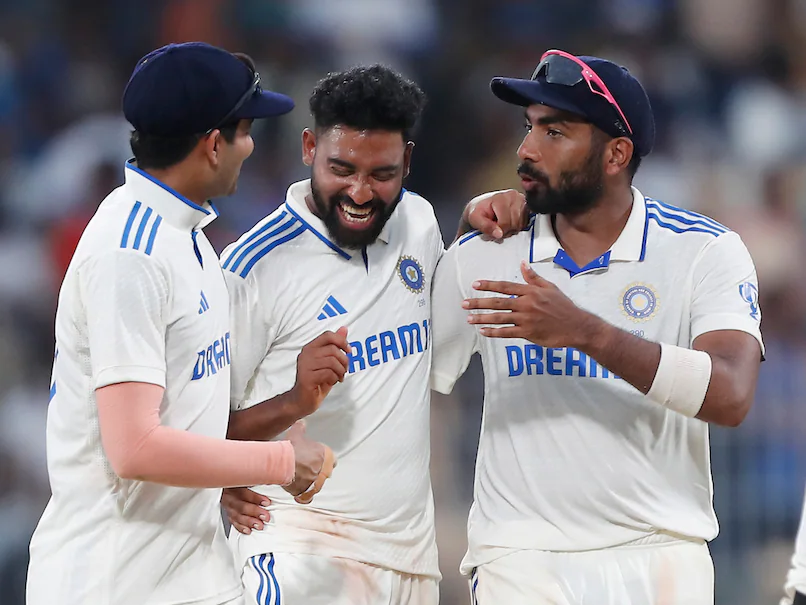
India were pegged back to 125-5 in England’s reply, but Root’s composed finish, backed up by handy contributions from Sam Curran, Will Jacks and Gus Atkinson, took the hosts to their target. Jasprit Bumrah made history with an early strike but it wasn’t enough for India.
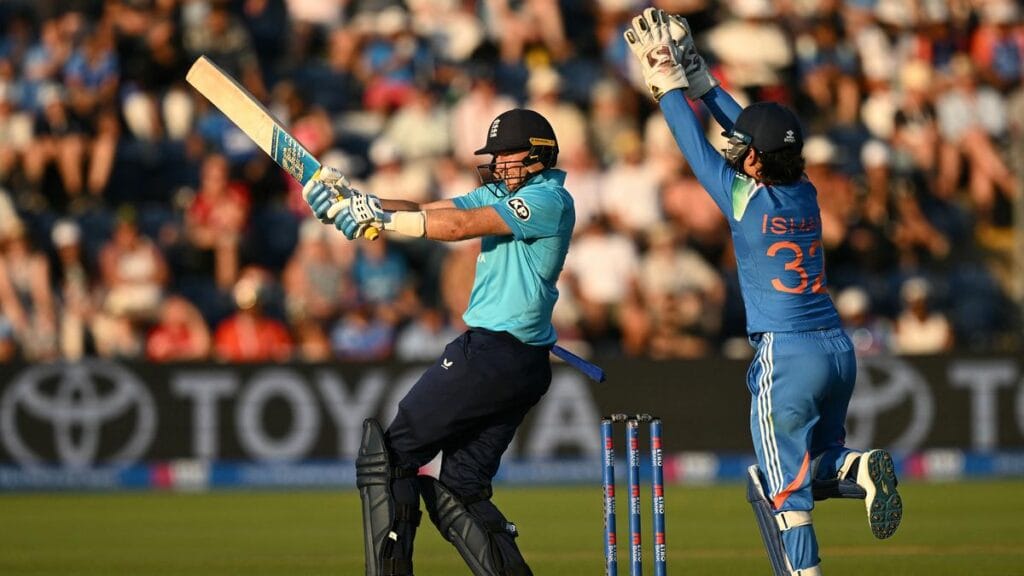
Joe Root celebrates after guiding England to a four-wicket win over India in the second ODI at Sophia Gardens, Cardiff. Image Credit: The Hindu
England produced a controlled and ultimately successful chase in Cardiff on Thursday, July 16, 2026, defeating India by four wickets in the second ODI and levelling the three-match series. Joe Root remained unbeaten on 99, steering England home after the hosts had been under pressure early in the pursuit of 234.
India had its moments. Jasprit Bumrah struck with the first ball of the innings, an historic achievement that made him the first Indian to take a wicket on the first ball of an ODI innings against England. But after a strong start with the ball, India could not sustain control as Root and England’s lower-middle order turned the game around. Yeh match kaafi important tha because it showed how one experienced batter can absorb pressure and shift the result in a chase.
How the Match Turned
India’s total of 233 looked competitive, especially in Cardiff, where chasing sides had enjoyed a strong record at Sophia Gardens. The venue had already seen eight of the previous 12 ODIs, including the last four in a row, won by the team batting second. So when England began their chase, the conditions and history both pointed toward the side under lights. This story was also covered by The Hindu.
India’s bowlers gave themselves a dream start. Bumrah removed Ben Duckett on the first ball and Prasidh Krishna soon dismissed Jacob Bethell, leaving England wobbling early. That burst gave India control for a brief period and looked like it might define the match. But England was never completely out of it because Root was still there, and in a chase like this that matters a lot.
England slipped to 125/5, and that should have given India a strong opening to push for victory. Instead, Root settled the innings, rotating strike and keeping England in touch. He was helped by small but crucial partnerships and quick runs from Sam Curran, Will Jacks and Gus Atkinson. That support reduced the pressure and allowed Root to remain patient until the finish.
The key point was that Root did not force the issue. He played the situation, not the scoreboard. In low chases, that is often the difference between a collapse and a close win. His unbeaten 99 may not have ended with a century, but it was still the defining innings of the day.
India’s Batting Story
India’s innings also had a promising start and then a costly middle-order slowdown. Shreyas Iyer top-scored with 66, while Virat Kohli added 65 in another important contribution. Bumrah even chipped in with a late 20-run cameo, which helped India reach 233 after they were bowled out.
However, the innings changed sharply after the 30th over. India lost five wickets for 32 runs in the middle phase, which severely limited the final total. On a surface where 250-plus would have offered more comfort, that collapse mattered. England’s bowlers sensed the shift and took advantage.
Jofra Archer and Gus Atkinson were the standout bowlers, each claiming three wickets. Their pace and accuracy put India under pressure at the right times, and the wicket-taking in the middle overs prevented India from building a stronger finish. Those wickets proved crucial because in one-day cricket, the middle overs often decide whether a side finishes with momentum or merely survives.
Why Joe Root Was the Difference
Root’s innings was a classic example of ODI control. He understood the target, the pitch and the state of the match. Once England lost early wickets, he did not try to blast his way back into the game. Instead, he rebuilt carefully, kept the required rate manageable and trusted his partners to contribute.
That is where experience shows its value. A younger batter might have felt forced to attack too early after England slipped to 125/5. Root stayed calm and absorbed the pressure. That calmness gave England the time they needed to recover. By the time the finish arrived, the chase had become manageable rather than desperate.
His unbeaten 99 will likely be remembered as one of those innings that never looked flashy but completely controlled the result. In ODI cricket, that kind of knock is often more valuable than a rapid century. It keeps the team composed and makes the chase look easier than it really is.
Match Context and Background
Cardiff’s Sophia Gardens has often rewarded teams chasing in ODIs, and that history added an interesting layer before the match began. England knew a target under 240 was well within reach if they stayed organised. India, meanwhile, needed to defend a below-par score by bowling aggressively and using the early movement available.
This was also a key match in the three-game series because the result directly affected momentum. India had the chance to take a lead, but England’s victory has now pushed the contest into a decisive phase. In bilateral ODI series, the second match is often the pressure match because it can either close out the contest or reopen it fully. Here, England used it to reset the narrative.
The match also reflected the ongoing value of experienced ODI players. Root and Kohli both played major roles with the bat, and Bumrah made an impact with the ball and in the lower order. That mix of veteran quality is what keeps ODI cricket compelling, even in an era where shorter formats often dominate attention. Seedhi baat yeh hai: big matches still belong to big players.
Timeline
Before the match: History at Sophia Gardens favoured chasing teams.
First ball of England’s innings: Jasprit Bumrah dismisses Ben Duckett, creating a historic first-ball wicket for India against England in an ODI innings.
Early chase: England fall under pressure as Jacob Bethell is also dismissed quickly.
Middle overs: Root rebuilds while England recover to 125/5.
India’s innings earlier: Shreyas Iyer scores 66, Virat Kohli makes 65, and India reaches 233.
Late chase: Root stays unbeaten on 99 and carries England to victory by four wickets.
Series status: England level the three-match ODI series.
Also Read: India vs England 1st ODI: Axar Patel and Shubman Gill Power India to 6-Wicket Win in Birmingham
Why This Matters
This matters because ODI cricket is often decided by how teams handle pressure in the middle overs and how well senior players manage the chase. England’s win showed that even after losing five wickets, a composed batter can still control the outcome. India, on the other hand, will feel that 233 was just short of what was needed on a ground that often rewards teams batting second. Yeh issue kaafi important hai because small margins in ODI cricket frequently decide entire series.
It also matters because this match showed the different ways top players influence results. Bumrah’s historic first-ball wicket, Iyer and Kohli’s batting, Archer and Atkinson’s pace, and Root’s unbeaten 99 all shaped the contest. For fans, that is exactly what makes ODI cricket interesting: one moment can shift the game, but one innings can still settle it.
The result also matters in the bigger context of India-England cricket. These games are not just bilateral matches; they are major watchpoints for fans across both countries. Momentum, confidence and tactical reads all carry into the next ODI. A series-levelling win puts pressure back on India and gives England a real shot at winning the series.
India Angle
For Indian fans, this result will sting a bit because the bowling start was excellent and the batting had enough individual contributions to suggest more was possible. In Hinglish, seedhi baat yeh hai: India ne achha start kiya, lekin middle overs mein grip thodi slip ho gayee. That is often the difference in overseas ODIs, where good spells can be undone by one strong partnership.
The match also highlights the importance of finishing power in one-day cricket. India’s top order and middle order put up decent individual scores, but the lack of a big acceleration phase after 30 overs meant the total stayed vulnerable. Fans in India will likely look at whether the batting approach was too conservative during the middle phase.
There is also excitement in India around Bumrah’s record. Taking a wicket on the first ball of an ODI innings against England is the kind of stat that grabs attention immediately. It shows how dangerous he can be with the new ball and adds another memorable line to his career achievements. Even in defeat, that moment will stand out for Indian supporters.
Analysis
My opinion is that India will feel they missed an opportunity. A total of 233 is not hopeless in Cardiff, but it required disciplined bowling throughout the chase. Bumrah’s early strike gave India hope, but they could not convert that into sustained pressure after England rebuilt. Once Root settled in, the chase became a classic example of a senior batter managing a situation better than the fielding side managed the defence.
I also think England deserve credit for their pace attack and for not panicking early in the chase. A side that gets reduced to 125/5 can easily fall apart. Instead, they trusted Root and the lower-order contributions to bring them home. That calm response says a lot about team maturity and is exactly the sort of thing that wins ODI series.
From a tactical point of view, India may want to revisit their death-over batting strategy and middle-overs acceleration. The innings had good individual scores but not enough pressure release at the right time. In tight ODI contests, 15 to 20 extra runs can change everything. This match was a reminder of that basic truth.
What Next
The next ODI becomes a series decider, and both teams will head into it with different confidence levels. England now have momentum from a successful chase, and Root’s form will give them belief in another close pursuit. India will need to tighten their middle-over batting and sharpen their bowling plans if they want to finish the series on top.
Expect team management to review the middle-overs slowdown and the bowling lengths used after England’s early collapse. India will likely look at how to build a stronger total or how to defend more aggressively if they bat first again. England, meanwhile, will want more of the same discipline and another strong top-order contribution to reduce dependence on the late rescue act.
For fans, the final ODI should be a high-pressure contest. The series is alive, the balance has shifted, and both sides have plenty to play for. That is exactly the kind of scenario ODI cricket thrives on.
Conclusion
England’s four-wicket win over India in the second ODI at Cardiff was defined by Joe Root’s unbeaten 99 and a composed chase under pressure. India had bright moments, including Bumrah’s first-ball strike and useful batting from Shreyas Iyer and Virat Kohli, but their total of 233 proved slightly below par. England’s pacers set up the win, Root finished it, and the series now moves to a decisive third match with everything still on the line.
Written By A. Jack