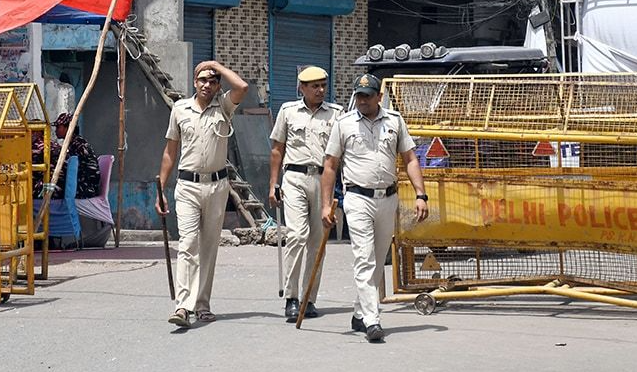
The complainant, a postgraduate teacher deployed as a BLO, alleged that she was humiliated, verbally abused and stopped from doing official work during the voter list revision exercise. Police have registered an FIR and said further investigation is underway.
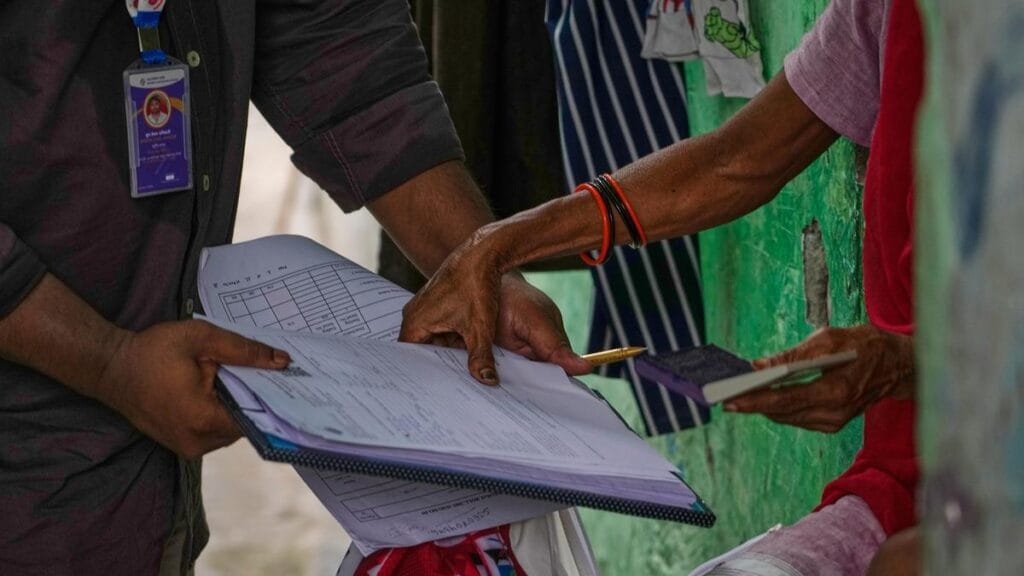
Delhi Police probe allegations of misconduct against a booth-level officer during the Special Intensive Revision of electoral rolls in Chandni Mahal. Image Credit: The Hindu
Delhi Police on Friday said they have arrested four persons for allegedly misbehaving with a Booth Level Officer while she was carrying out the Special Intensive Revision of electoral rolls in the Chandni Mahal area of central Delhi. The incident reportedly took place on July 5 at Fatak Telian, but the complaint reached police on July 15 after the matter was taken up through official channels.
According to the complaint, the woman, who is a Post Graduate Teacher in Special Education and was deployed as a BLO for the revision exercise, alleged that a man placed the BLO register on her lap and signed it despite her objection. She also alleged that others present at the spot abused her, refused to accept SIR forms and behaved in a way that humiliated and obstructed her from performing her official duties. This is a serious matter because voter revision work depends on field-level staff being able to do their job without pressure or intimidation. Yeh issue kaafi important hai because election-related work is part of the democratic process, and interference with it affects public trust.
What Police Said Happened
Police said the complaint was first taken up through the Additional District Magistrate, Old Delhi, who informed the authorities after the complainant approached him. The delay in filing the complaint, according to the woman, was due to consultations with senior officers about the appropriate course of action. Once police verified the complaint and reviewed the available material, they said a prima facie case was established.
An FIR was then registered at Chandni Mahal Police Station under Sections 221, 132, 79, 74 and 3(5) of the Bharatiya Nyaya Sanhita, 2023. These sections relate to obstruction of a public servant, assault or criminal force, insulting the modesty of a woman and other related offences, along with common intention. The arrests of four persons indicate that police treated the allegations seriously and moved forward after initial scrutiny of the facts. This story was also covered by The Hindu.
At this stage, the matter is still under investigation. That means police are likely to review witness accounts, the exact sequence of events, and any available administrative records connected to the BLO’s work at the site. In cases like this, the official complaint and the statements of the parties involved will matter a lot in deciding what happened and how.
Why the Incident Is Sensitive
This case has drawn attention because it involves an election-related official doing field duty in a crowded urban locality. Booth Level Officers are the people who carry voter revision work to the ground. They interact with residents, distribute forms, verify entries and help ensure that the electoral roll is accurate. When they face hostility, the quality of the voter list itself can suffer.
The complaint suggests that the woman was not just interrupted but also publicly humiliated while carrying out official work. That is significant because respect for frontline administrative staff is essential during any election exercise. If people feel they can pressure or intimidate BLOs, the integrity of the revision process can be affected. In simple terms, if the person handling voter records is blocked, the system gets weaker.
There is also a gender aspect here. The complainant alleged that she was misbehaved with and humiliated in front of others. When a woman public servant says she was treated in this manner while on duty, it raises both legal and social concerns. Public service cannot function properly if officials are made to feel unsafe or disrespected while working.
Background and Context
The Special Intensive Revision of electoral rolls is an important administrative exercise meant to keep voter lists up to date. Names may need correction, deletion or inclusion depending on changes in residence, eligibility or documentation. This process becomes especially important in dense urban areas like central Delhi, where populations shift and voter lists can quickly become outdated.
Chandni Mahal is a high-density part of Old Delhi, and field-level election work in such areas can be challenging. Public interactions may be quick, tense or crowded. BLOs often work under pressure and must handle questions, objections and paperwork in real time. That makes proper cooperation from residents essential.
This case fits into a larger pattern seen in urban governance: the success of public administration often depends on whether ordinary citizens and local actors allow the machinery to function smoothly. When there is resistance at the ground level, the system gets delayed. When there is discipline and cooperation, processes like voter revision become more accurate. Seedhi baat yeh hai: democracy ka paperwork bhi respect maangta hai.
Timeline
July 5: The alleged incident takes place at Fatak Telian in Chandni Mahal.
Between July 5 and July 15: The complainant consults senior officers regarding the next step.
July 15: The complaint reaches police through the Additional District Magistrate, Old Delhi.
After verification: Police say a prima facie case is established.
Friday: Four accused are arrested and an FIR is registered.
Now: Further investigation is underway.
Why This Matters
This matters because it is not just a law-and-order case. It is also about the functioning of democratic institutions at the ground level. Electoral roll revision is one of the basic building blocks of free and fair elections. If BLOs cannot work without obstruction, voter lists can become less accurate, and that can affect who gets to vote. Yeh issue kaafi important hai because even small disruptions in voter revision can have wider democratic consequences.
It also matters because it highlights the safety and dignity of government workers. Teachers, clerks and local administrative staff are often deployed for election duty, and they need the protection of the state when carrying out official responsibilities. If they are harassed, the message to other officials becomes worrying. Public duty should not mean public humiliation.
The case also has a broader civic message. Citizens may disagree with officials, form disputes over forms or documentation, or challenge procedures. But such disagreements should be handled through proper channels, not through abuse or obstruction. In a functioning democracy, the process matters as much as the outcome.
India Angle
For Indian readers, this story touches a nerve because voter lists and election fairness are sensitive issues across the country. People care deeply about whether names are added or removed correctly, especially before elections. In Hinglish, seedhi baat yeh hai: jab voter list revise hoti hai, toh har ghar ko lagta hai ki unka haq sahi tarah register ho. That makes the BLO’s role very important.
This case also reflects the daily reality of local governance in India. The person at the desk or in the field is often a teacher, clerk or junior official, not a high-ranking authority. Yet they carry out work that directly affects democracy. When they are obstructed, the impact can be immediate and practical. This is why respect for such workers is a national issue, not just a local one.
The matter is also relevant because Delhi often becomes a reference point for administrative practice. What happens in the capital tends to get attention beyond the city. Cases like this can influence how other states think about protecting election staff and improving ground-level enforcement. That makes the story more than a local police update.
Analysis
My opinion is that the timing of the complaint is important. The delay does not automatically weaken the case because the complainant says she first consulted senior officers before approaching police. That is a reasonable step in a sensitive official matter. In workplace and public-service disputes, people often seek guidance before filing formal complaints, especially if they fear escalation. The police statement that a prima facie case was established suggests there was enough material to move forward.
I also think the case underlines a larger issue: election work is often treated as routine, but it is actually one of the most important public-facing functions in the system. BLOs are the bridge between the administration and the voter. If they are undermined, the voter list may suffer. That is why even a single incident of obstruction can have wider importance than it first appears.
From an editorial perspective, the story is important because it is both specific and systemic. The specific event is the alleged misbehaviour in Chandni Mahal. The systemic issue is the vulnerability of field officers during democratic exercises. Good governance depends on both law enforcement and public cooperation. This case is a reminder that neither can be taken for granted.
What Next
The next step will likely involve questioning the arrested accused and collecting statements from witnesses present at Fatak Telian on July 5. Police may also review any administrative notes, form records or officer logs connected to the BLO’s duties that day. If additional evidence supports the complaint, the case may move further through the legal process.
The electoral administration may also look at whether more safeguards are needed for BLOs during revision work. That could include clearer deployment protocols, better coordination with local police and faster escalation channels for on-ground complaints. Such steps would make sense, especially in dense and politically sensitive localities.
For the complainant, the next phase will depend on how the investigation progresses and whether the charges hold up in the legal process. If the case is pursued strongly, it may act as a warning against interference in election work. If not, it could raise fresh concerns about the protection given to frontline election staff.
Conclusion
The arrest of four people in connection with the alleged misbehaviour of a Delhi poll officer during voter revision is a serious reminder that democratic processes depend on respect for public servants on the ground. The complaint, filed after the July 5 incident in Chandni Mahal, alleges obstruction, humiliation and abuse while the BLO was performing official work. Police say an FIR has been registered and the investigation is underway. Beyond the immediate case, the larger message is clear: voter revision is not just paperwork, it is a core democratic function, and it must be protected.
Written By A. Jack