
R K Associates & Hoteliers in Kurla, Govinda’s Restaurant and two other ISKCON food establishments shut down after inspections reveal pest infestation, uncovered food, staff hygiene violations; part of Tukaram Mundhe’s statewide crackdown
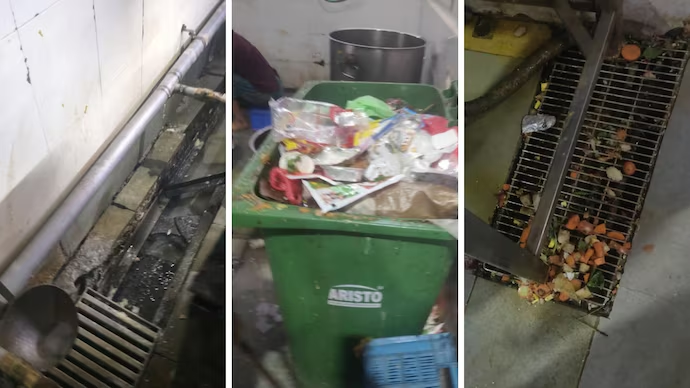
Clogged drains, uncovered food storage, and inadequate staff hygiene were found, leading to license suspensions of IRCTC-linked suppliers. Image Credit: IndiaToday
The Maharashtra Food and Drug Administration (FDA) has suspended the food licenses of an IRCTC-linked base kitchen in Kurla and three food establishments at ISKCON’s Hare Krishna Land in Juhu after inspections revealed serious hygiene and food-safety violations, including cockroach infestation, clogged drains containing food waste, uncovered food, and staff handling food without medical fitness certificates.
At R K Associates & Hoteliers Pvt Ltd in Kurla West, which supplies food to railway passengers through IRCTC, officials found cockroaches in food storage and processing areas, uncovered food, food preparation taking place near open garbage, damaged floor tiles, and inadequate staff hygiene during an inspection on September 2. The establishment scored only 78 out of 114 marks (69 percent) and was declared “Non-Compliant,” leading to license suspension with immediate effect from September 8.
At ISKCON’s Hare Krishna Land in Juhu, inspections conducted on September 3 led to the suspension of licenses for three food establishments: Govinda’s Restaurant, Food Services Restaurant, and a snack stall. Violations included clogged drains, water accumulation in cold storage areas, evidence of pest infestation, inadequate segregation of raw and cooked food, missing food and drinking-water testing records, and food handlers working without proper protective clothing.
Systematic Hygiene Failures Uncovered Across Establishments
The FDA inspections were part of a targeted drive to ensure safe food for railway passengers and the general public, focusing on high-volume food service operations. Officials used a standardized scoring system (out of 114 points) to evaluate compliance with the Food Safety and Standards Act, 2006, and corresponding regulations.
IRCTC-Linked Supplier Violations: At R K Associates & Hoteliers in Kurla West, the September 2 inspection revealed multiple critical violations:
Pest Infestation: Cockroaches were found in food storage and processing areas, indicating inadequate pest control measures.
Uncovered Food: Food items were stored without proper covers, exposing them to contamination.
Food Preparation Near Garbage: Food was being prepared in close proximity to open garbage, creating a high risk of bacterial contamination.
Infrastructure Damage: Damaged floor tiles, cracks, and damaged wall surfaces were observed, which can harbor pests and bacteria.
Staff Hygiene Lapses: An employee with an injured finger was handling food, and only 21 of 34 food handlers (62 percent) could produce medical fitness certificates.
Incomplete Records: Documentation covering packaging, staff training, maintenance, equipment calibration, and cooking/cooling temperatures was incomplete or unavailable.
Unclean Transport: The food transport vehicle was found to be unclean and rusty, raising concerns about contamination during transit.
Following the initial inspection, the establishment was issued an improvement notice. However, a reinspection found that serious deficiencies continued, prompting the FDA to suspend the license from September 8 until further orders. The kitchen has been barred from preparing, supplying, or selling food during the suspension. This story was also covered by IndiaToday.
ISKCON Juhu Violations: At ISKCON’s Hare Krishna Land, inspectors found equally serious lapses across the three food establishments:
At Govinda’s Restaurant:
No Water Testing: Periodic testing of food and drinking water was not being carried out.
Raw Material Issues: Records demonstrating procurement from approved suppliers were unavailable; raw materials were not cleaned before preparation.
Water Accumulation: Water was found accumulating in the cold-storage room, creating conditions for bacterial growth.
Clogged Drains: Drains were choked, and grease traps and cockroach traps were not in place.
Pest Infestation: Evidence of pest infestation was found in storage areas.
Staff Hygiene: Some food handlers were working without aprons and gloves.
At Food Services Restaurant:
No Food Segregation: There was no proper segregation of raw and cooked food items, creating a risk of cross-contamination.
Open Kitchen Entrance: The rear kitchen entrance was open without adequate measures to prevent pest entry.
Clogged Drains with Waste: Food waste was found accumulated in clogged drains, with traces of pest infestation in the store room.
Missing Records: Lapses were found in medical examinations, vaccination, and training records of food handlers.
Inadequate Lighting: The establishment had insufficient lighting for proper food preparation and cleaning.
At the Third Establishment (Snack Stall):
Inadequate Records: Records for water testing were missing, and raw-material inspection was improper.
Storage Issues: Unsuitable temperature and humidity conditions for storing raw and prepared food.
Pest Infestation: Inadequate cleaning and pest infestation were reported.
Unsafe Storage: Food and non-food items were stored together, creating contamination risks.
The FDA suspended all three ISKCON restaurant licenses with immediate effect on September 7 after reviewing inspection reports and photographs.
Official Statements and Regulatory Context
FDA Commissioner Tukaram Mundhe has been leading an aggressive enforcement campaign since taking charge in May 2026, targeting food adulteration, hygiene violations, and regulatory non-compliance across Maharashtra. In a statement, Mundhe said, “The government in Maharashtra is very strict regarding the quality of food and enforcement of laws.”
The FDA release emphasized that the inspection process has been accelerated to ensure effective regulatory oversight at every stage, from food preparation to final sale. “Serious or repeated violations resulted in show-cause notices, hearings and, where applicable, suspension or cancellation of licenses,” the department said.
The FDA also clarified that inspections of establishments supplying food to railway passengers would continue, putting the responsibility on operators to rectify deficiencies and comply with food-safety requirements before resuming or continuing operations.
Improvement Notices Issued: While R K Associates & Hoteliers had its license suspended, improvement notices were issued to four other IRCTC-linked establishments: Om Sai Ram Enterprises and Ambuj Hotels & Real Estate Pvt Ltd in Chembur, Express Food Services in Powai, and Araha Hospitality Pvt Ltd in Kopri Colony, Thane East. These establishments were given time to rectify deficiencies before facing license suspension.
Background
Tukaram Mundhe took charge as Maharashtra FDA Commissioner in May 2026 and immediately launched an aggressive enforcement campaign targeting food safety violations across the state. His first 100 days in office have been described as transformative, with over 12,083 regulatory actions taken across food and drug sectors.
Prior to Mundhe’s tenure, enforcement was often criticized as lax, with violations going unpunished and unsafe food reaching consumers. Mundhe’s approach has been to dramatically increase inspections, act swiftly on complaints, and impose meaningful penalties—including license suspensions and cancellations—to deter violations.
The Commissioner has faced criticism from some industry quarters and political figures who argue that aggressive enforcement disrupts business. However, Mundhe has maintained that public health must take precedence over commercial interests. In recent interviews, he has emphasized that food safety is not punishment but a fundamental right of consumers.
The action against ISKCON and IRCTC-linked establishments is particularly significant because both are high-profile organizations with strong public trust. ISKCON’s Govinda’s Restaurant is a popular vegetarian dining destination in Juhu, known for serving sattvic food to thousands of devotees and tourists. IRCTC caterers supply food to millions of railway passengers daily, making food safety a matter of public health at scale.
From Inspections to License Suspensions
September 2, 2026: FDA inspects R K Associates & Hoteliers Pvt Ltd in Kurla West; finds cockroaches, uncovered food, and staff hygiene lapses; establishment scores 69% (78/114).
September 2–3: FDA inspects five IRCTC-linked establishments across Mumbai and Thane; improvement notices issued to four (Om Sai Ram, Ambuj Hotels, Express Food, and Araha Hospitality).
September 3, 2026: FDA inspects three food establishments at ISKCON’s Hare Krishna Land, Juhu: Govinda’s Restaurant, Food Services Restaurant, and snack stall.
September 3–7: FDA reviews inspection reports and photographs from ISKCON establishments; determines violations are serious and warrant license suspension.
September 7, 2026: The FDA suspends licenses of all three ISKCON Juhu food establishments with immediate effect.
September 8, 2026: FDA suspends the license of R K Associates & Hoteliers in Kurla West after reinspection confirms continued deficiencies.
September 8, 2026: Media reports detail violations; ISKCON administration says compliance measures are underway.
September 9, 2026: FDA clarifies that inspections of railway food suppliers will continue; suspended establishments are barred from operations until compliance is achieved.
Why This Matters
Yeh issue kaafi important hai for multiple reasons. First, it directly impacts public health. Cockroaches carry pathogens that can cause foodborne illnesses. Clogged drains with food waste create breeding grounds for bacteria. Uncovered food and improper segregation of raw and cooked items can lead to cross-contamination.
Second, the action restores public trust in food safety regulation. For years, consumers have worried about hygiene in railway food and popular restaurants. When the FDA takes action against high-profile establishments like ISKCON and IRCTC suppliers, it sends a message: no one is above the law.
Third, the economic impact is significant. R K Associates & Hoteliers supplies food to thousands of railway passengers daily. ISKCON’s Govinda’s Restaurant serves hundreds of devotees and tourists. License suspensions mean lost revenue, but they also mean safer food when operations resume.
For Maharashtra’s food industry, the message is clear: compliance is not optional. With multiple establishments facing suspension, the FDA has shown it will take meaningful action against violators, regardless of their profile. This will force companies to invest in pest control, staff training, and hygiene protocols—or face closure.
India Angle
For readers across India, yeh sirf Mumbai ki problem nahi hai—yeh ek national crisis ban chuka hai. Foodborne illnesses affect millions of Indians annually, yet enforcement remains weak in most states. From railway food to temple prasadam, from street vendors to five-star hotels, hygiene violations are endemic.
Agar aapko lagta hai ki yeh issue sirf Maharashtra tak limited hai, toh sochiye dobara. The Food Safety and Standards Authority of India (FSSAI) has national jurisdiction, but enforcement depends on state-level agencies. Some states are aggressive; others are lax. The “Tukaram Mundhe Effect” could inspire similar crackdowns across India.
The railway food angle is particularly concerning. IRCTC caterers supply food to millions of passengers daily, yet inspections reveal cockroaches, uncovered food, and unclean transport vehicles. If railway food isn’t safe, where can passengers turn?
The ISKCON angle is equally significant. Millions of devotees trust temple food to be pure and hygienic. When inspections reveal pest infestation, clogged drains, and missing water testing records, that trust is compromised. Religious institutions must be held to the same standards as commercial establishments—perhaps even higher, given the faith people place in them.
Analysis
The violations are undeniable. Cockroaches in food storage, clogged drains with food waste, uncovered food, staff without medical certificates—these aren’t minor lapses. They’re fundamental failures of basic hygiene.
The FDA’s approach is refreshingly impartial. No sacred cows. ISKCON is a revered religious organization. IRCTC is a government-owned corporation. Yet both faced license suspensions when violations were found. This is what impartial enforcement looks like.
The scoring system adds objectivity. R K Associates scored 69% (78/114)—clearly non-compliant. This isn’t subjective judgment; it’s a measurable deficiency. Other states should adopt similar standardized scoring to reduce arbitrariness in inspections.
The improvement notice process is fair. Four IRCTC-linked establishments received improvement notices instead of immediate suspension. This gives them time to rectify issues. Only R K Associates, which failed to improve after reinspection, faced suspension. This is proportionate enforcement.
The public health argument is stronger than reputational concerns. Yes, ISKCON’s reputation takes a hit. Yes, railway passengers face disruption. But contaminated food causes illness, hospitalization, and even death. Public health must come first.
What Next
In the immediate term (next 1–2 weeks):
Corrective action: Suspended establishments must address all violations—pest control, drain cleaning, staff medical certificates, food testing, and record-keeping—before applying for license restoration.
Reinspection: The FDA will conduct reinspections to verify compliance before restoring licenses.
Continued inspections: FDA will continue inspecting other IRCTC-linked establishments and high-volume food service operations across Mumbai and Thane.
Public communication: ISKCON and IRCTC must communicate with customers about closures, corrective measures, and reopening timelines.
Longer-term (weeks to months):
Policy reforms: Maharashtra FDA may propose stricter penalties for repeat violators, mandatory third-party audits for high-risk establishments, and real-time monitoring systems for food safety.
Technology integration: The FDA may implement digital systems for tracking inspection scores, compliance deadlines, and license status across establishments.
National influence: Other states may adopt Maharashtra’s enforcement model, pressured by public demand for food safety.
FSSAI coordination: State-level crackdowns may prompt the central regulator to enhance oversight and coordinate enforcement actions.
For consumers, the advice is clear:
Verify hygiene: Before eating at restaurants, check for visible cleanliness, pest control measures, and staff hygiene.
Ask for certificates: Licensed establishments should display food safety certificates and staff medical fitness records.
Report violations: Use FDA complaint mechanisms to report suspicious food, pest infestation, or unhygienic practices.
Stay informed: Follow FDA announcements about suspended licenses and compliance updates.
Final Thoughts
The FDA’s action against ISKCON and IRCTC suppliers is more than a regulatory exercise—it’s a statement. A statement that public health matters more than reputation. That violations will be caught and punished, regardless of who commits them. That consumers deserve safe, hygienic food.
The violations found—cockroaches, clogged drains, uncovered food, missing records—are not minor. They’re fundamental failures that put public health at risk. The license suspensions are not punishment; they’re protection.
For ISKCON, this is a wake-up call. Millions of devotees trust temple food to be pure. That trust must be earned through compliance, not assumed through reputation.
For IRCTC, this is a reminder. Railway passengers deserve safe food, not contaminated meals served from cockroach-infested kitchens. The “Rail Neer” brand means nothing if the food is unsafe.
For Tukaram Mundhe and the Maharashtra FDA, this is validation. Aggressive, impartial enforcement works. When you treat all establishments equally—whether temple, railway, or restaurant—you build public trust.
Written By A. Jack