
The Maha Vikas Aghadi has almost finalised its seat sharing formula for the Maharashtra Legislative Council elections and the Nashik and Nanded seats are still pending. Congress is likely to get seven seats while Shiv Sena (UBT) is likely to get five but both the allies are not ready to concede the two disputed constituencies.
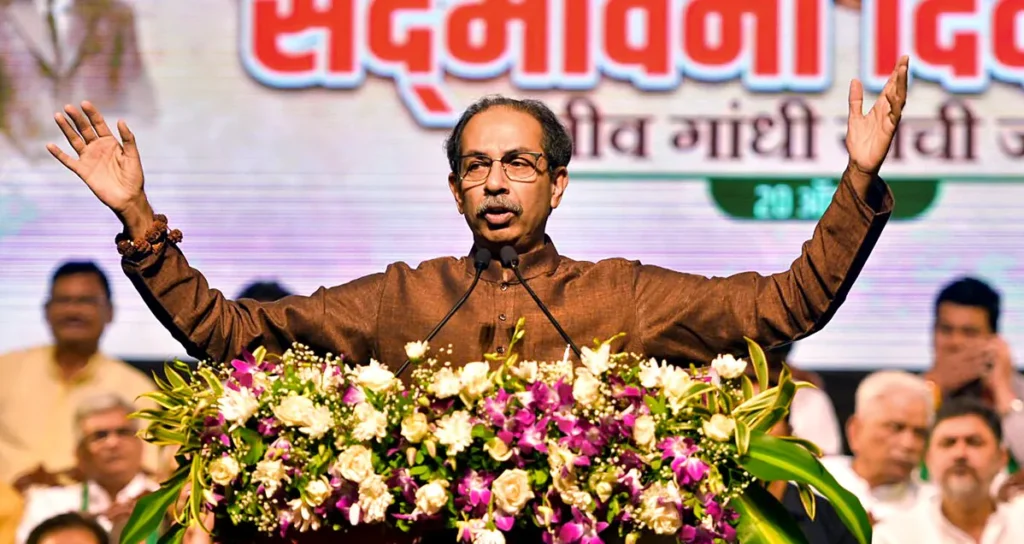
Congress, Shiv Sena (UBT) clash over Nashik, Nanded Maharashtra opposition leaders meet to discuss seat-sharing ahead of Legislative Council polls [Image Souce: NDTV]
The Maharashtra Legislative Council election race has opened a fresh round of bargaining inside the opposition Maha Vikas Aghadi, with Congress and Shiv Sena (UBT) locked in a tussle over two seats — Nashik and Nanded. According to sources, the alliance has largely settled the arithmetic for 15 out of 17 seats, but the final two constituencies are still creating friction between the two major partners.
Under the current understanding, Congress is set to receive the largest share with seven seats, while Uddhav Thackeray’s Shiv Sena faction is likely to get five and Sharad Pawar’s NCP-SP three. But the unresolved claims over Nashik and Nanded have shown that even when a coalition agrees on paper, ground-level political strength and legacy claims can still complicate seat-sharing. Yeh issue kaafi important hai because MLC elections often reflect not just numbers but alliance trust and future coordination too.
What the Seat-Sharing Formula Looks Like
Sources indicate that the MVA has worked out a broad formula designed to reduce internal conflict and keep the focus on defeating the ruling Mahayuti alliance. The Congress is projected to get the highest share because of its stronger presence in Vidarbha, western Maharashtra, and northern Maharashtra.
The likely Congress seats include Chandrapur, Yavatmal, Bhandara, Amravati, Solapur, Dharashiv, and Ahilyanagar. These are constituencies where the party is believed to have a relatively better organizational network. In recent years, the Congress has tried to rebuild its local structure in several districts, and this arrangement appears to reflect that effort. NDTV has covered the full story.
For Shiv Sena (UBT), the proposed five-seat share includes Chhatrapati Sambhajinagar, Hingoli, Parbhani, Jalgaon, and Raigad. The party has focused largely on retaining influence in Marathwada and the Konkan belt, where its political identity still carries local weight. Meanwhile, NCP-SP under Sharad Pawar is expected to contest Pune, Thane, and the Satara-Sangli constituency.
This distribution suggests that the MVA is trying to match seats with party strengths rather than forcing a uniform formula. In coalition politics, that approach usually helps avoid open rebellion, but only if the biggest local claims are settled in time.
Why Nashik and Nanded Are Sticking Points
The biggest disagreement is over Nashik and Nanded, two constituencies where both Congress and Shiv Sena (UBT) have laid claim. In Nashik, both parties are pointing to organizational presence and ground-level mobilization. In Nanded, Congress has long considered the seat its stronghold, but changing political equations and alliance calculations have created room for challenge.
This is where coalition politics becomes messy. One party may have historical dominance in a region, while another may have stronger recent organization or a better chance of mobilizing cross-group support. That often turns a simple seat-sharing discussion into a test of influence. The fact that these are the only unresolved constituencies out of 17 shows broad coordination but also highlights the limits of compromise.
The sources say senior leaders from all three MVA parties are expected to continue discussions in the next few days. The main goal is to prevent friendly contests and present a united front against Mahayuti. But if no agreement is reached, these two seats could become symbolic of deeper alliance tensions.
Mahayuti’s Parallel Calculation
The ruling Mahayuti alliance is also said to be close to finalizing its own formula. According to sources, Ajit Pawar’s NCP is likely to contest Raigad and Pune, while Eknath Shinde’s Shiv Sena may receive Nashik, Yavatmal, Parbhani, and Thane. The BJP is expected to take the remaining seats.
This parallel seat-sharing exercise matters because it shows both alliances are thinking not only about winning seats but also about managing internal egos. In Maharashtra politics, one constituency can become a proxy battlefield for bigger political dominance. If a party feels shortchanged, the result can be rebellion, independent candidature, or reduced coordination during the campaign.
Political observers are watching Chhatrapati Sambhajinagar and Nashik in particular, where dissatisfaction among leaders could lead to alternative political moves. The support of independents can also become important if any alliance feels pressured. That means these MLC polls are not just about who gets which seat—they are also about whether discipline inside alliances holds.
Background and Context
The Maha Vikas Aghadi has been under pressure to show coordination after years of political shifts in Maharashtra. Coalition politics in the state is often complicated because the Congress, Shiv Sena (UBT), and NCP-SP each have different regional strengths, vote banks, and expectations. Seat-sharing therefore becomes both a mathematical and symbolic process.
Maharashtra Legislative Council elections are often less dramatic than assembly polls, but they still matter because they shape legislative presence and reflect alliance strength at the state level. For opposition parties, avoiding friendly fights is especially important because even internal clashes can be used by the ruling alliance as evidence of disunity. For the MVA, the priority is not just winning a handful of seats but showing voters and workers that the alliance can act as one.
In a state where alliances can change quickly, every seat-sharing formula carries political meaning beyond the immediate election. That is why the Nashik and Nanded dispute is drawing so much attention. It is not just about two seats; it is about who gets to define the alliance’s regional balance.
Timeline
Early negotiations: MVA leaders begin working on a seat-sharing formula for 17 Maharashtra Legislative Council seats.
Initial consensus: Agreement is reached on 15 seats.
Current sticking point: Nashik and Nanded remain unresolved between Congress and Shiv Sena (UBT).
Ongoing talks: Senior leaders are expected to continue discussions over the next few days.
Parallel development: Mahayuti also moves closer to finalizing its own formula.
Also Read: Pune Toxic Liquor Tragedy: Methanol-Laced Brew Kills 18 as Police Hunt Key Accused
Why This Matters
This matters because seat-sharing often decides the health of a coalition long before polling day. If partners are fighting over two seats, it can create doubts about coordination elsewhere too. Even small disagreements can become bigger during campaigning if workers feel confused about which party to support.
It also matters because Maharashtra is one of India’s most politically important states, and every alliance decision here gets watched closely. The Legislative Council may not attract the same attention as assembly elections, but it is still a serious test of alliance discipline and regional bargaining power. Yeh issue kaafi important hai because what happens in these negotiations often shapes the political mood for the next big battle.
India Angle
The India angle is strong because this is a classic example of coalition politics in a large and politically diverse state. Across India, parties with different ideologies and local strengths often come together to challenge a common rival. Maharashtra is one of the best examples of how alliance management becomes an art form in itself.
In Hinglish, seedhi baat yeh hai: jab alliance banta hai, toh seats baatni bhi padti hain, aur ego sambhalni bhi padti hai. For Indian readers, this story shows how regional politics works behind the scenes—not just through speeches and rallies, but through late-night negotiations, local claims, and strategic compromise.
Analysis
My opinion is that the MVA has done the difficult part by agreeing on 15 out of 17 seats. That is not a small achievement in a three-party alliance. But the final two constituencies matter disproportionately because they reveal how much trust the coalition really has. Nashik and Nanded are not just regional seats; they are political signals. If Congress and Shiv Sena (UBT) resolve them without public friction, it will show maturity. If they don’t, the Mahayuti will likely use that as evidence that the opposition is still struggling to speak with one voice. In coalition politics, perception is often as important as arithmetic.
What Next
The next step will be more rounds of discussion between senior leaders of the Congress, Shiv Sena (UBT), and NCP-SP. They will likely try to resolve Nashik and Nanded through a formula that balances local strength with alliance discipline. If they succeed, the MVA can move into campaign mode with less internal noise.
If no agreement is reached, the alliance may need to consider compromise candidates, rotation arrangements, or other political adjustments. There is also a chance that the ruling Mahayuti could benefit indirectly if the opposition appears divided. Over the next few days, the final seat list will show whether the MVA can turn broad consensus into a clean political settlement.
Conclusion
The Maharashtra MLC seat-sharing deal inside the Maha Vikas Aghadi is nearly complete, but Nashik and Nanded remain the key flashpoints between Congress and Shiv Sena (UBT). With 15 out of 17 seats largely settled, the alliance has made progress, but the final two seats will test its internal balance and political discipline.
At the same time, Mahayuti is also nearing its own formula, which means both sides are now entering a crucial phase of negotiations. In Maharashtra politics, even small seat disputes can carry big meaning. Whether the MVA resolves these differences smoothly will be a strong indicator of how prepared it really is for the electoral fight ahead.
Written By A. Jack