
A shocking murder case from Maharashtra has surfaced after a woman, allegedly with the help of her husband, brother and his friend, killed her lover, stuffed the body into a drum and dumped it in a drain in the Mumbra area of Thane. Police say the incident was linked to an extortion attempt that turned deadly after the victim refused to pay.
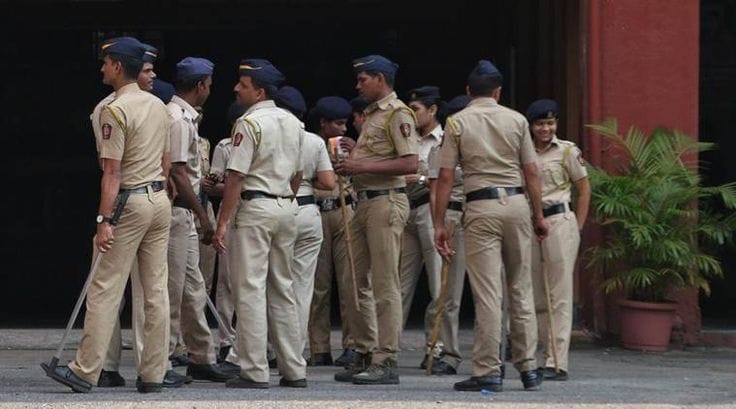
A crime scene in Mumbra, Thane, where police say a body was allegedly stuffed into a green drum and dumped in a drain after a planned murder.
Maharashtra Woman
Maharashtra has once again been shaken by a gruesome crime that echoes the infamous Meerut blue drum murder case. In the latest incident, police say a woman identified as Mehjabeen Sheikh, along with her husband Hasan, her brother Tariq Sheikh, and Hasan’s friend, allegedly murdered her lover Arbaz Maqsood Ali Khan and disposed of his body in a drum before dumping it in a drain in Mumbra, Thane.
According to police, Khan had left home on April 3 saying he was going to Dadar for work, but he never returned. After his family failed to trace him, his father filed a missing person complaint at the Mumbra police station. What began as a missing persons search soon turned into a murder investigation after police tracked Khan’s call records and location data. The case has now resulted in arrests, a confession, and a murder probe under criminal conspiracy charges.
What Happened
Police say the victim’s last known location was in the Vasai area, while Mehjabeen Sheikh’s phone was also traced there. That clue reportedly led investigators to question her. During interrogation, she allegedly broke down and confessed to the crime. According to ACP Priya Dhankne, Mehjabeen initially refused to give details, but after sustained questioning, she admitted that she and her accomplices were involved in killing Khan. NDTV has covered the full story.
The motive, police said, was extortion. The group allegedly intended to pressure Khan for money. When they could not extract anything from him, the situation escalated into violence. Khan’s hands were tied; he was beaten with a plastic pipe and then allegedly killed. After that, the accused reportedly stuffed his body into a green drum and dumped it in a drain in the Mumbra area. The cruelty and planning described by police have made the case especially disturbing for the local community.
How the Case Unfolded
This case appears to have developed in multiple stages, beginning with the disappearance of the victim and ending with police work that uncovered the alleged conspiracy. First came the missing complaint, then the analysis of call records and location data, and finally the identification of the girlfriend’s phone in Vasai. That chain of evidence helped investigators narrow down suspects and bring Mehjabeen in for questioning.
Once she was in custody, police say, the confession opened the full picture of the crime. The involvement of multiple people, including a spouse and a relative, suggests this was not a sudden act of anger but a planned operation. That makes the case more serious under Indian law because it involves murder, concealment of evidence, and conspiracy. The drum disposal method also shows how the accused allegedly tried to hide the body, but the investigation uncovered the trail anyway.
Reported Statements
ACP Priya Dhankne said Mehjabeen first refused to disclose anything but later confessed after rigorous questioning. That statement is important because it shows how police used both digital evidence and interrogation to solve the case. Investigators also said the crime had an extortion angle, which gives a financial motive to the murder.
Police have now arrested Mehjabeen and her brother Tariq Sheikh, while Hasan and another accomplice are still on the run. Officials also said Tariq has other cases registered against him, which could become relevant during further investigation. The case is now being treated as a murder, criminal conspiracy, and related offense matter. In other words, this is no longer a disappearance story; it is a full-fledged homicide investigation.
Background
The Maharashtra case has drawn attention because it echoes the Meerut “blue drum” murder that shocked the country in early 2024. In that case, Muskaan Rastogi and her partner Sahil were accused of killing her husband, Saurabh Rajput, chopping the body into pieces, and sealing it in a drum with cement. That crime became a national talking point because of its brutality and the image of body disposal in a drum.
The new case has a similar psychological impact, even if the details differ. In both incidents, the drum became a symbol of concealment, planning, and extreme violence. For the public, such cases are hard to digest because they mix betrayal, crime, and domestic relationships in a very disturbing way. Yes, similarity is exactly why the Maharashtra case is now being discussed so widely.
Timeline
April 3: Arbaz Maqsood Ali Khan left home, saying he was going to Dadar for work.
Later that day: He did not return, and the family began searching for him.
After the search failed, Khan’s father filed a missing person complaint at Mumbra police station.
During investigation: Police traced call records and location data to Vasai.
After questioning Mehjabeen: She allegedly confessed to the killing.
Following the confession: Police arrested Mehjabeen and Tariq Sheikh.
Current status: Hasan and one accomplice remain absconding, and the investigation continues.
Also Read: Maharashtra Man Allegedly Kills Parents With Pestle After Family Insult in Front of Wife
Why This Matters
This case matters because it exposes how a crime can move from personal relationships into organized violence. When the accused are family members or close associates, the sense of betrayal is even deeper. The murder of a lover for money, followed by body disposal in a drum, highlights the dark side of planned crimes that exploit emotional trust.
It also matters because it shows how police work increasingly depends on digital tracing. Call records, location tracking, and mobile data helped investigators identify the suspects and crack the case. That is important for public safety in India, where many missing person cases depend on quick technical follow-up. For families, this story is a reminder that every delay in reporting a disappearance can make investigations harder. Yeh baat kaafi important hai because timely police action can be the difference between a rescue and a murder probe.
India Angle
For Indian readers, this case hits hard because it combines relationship betrayal, financial motive, and a grisly method of body disposal. Such stories tend to trigger strong reactions in India because they mirror the growing concern around violent crimes hidden inside domestic or personal relationships. In urban and semi-urban areas like Thane, families trust that normal daily routines are safe, but such cases shake that confidence.
There is also a wider social lesson. People often assume that crime stories involving women and relationships are always about emotional conflict, but this case, as alleged by police, also includes extortion and criminal planning. That makes it relevant not just as a murder story but as a warning about how greed and manipulation can turn deadly. In India, where missing-person cases are numerous, this kind of investigation also underscores how fast police must act when someone disappears unexpectedly.
Analysis
My opinion is that the case stands out because of its layered nature. It is not just a murder; it is a planned killing, a concealment attempt, a missing person investigation, and a possible extortion plot. That combination makes it a compelling but deeply tragic news report. The comparison with the Meerut case also adds a strong contextual hook, but the article should avoid sensationalism and keep the focus on verified police details.
What’s Next?
The next stage will likely involve a detailed chargesheet after the police complete the investigation. Authorities will focus on recovering any evidence from the drain area, verifying the sequence of the killing, and tracking down Hasan and the remaining suspect. Their arrest could reveal more about whether the crime was planned in advance or developed after the extortion demand failed.
The court process will then determine the legal consequences for those arrested. Depending on the evidence, the accused could face serious punishment under murder and conspiracy laws. For the victim’s family, the next step is not just legal closure but the painful process of understanding how a missing son became the center of a homicide case. For the public, the main takeaway will likely be that relationships, money, and violence can become a deadly mix when trust breaks down completely.
Conclusion
The Maharashtra case is one of those crimes that feels almost unreal because of how coldly it is described: a woman, her husband, her brother, and an accomplice allegedly killed a lover and hid the body in a drum. The fact that the victim’s disappearance began as a routine work trip makes the case even more unsettling.
Police say the crime was linked to extortion and that the investigation is still ongoing. With two accused arrested and two more on the run, the full picture may become clearer in the coming days. But even now, the case stands as a grim reminder of how quickly greed, betrayal, and violence can destroy lives.
Written By A. Jack