Popular online educator Khan Sir is in legal trouble with a FIR lodged against him in Patna for firing at his residence and a defamation suit filed by a well-known journalist for his criticism of YouTube teachers during a public spat.
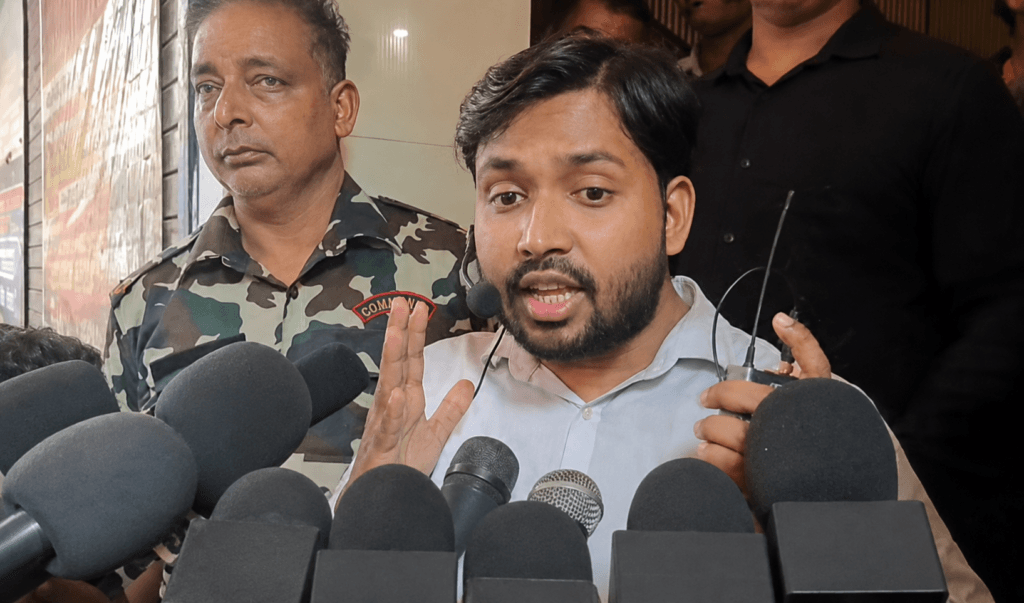
Khan Sir (Faizal Khan), the widely followed online educator, stands outside a court in Patna as legal teams discuss his anticipatory bail plea amid a ₹2 crore defamation suit and a separate FIR over a coaching institute firing incident.
Patna-based online educator Faizal Khan, popularly known as Khan Sir, is in fresh legal trouble with a renowned journalist filing a ₹2 crore defamation suit against him and other YouTube educators. The lawsuit seeks the removal of allegedly defamatory content online after a public spat that came after the journalist criticized online teachers. Khan Sir and fellow teacher Abhinay Sharma defended the role of online educators in their remarks and criticized the journalist’s comments.
Meanwhile, Khan Sir is battling an FIR filed near his coaching institute in Patna in connection with a firing incident. His lawyers have denied the claims of surrender and are scheduled to file an anticipatory bail plea in Patna Civil Court on Monday, June 8, 2026. This is a fairly important issue because it indicates the increasing legal and reputational risks for digital educators in India’s booming online learning space.
Why and How This Happened
The Defamation Suit: Origins in a Public Dispute
The ₹2 crore defamation suit is related to a public spat between the journalist and some online educators. In public, the journalist asked about the credibility, the quality of teaching, and the influence of YouTube teachers on students.
Khan Sir and Abhinay Sharma retaliated strongly on social media, defending the online teachers’ role in democratizing education and accusing the journalist of mocking the sector. These remarks were not only defamatory; they also harmed my professional reputation,” the journalist argues. The suit seeks Rs 2 crore in damages and removal of the allegedly defamatory material from the internet.
Key Legal Claims
Defamation: The journalist says the educators made false statements that damaged his reputation.
Content Removal: The suit seeks court orders to remove or block the offending posts/videos.
Damages: ₹2 crore as alleged damage to reputation.
The FIR: Firing Incident Near Coaching Institute
In another case, a FIR has been registered against Khan Sir in Patna near his coaching institute in a firing case. Specifics about the incident are limited, but reports say it was a confrontation that ended in the use of a firearm. Khan Sir was supposed to surrender in Patna High Court on Saturday, but his legal team denied any plan of surrender. They will fight the case legally and go for anticipatory bail from Patna Civil Court on June 8, 2026.
Why Educators Reacted So Strongly
Khan Sir and other online educators have built huge followings by offering free or low-cost education to students in Bihar, Uttar Pradesh, and elsewhere. They see themselves as opening up access to quality learning. Criticism from established journalists or media personalities can feel like an assault on their mission. The strong backlash is a sign of the sector’s growing confidence but also its vulnerability to reputational damage.
Statements
“Online educators are not just teachers; we are building futures,” Khan Sir said in a social media post. Criticism that undermines our work is wrong and damaging.
“The journalist’s remarks were defamatory,” said a legal representative for Khan Sir. “We will vigorously defend this lawsuit.
“This case shows the legal risks that digital creators face when they defend their profession,” said Rajesh Kumar, a media lawyer based in Delhi. Online teachers must react strongly, carefully, and legally.
“The education sector is changing fast, and such legal disputes will become more common,” said Dr. Anjali Mehta, an education policy expert at JNU. “Regulators must lay out clear guidelines for online educators.”
Background and Context
Khan Sir’s Rise as an Online Educator
Khan Sir, whose real name is Faizal Khan, began his career as a classroom teacher in Patna before he switched to YouTube. His free classes on preparation for competitive exams, especially for SSC, Banking and Railway exams garnered millions of views. His followers are from Bihar, UP, Rajasthan, and MP where students are dependent on his content to pass their exams. With more than 10 million subscribers on his YouTube channel, Khan Sir is one of the most influential online teachers in India.
Why It Matters
Impact on Online Educators
This case sends a clear warning: online defense of your profession can have serious legal ramifications. Now teachers have to balance strong public reactions with possible defamation suits. This issue is very important for the whole digital education industry that is still in the wild without any regulation.
Impact on Students
Court order could take down Khan Sir’s content, leaving students in the lurch. If legal battles are the stories in the headlines, trust in online educators could falter. But it also encourages students to verify the sources and locate dependable materials for their studies.
Impact on Journalists and Media
The suit highlights the power journalists wield to shape public opinion but also the dangers of venturing into defamatory territory. Media personalities must be cautious to ensure their criticism is factual and evidence-based to avoid legal backlash.
Industry Implications
Legal scrutiny on the ₹280-billion education technology sector is mounting. Platforms like YouTube might have to implement more effective content moderation and dispute resolution procedures. Regulators are likely to develop clearer guidelines on the behaviors expected of online educators and what they are able to provide.
India Angle
Khan Sir’s case is linked with lakhs of students of Bihar and UP who depend on his free lectures. The shooting incident and the defamation lawsuit are both testing his credibility. Students from Patna have posted on social media in support of Khan Sir. Their demand is simple: “Show the proof to Khan Sir, but do not stop his teaching.” This case is an indication that the online education sector in India has grown big and the legal issues are becoming serious.
My Take as an News Writer
This is a high-intent search topic from an SEO and journalism perspective. Terms such as “Khan Sir defamation suit,” “₹2 crore lawsuit online educator,” and “Khan Sir Patna FIR” are expected to trend. The story also reveals three important trends:
Digital Creators and Legal Threats: Educators Who Defend Their Work Are Confronting an Increasing Number of Defamation Lawsuits Content strategies should be aggressive but legally cautious.
Lawsuits undermine student confidence in teachers Student trust is at risk. Publishers should stick to verified facts and not speculate.
Lack of Regulation: India’s online education industry does not have well-defined guidelines. Media coverage should make clear what the regulatory environment is to protect students and teachers.
The best way for publishers to get maximum discoverability is to use “Khan Sir,” “₹2 crore defamation,” and “Patna FIR” in headlines. Stick to the facts and legal developments, not sensationalism.
What Next
Anticipatory Bail Filing: Khan Sir’s team will file for anticipatory bail in Patna Civil Court on 8th June 2026. Because if he can be bought, then he evades arrest.
How a Defamation Case Proceeds: The court can order the removal of content or the parties (journalists and educators) to undergo mediation.
Content Removal Orders: If the court rules in favor of the journalist, then Khan Sir’s videos or posts may be removed.
Increased Legal Awareness: More lawsuits may be filed against teachers, making the industry cautious.
Regulatory Guidelines: Authorities can set rules for the conduct of online educators and moderation of content.
Public Support Campaigns: Students and followers can run social media campaigns to support Khan Sir.
Possibility of settlement: Both sides may settle to avoid a protracted legal fight. /This Story also covered by sundayguardianlive/
Conclusion.
Now, Khan Sir is facing increasing heat in courts—a ₹2 crore defamation suit by a journalist and an FIR for a firing incident in Patna. His legal team has denied the claims of surrender and will be moving for anticipatory bail on 8th June 2026. The case underscores the mounting legal and reputational risks online educators are facing in India’s booming digital learning space.
This is a very important issue, as it is not only about Khan Sir but also about lakhs of students who depend on their free content. “The industry is evolving, and regulators, platforms, and creators need to tread carefully on the legal line to build trust and credibility. The future of online education in India will hinge on the skill of the Khan Sir team and whether the defamation case is won or lost.