
Mumbai’s civic body will use CCTV surveillance and heavy fines to curb illegal waste dumping at identified hotspots, as part of a High Court-mandated push to clean up Garbage Vulnerable Points across the city.
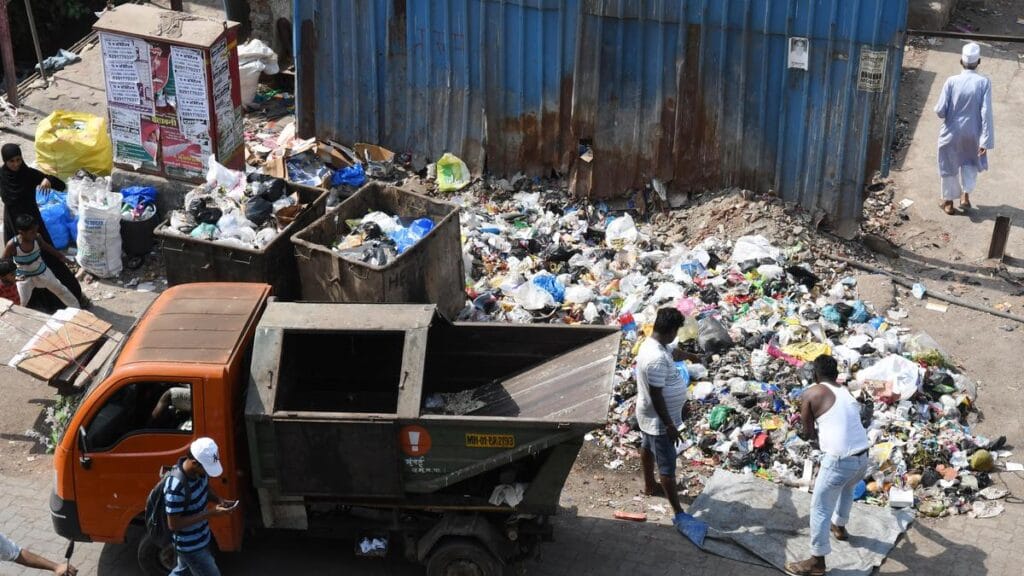
A BMC sanitation worker clears waste at a known garbage dumping hotspot in Mumbai. Image Credit: The Hindu
Mumbai’s fight against illegal waste dumping is getting a technological upgrade. The Brihanmumbai Municipal Corporation (BMC) has launched a citywide cleanliness drive that will use CCTV cameras to monitor garbage dumping hotspots and impose strict penalties on those found littering or illegally dumping waste. The move comes after the Bombay High Court directed the civic body to take stronger action against open dumping and persistent garbage piles in the city and suburbs.
The corporation’s Solid Waste Management Department has described the initiative as a comprehensive campaign to improve visible cleanliness, prevent open dumping and permanently eliminate Garbage Vulnerable Points (GVPs)—locations where waste is repeatedly dumped despite regular clearing. For residents who have long complained about overflowing bins, stinking lanes and stray dogs scattering garbage, the BMC promises a more disciplined and tech-enabled approach.
Why the BMC is using CCTV for waste monitoring
The decision to install CCTV cameras at garbage dumping hotspots is driven by both practical and legal factors. On the ground, BMC officials have found that many GVPs reappear because people continue to dump waste at the same spots even after the area is cleared. Without evidence, it is difficult to identify and penalise the offenders, especially when dumping happens late at night or in poorly monitored areas.
CCTV surveillance offers a way to:
Capture real-time footage of illegal dumping
Identify individuals, vehicles or contractors responsible
Build a database of repeat offenders
Deter future violations through the threat of fines and prosecution
The Bombay High Court’s directions have added urgency to the campaign. The court has been hearing petitions on Mumbai’s waste management and cleanliness and has asked the BMC to demonstrate concrete steps to reduce open dumping and improve sanitation. By introducing CCTV monitoring and strict penalties, the civic body is signalling compliance with the court’s orders while attempting to change behaviour on the ground. This story was also covered by The Hindu.
Yeh issue kaafi important hai because Mumbai generates thousands of tonnes of waste every day, and illegal dumping undermines even the best collection systems.
How the cleanliness drive will work
Under the new campaign, the BMC’s Solid Waste Management Department will identify and map Garbage Vulnerable Points across all wards in Mumbai and its suburbs. These are locations where waste tends to accumulate repeatedly, often because of:
Inadequate bin capacity or frequency of collection
Narrow lanes where garbage trucks cannot enter
Informal settlements with limited waste infrastructure
Habitual dumping by residents, shops or small establishments
At these identified hotspots, CCTV cameras will be installed to monitor activity around the clock. The footage will be reviewed by ward-level officials and a dedicated monitoring cell. Those found illegally dumping waste—whether individuals, housing societies, shops or commercial establishments—will face strict penalties under existing municipal laws and solid waste management rules.
The BMC has indicated that fines will be calibrated based on the severity and frequency of the offence. Repeat offenders could face higher fines, sealing of premises or legal action. The civic body is also expected to launch public awareness campaigns to inform residents about proper waste disposal and the consequences of illegal dumping.
Statements from BMC and officials
While the exact wording of official statements may vary across releases, the BMC’s position is clear: the city’s cleanliness cannot improve unless illegal dumping is curbed through enforcement and technology. A senior official from the Solid Waste Management Department described the CCTV initiative as a “game-changer” that will help catch violators who currently operate with impunity.
The civic body is also expected to emphasise that the goal is not just punishment but behaviour change. By making it clear that dumping is being watched and penalised, the BMC hopes to create a deterrent effect. In simple Hinglish, jab logon ko pata hoga ki camera chal raha hai, toh wo gandagi nahi phainkenge.
Citizen groups and housing societies have been asked to cooperate by ensuring that waste is segregated, stored properly and handed over to BMC collectors or authorised pick-up services. The department has also reminded residents that dumping construction debris, biomedical waste or hazardous material in regular bins is a separate offence that will attract heavier penalties.
Background and context
Mumbai’s waste management challenges are well-documented. The city generates over 11,000 tonnes of solid waste per day, according to BMC data from recent years. While the civic body has improved door-to-door collection and introduced segregation-at-source rules, illegal dumping remains a persistent problem.
Garbage Vulnerable Points have been a particular pain point. These are spots where waste tends to accumulate despite regular clearing, often because of high footfall, dense population or poor infrastructure. In some areas, residents have complained that BMC trucks do not come on time or that bins overflow, leading them to dump waste nearby. In others, shops and establishments dump waste late at night to avoid fines, knowing that enforcement is weak.
The Bombay High Court has been hearing petitions on Mumbai’s sanitation and waste issues, with judges expressing frustration over the slow progress. The court has asked the BMC to submit action plans, identify GVPs and demonstrate measurable improvement. The CCTV-driven cleanliness drive is part of that response.
Timeline
Past years: Mumbai struggles with illegal dumping and recurring Garbage Vulnerable Points despite regular cleaning drives.
Recent months: The Bombay High Court directs BMC to take stronger action against open dumping and improve visible cleanliness.
Now: BMC launches a citywide cleanliness drive and announces CCTV surveillance at GVPs and strict penalties for violators.
Coming weeks: Cameras to be installed at identified hotspots; fines and enforcement actions expected to begin.
Ongoing: Public awareness campaigns and ward-level monitoring to support the initiative.
Also Read: MNS Chief Raj Thackeray Alleges ₹18-Crore Donation ‘Theft’ at Mumbai Siddhivinayak Temple
Why This Matters
This matters because illegal waste dumping directly impacts public health, aesthetics and quality of life. Overflowing garbage attracts stray animals, breeds mosquitoes and creates foul odours, especially during monsoon and summer. It also undermines the work of sanitation staff who clear waste regularly only to see it pile up again.
It also matters because Mumbai’s global image is tied to its cleanliness. As a financial capital and tourist destination, the city cannot afford to be seen as dirty and poorly managed. The BMC’s use of CCTV sends a message that the civic body is serious about enforcement, not just seasonal clean-up drives.
For residents, the initiative could mean cleaner streets and fewer garbage piles if implemented effectively. In simple Hinglish, saaf sadak aur clean colony sabko pasand hai, bas rule follow karna padega.
India angle
For Indian readers, this story is directly relevant because waste management is a major urban challenge across India. From Delhi to Bengaluru to Chennai, cities struggle with illegal dumping, overflowing bins and inadequate processing capacity. Mumbai’s CCTV-driven approach could become a model for other municipal corporations looking to curb littering and enforce solid waste rules.
The India angle also includes the legal dimension. The Solid Waste Management Rules, 2016, mandate segregation, proper disposal and penalties for violations. However, enforcement is often weak. If Mumbai’s CCTV initiative leads to measurable improvement, it could encourage other cities to adopt similar technology-backed enforcement.
There is also the civic responsibility angle. Indian urban residents often complain about dirty streets but may not always follow waste rules themselves. Campaigns like this force a conversation about individual accountability alongside government action.
Analysis
My opinion is that the CCTV plan is logical but will only work if paired with consistent enforcement. Cameras alone do not clean streets; they generate evidence that must be acted upon. If fines are imposed sporadically or corruption creeps in, the deterrent effect will fade.
I also think the BMC must address the root causes of GVPs. If bins are too small, collection is irregular or trucks cannot access certain lanes, people will find ways to dump waste regardless of cameras. Infrastructure upgrades and schedule improvements must go hand-in-hand with surveillance.
What Next
The immediate next step will be the installation of CCTV cameras at identified Garbage Vulnerable Points across Mumbai’s wards. The BMC will need to ensure that cameras are functional, footage is stored securely and monitoring staff are trained to review and act on violations.
Once the system is operational, the civic body is expected to begin issuing fines and penalties to those caught illegally dumping waste. Public awareness campaigns will likely run in parallel to inform residents about the rules and consequences.
Longer term, the success of the initiative will be measured by whether GVPs are permanently eliminated or simply shift to new locations. If the BMC can reduce open dumping and improve visible cleanliness, it could set a benchmark for other Indian cities facing similar challenges.
Conclusion
The BMC’s decision to monitor illegal waste dumping through CCTV surveillance marks a significant escalation in Mumbai’s fight against open garbage and recurring dumping hotspots. Backed by Bombay High Court directions, the cleanliness drive aims to improve visible cleanliness across the city and suburbs by combining technology, enforcement and public awareness.
While the plan is ambitious, its success will depend on consistent implementation, fair penalties and parallel improvements in waste infrastructure. For Mumbai’s residents, the promise is simple: cleaner streets and fewer garbage piles, but only if everyone plays their part.
Written By A. Jack