
Raj Thackeray’s claim of ₹18 crore being diverted from Siddhivinayak Temple donations has sparked demands for a probe, even as the temple trust and political rivals question the evidence behind the serious corruption charge.
The Siddhivinayak Temple in Mumbai’s Prabhadevi, one of India’s wealthiest and most visited Ganesh temples. Image Credit: The Hindu
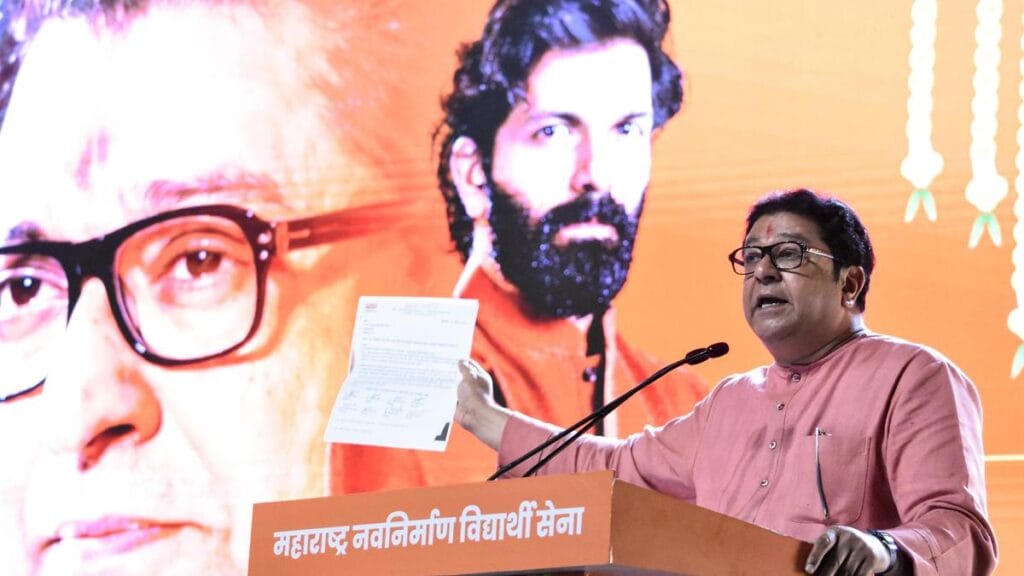
Mumbai’s iconic Siddhivinayak Temple, a major religious and financial institution, has become of a fresh political controversy after MNS chief Raj Thackeray alleged that ₹18 crore in donations are being syphoned off every year from the temple’s collections. Speaking on Sunday, August 2, 2026, Thackeray claimed that the alleged “theft” represents about 10% of the temple’s reported revenue of ₹182 crore in fiscal 2025-26.
Thackeray, who has often targeted the ruling establishment in Maharashtra on issues of governance and corruption, went a step further by saying that “even temples are not safe these days” and demanded that Prime Minister Narendra Modi speak on the issue. The allegation has quickly drawn reactions from rival parties, temple authorities and devotees, with calls for a transparent probe to verify the claims.
What Raj Thackeray has alleged
According to Thackeray, the Siddhivinayak Temple, which sees burgeoning devotees every year and is one of the most financially lucrative religious institutions in the country, is losing ₹18 crore annually through what he described as a “theft” of donations. He did not provide detailed documentary evidence in his initial remarks but asserted that the scale of the alleged diversion warranted a high-level inquiry.
The MNS chief’s allegation implies that a significant portion of the temple’s income—roughly one-tenth—is not reaching the official accounts or is being misappropriated before it is recorded. Given the temple’s high footfall and large donation inflows, even a small percentage of unaccounted money can translate into a huge sum. This story was also covered by The Hindu.
Thackeray’s demand for the Prime Minister to comment underscores the political weight he is attaching to the issue. By framing it as a matter of temple safety and financial integrity, he is seeking to position the MNS as a watchdog against corruption in religious institutions.
Why and how the allegation gained traction
The allegation gained immediate traction for several reasons. First, the Siddhivinayak Temple is not just a place of worship; it is a major economic entity. With reported revenues of ₹182 crore in FY2026, it ranks among the wealthiest temples in India. Any claim of financial irregularity automatically draws public interest.
Second, temple finances in India have been a sensitive topic. In several states, there have been debates over how temple funds are managed, whether trusts are transparent and whether government oversight is appropriate. Thackeray’s claim taps into that broader anxiety about accountability in religious institutions.
Third, the timing is politically significant. Maharashtra has a history of temple-related political battles, with parties often using such issues to mobilise support. By alleging a ₹18-crore “theft”, Thackeray is creating a narrative that can be leveraged against rivals, especially if the ruling dispensation is seen as close to the temple trust.
Yeh issue kaafi important hai because it combines faith, finance and politics—three highly charged elements in Indian public life.
Statements and reactions
Raj Thackeray’s core statement was sharp and direct: even temples are not safe these days, and the Prime Minister should speak on this issue. While the exact wording of his remarks may vary across media reports, the thrust is clear—he is alleging systemic corruption at the Siddhivinayak Temple and demanding a response from the highest levels of government.
As of now, the Siddhivinayak Temple trust has not issued a detailed public rebuttal, but sources close to the management have questioned the basis of Thackeray’s claim. Temple officials typically maintain that donations are counted under strict supervision, with multiple witnesses and CCTV coverage, and that audited accounts are filed regularly.
Political rivals of the MNS have also reacted, with some dismissing the allegation as a “gimmick” and others calling for a probe if there is credible evidence. The Shiv Sena, BJP and Congress have yet to take a unified position, but the issue is likely to feature in political discourse given the temple’s prominence.
Background and context
The Siddhivinayak Temple in Prabhadevi, Mumbai, is one of the most revered Ganesh temples in India. It attracts lakhs of devotees every year, especially on Tuesdays, during festivals like Ganesh Chaturthi and on auspicious days. The temple’s income comes from:
Cash donations (hundi collections)
Online donations and transfers
Special pujas and offerings
Merchandise and prasad sales
In recent years, the temple has reported revenues exceeding ₹150–180 crore annually, making it one of the wealthiest religious trusts in the country. The funds are used for temple operations, maintenance, charitable activities, and donations to social causes.
Temple finances in India have occasionally been scrutinised. In some states, governments have taken over the management of major temples to ensure transparency. In others, independent trusts run the institutions with varying degrees of public disclosure. Allegations of mismanagement or corruption, when they arise, tend to spark intense debate because they touch on both faith and public trust.
Timeline
FY2025-26: Siddhivinayak Temple reports revenue of around ₹182 crore.
August 2, 2026 (Sunday): MNS chief Raj Thackeray alleges ₹18 crore in donations are being syphoned off annually.
Same day: Thackeray demands PM Narendra Modi speak on the issue; says “even temples are not safe.”
Coming days: Temple trust and political parties are expected to respond; calls for a probe may intensify.
Also Read: Delhi Govt Announces Up to Rs 7.5 Lakh Compensation for Unnatural Jail Deaths
Why This Matters
This matters because temple finances are ultimately public money in a moral sense. Devotees donate with the belief that their contributions will be used for religious and charitable purposes. If even a fraction is diverted, it undermines that trust.
It also matters because religious institutions in India operate with significant autonomy. Unlike government bodies, they are not always subject to the same level of audit and public scrutiny. When allegations of this magnitude arise, they force a conversation about transparency, governance and oversight.
For Mumbai’s devotees, the Siddhivinayak Temple is not just a religious site; it is a symbol of civic pride. Any suggestion of corruption can dent that image. In simple Hinglish, jab mandir ke paise ka sawal aata hai, toh logon ke dil par lagta hai.
India angle
For Indian readers, this story is directly relevant because temple corruption allegations are a recurring theme across the country. From Tamil Nadu’s famous temples to Uttar Pradesh’s mathas, questions about fund management and political interference are common.
The India angle also includes the legal and regulatory dimension. Temple trusts are governed by a mix of state laws, trust deeds and central guidelines. Some states have Hindu Religious and Charitable Endowments (HRCE) departments that oversee major temples; others rely on independent trusts. The Siddhivinayak Temple operates under its own trust, which adds another layer to the accountability question.
There is also the political angle. Parties often use temple issues to mobilise voters, especially in Maharashtra where religion and politics are closely intertwined. How this allegation plays out could influence local narratives and even electoral strategies.
Analysis
My opinion is that the allegation will only gain credibility if backed by concrete evidence—such as audit discrepancies, whistleblower testimony or forensic analysis of donation records. Without that, it risks being dismissed as a political stunt.
I also think the temple trust’s response will be critical. If it opens its accounts to an independent audit and invites public scrutiny, it can defuse the controversy. If it becomes defensive, speculation will grow.
What Next
The immediate next step will be reactions from the Siddhivinayak Temple trust, the Maharashtra government and other political parties. If pressure mounts, there could be demands for an independent inquiry or a special audit of the temple’s finances.
If credible evidence emerges, the issue could escalate into a legal and political battle, with calls for resignations or prosecutions. If not, the allegation may fade after an initial media storm.
Longer term, the case could renew debates over temple governance in India. If the Siddhivinayak Trust adopts more transparent practices—such as publishing detailed annual reports, live-streaming hundi counting or inviting external auditors—it could set a benchmark for other major temples.
Conclusion
Raj Thackeray’s allegation of ₹18 crore being syphoned off annually from Mumbai’s Siddhivinayak Temple has injected a fresh controversy into Maharashtra’s political and religious landscape. With the temple reporting ₹182 crore in revenue for FY2026, the claim of a 10% “theft” strikes at the heart of public trust in religious institutions.
While the MNS chief has demanded that Prime Minister Narendra Modi speak on the issue, the ultimate test will be whether credible evidence emerges and whether the temple trust responds with transparency. For devotees, the key question is simple: are their donations being used as intended, or is a portion being diverted? The answer will determine whether this remains a political allegation or becomes a catalyst for real reform.
Written By A. Jack