
Mumbai Customs has seized suspected hydroponic weed worth nearly Rs 20 crore in two airport operations and arrested three passengers linked to Bangkok-based drug smuggling routes. Officials also booked a separate case of foreign currency smuggling at Chhatrapati Shivaji Maharaj International Airport.
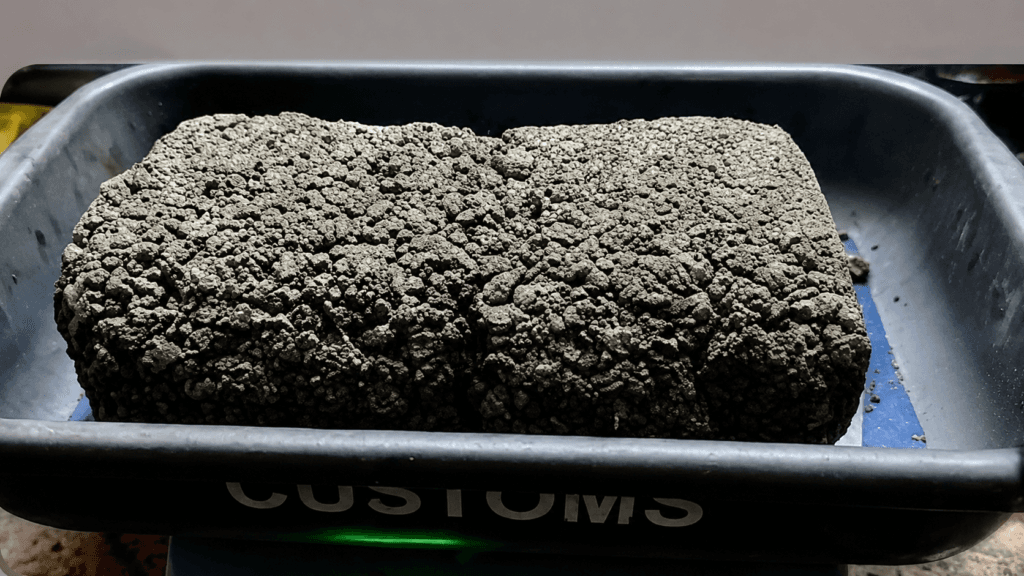
Mumbai Customs officers conduct checks at Chhatrapati Shivaji Maharaj International Airport after seizing suspected hydroponic weed and foreign currency in separate cases.
Mumbai Customs has once again cracked down on international smuggling activity at Chhatrapati Shivaji Maharaj International Airport, where officials seized suspected hydroponic weed worth nearly Rs 20 crore in two separate operations between May 7 and May 8. The seizures, based on passenger profiling and specific intelligence inputs, led to the detention of three passengers and exposed what investigators believe is a larger narcotics network operating through Bangkok-linked routes.
What Happened
In the biggest seizure, customs officers intercepted a passenger who arrived in Mumbai from Bangkok on a Thai Airways flight. During the search, officials allegedly recovered 17.915 kilograms of suspected hydroponic weed hidden in the passenger’s baggage. The estimated market value of the narcotic substance was placed at around Rs 17.91 crore. News18 has covered the full story.
In a second operation, customs officers detained two passengers who arrived from Bangkok on an Air India flight. A detailed inspection of their luggage reportedly led to the recovery of 1.9 kilograms of suspected hydroponic weed valued at approximately Rs 1.9 crore. Both cases are now being investigated under the Narcotic Drugs and Psychotropic Substances Act, and the accused passengers are in custody.
How The Smuggling Worked
The pattern suggests that the smugglers were trying to use regular international passenger flights to move narcotics into India. That method is commonly preferred because it reduces the need for large consignment shipments and allows traffickers to split risk across multiple couriers. In this case, the use of baggage concealment indicates that the passengers may have been acting as carriers rather than as the main organizers.
Officials said the seizures were made through a combination of passenger profiling and intelligence inputs. That matters because airport drug busts are rarely accidental; they usually depend on behavioural indicators, route history, travel patterns and targeted screening. In simple words, this was not a random check — it was a focused operation built on clues.
The Foreign Currency Case
Apart from the drug seizures, customs officials also booked a separate case involving foreign currency smuggling. During profiling checks, officers intercepted a passenger travelling from Jamnagar to Dubai via Mumbai on an IndiGo flight.
A search reportedly led to the recovery of USD 1,00,000, which is equivalent to nearly Rs 93.45 lakh. Officials suspect the money was being carried in violation of foreign exchange regulations. While this case is separate from the narcotics seizure, it reinforces the broader point that Mumbai airport continues to be a key enforcement zone for cross-border illegal movement of both drugs and cash.
Why Bangkok Route Is Important
Bangkok has repeatedly emerged as a source point in hydroponic weed trafficking into India, and this latest case appears to fit that wider trend. Hydroponic weed is often more potent and higher in value than conventional cannabis, which makes it attractive to smugglers seeking bigger returns per kilogram.
The route from Bangkok to Mumbai is also commercially busy, which gives traffickers an opportunity to blend in with normal passengers. That is why customs officials rely heavily on profiling and intelligence rather than only physical baggage checks. This issue kaafi important hai because it shows how international drug networks adapt quickly to regular travel routes and try to hide behind legitimate passenger traffic.
Background And Context
Mumbai airport has seen a sharp rise in attempts to smuggle hydroponic weed in recent months. Customs officials say intensified surveillance, data profiling and intelligence-led operations have helped them crack down on carriers trying to exploit international flights.
This is part of a larger pattern seen at major Indian airports, where narcotics enforcement has become more sophisticated because smugglers also keep changing tactics. Instead of bulk shipments, they often rely on smaller but high-value loads carried by passengers. That makes each interception significant because even one successful seizure can disrupt a wider supply chain.
The separate currency case also reflects how airports remain vulnerable to multiple kinds of smuggling, not just narcotics. Cash movement across borders, especially when undeclared or misdeclared, can be linked to money laundering, hawala flows or other illegal transactions. So the airport is not just a travel hub; it is also a high-risk enforcement zone.
Timeline
May 7, 2026: Customs operations begin at Mumbai airport based on profiling and intelligence.
May 7-8, 2026: A passenger from Bangkok on Thai Airways is intercepted with 17.915 kg of suspected hydroponic weed.
May 7-8, 2026: Two passengers arriving from Bangkok on Air India are detained with 1.9 kg of suspected hydroponic weed.
Same period: A separate passenger on the Jamnagar-Mumbai-Dubai route is found with USD 1,00,000 in foreign currency.
Ongoing: All cases are being investigated under the NDPS Act and foreign exchange rules.
Also Read: CBI Raids 17 Mumbai Locations in Anil Ambani-Led Reliance ADA Group Bank Fraud Probe
Why This Matters
This matters because drug trafficking at airports is not a victimless crime. Hydroponic weed is a narcotic product, and its movement into India can feed local distribution networks, addiction risks and organised crime. Every successful seizure is not just a customs success; it is a disruption to a larger chain that affects public health and law and order.
It also matters because airport smuggling cases often reveal the sophistication of trafficking groups. They do not rely on one-off couriers alone; they use routes, concealment methods and money channels that can stretch across countries. For Indian readers, this is a reminder that border control is not only about land borders — air routes are equally critical.
India Angle
For Indian travellers and airport users, this case has a clear local angle because it involves one of the country’s busiest international gateways. Mumbai airport handles a massive flow of passengers every day, and that makes targeted enforcement essential. The fact that customs officials are using profiling and intelligence to detect smugglers shows how security is increasingly data-driven in India’s aviation system.
There is also a broader Indian urban angle. Drug trafficking and illegal currency movement do not stay at the airport; they reach city markets, financial channels and local criminal ecosystems. So when Mumbai Customs intercepts a large haul, the effect is not limited to the airport itself. It can affect supply routes into Maharashtra and beyond. In daily language, yeh sirf ek airport raid nahi hai — it is part of a bigger fight against organised illegal networks.
Analysis
My reading is that the customs department is under pressure to keep tightening airport screening, and this case shows that profiling-based enforcement is working. The repeated Bangkok connection also suggests that trafficking networks may be relying on a stable source route because it is commercially convenient and operationally profitable. However, the higher the frequency of such interceptions, the greater the risk for smugglers that their route gets compromised.
What Next
The next step will likely be detailed interrogation of the three accused passengers to identify who arranged the consignments, who financed the operation and where the narcotics were meant to be delivered. Customs and narcotics officials may also try to trace the wider network, including handlers at the source and destination ends.
The foreign currency case may also lead to further inquiry into the source of the money and whether it was linked to any illegal remittance or hawala operation. Since all cases are under active investigation, more arrests or follow-up seizures are possible. If officials can connect the dots across multiple travel routes, this operation could become part of a bigger crackdown on airport-based smuggling.
Conclusion
Mumbai Customs’ seizure of suspected hydroponic weed worth nearly Rs 20 crore and the separate recovery of foreign currency underline how serious airport smuggling challenges remain in India. The Bangkok route, baggage concealment, and passenger profiling all point to a well-adapted trafficking model that customs officers are now working hard to counter.
The arrests of three passengers and the separate currency case show that airport security is not just about convenience or travel flow—it is a frontline defense against narcotics and financial crime. For Mumbai, and for India more broadly, this is a reminder that vigilance at airports remains essential, because the fight against smuggling is constantly evolving.
Written By A. Jack