
The affected Mumbai outlets are located in Vile Parle, Borivali and Ghatkopar. Their licences will remain suspended until the company demonstrates compliance with food-safety regulations.
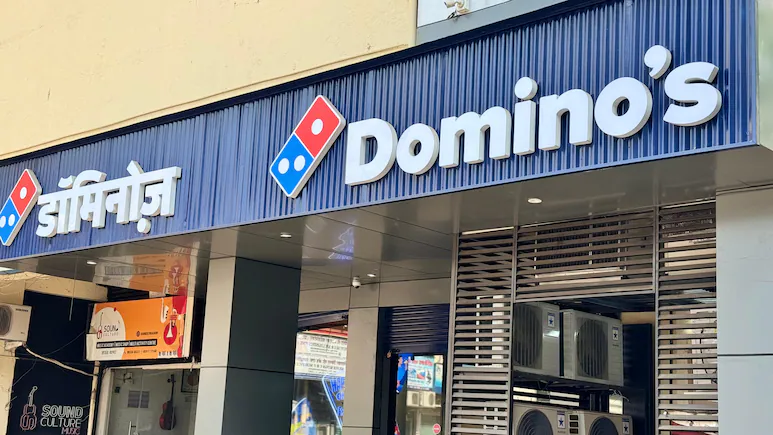
A Domino’s Pizza outlet in Mumbai after Maharashtra FDA inspections flagged alleged hygiene. Image Credit: NDTV Profit
Three Domino’s Pizza outlets in Mumbai have lost their food-business licenses after the Maharashtra Food and Drug Administration found multiple alleged violations of food-safety and hygiene norms.
The affected outlets are located in Vile Parle West, Borivali West and the R-City Mall in Ghatkopar West. All three are operated by Jubilant FoodWorks Ltd., the company responsible for Domino’s Pizza operations in India.
The FDA action followed inspections conducted as part of a special food-safety drive in Maharashtra. Officials found deficiencies in sanitation, pest control, food storage, temperature monitoring, cleaning schedules and documentation.
The Ghatkopar outlet faced the most detailed set of observations. Inspectors reported pest infestation, inadequate pest-control records, failure to follow FIFO and FEFO stock rotation, improper temperature controls and gaps in food-handler records.
What the FDA found at Ghatkopar
The Domino’s outlet inside R-City Mall on Lal Bahadur Shastri Marg in Ghatkopar West was found to have several food-safety deficiencies. Inspectors reported evidence of pest infestation and said the outlet lacked effective pest-control measures and supporting documentation. Pest-control records are important because food businesses must be able to demonstrate that preventive measures are being taken regularly.
The FDA also found that the outlet was not properly following FIFO and FEFO inventory systems. FIFO means “first in, first out,” while FEFO means “first expired, first out.” These systems ensure that older food stock is used before newer stock and that products approaching their expiry date are prioritized. Without such controls, ingredients may remain in storage beyond their intended shelf life. This story was also covered by NDTV Profit.
The inspection also found deficiencies in temperature monitoring. Pizza ingredients such as cheese, meat, sauces and prepared toppings may require controlled storage. If cold-chain temperatures are not monitored correctly, the quality and safety of the food can deteriorate.
The outlet reportedly lacked a proper cleaning and sanitation schedule. A defined schedule should identify what is cleaned, how frequently it is cleaned, which materials are used and who is responsible for completing the task.
Missing records and certificates
The Ghatkopar branch was also unable to produce several mandatory documents during inspection. These included food-grade certificates for materials that come into contact with food. Such certificates help establish that packaging, containers, utensils and other materials are suitable for food use.
Inspectors also noted the absence of routine food and water testing reports. Regular testing can help businesses identify contamination risks in ingredients, drinking water and food-preparation areas.
The outlet reportedly lacked calibration and preventive-maintenance records as well. Equipment such as refrigerators, freezers, ovens and temperature-monitoring devices must be maintained and calibrated to function reliably.
The FDA also raised concerns about food-handler records. The outlet did not produce adequate documentation relating to cleanliness, medical examinations, licensing and protective equipment such as gloves and aprons.
These records may appear administrative, but they are part of a food business’s safety system. If a worker is unwell or food is handled without proper protective equipment, contamination risks can rise.
The absence of documents does not automatically prove that every product sold was unsafe. However, it indicates that the outlet could not demonstrate compliance with required procedures at the time of inspection.
Violations at Vile Parle outlet
The Domino’s outlet at Vile Parle West is located at Shop Nos. 6, 8 and 10 on S. V. Road near the D. J. Road corner.
The FDA suspended its license after inspectors recorded several violations of the required hygiene and sanitary practices under Schedule 4 of the Food Safety and Standards Regulations.
The observations included deficiencies in drinking-water arrangements, food storage, pest control and hygiene facilities. Inspectors also raised concerns about temperature monitoring for frozen food and the sanitation of food-preparation areas.
The outlet was also found to have shortcomings related to hand-washing facilities. Hand hygiene is one of the most basic food-safety controls because employees can transfer germs to ingredients, utensils and ready-to-eat products.
The inspection findings suggest that the issue was not limited to one isolated cleaning lapse. Rather, the FDA identified several operational areas requiring improvement.
Action against Borivali outlet
The third Mumbai outlet is located on the ground and first floors of Shop No. 14 on Veer Savarkar Road, near St. Francis School Ground in IC Colony, Borivali West.
The FDA said the outlet failed to adhere to mandatory food-safety protocols and suspended its license.
The available details indicate that the violations were related to Schedule 4 hygiene and sanitary requirements. These requirements cover the basic conditions under which food must be received, stored, prepared, handled and served.
The suspension means the outlet cannot legally continue the food business covered by the license until the regulatory requirements are met and the FDA is satisfied with the corrective measures.
Karad outlet also faces action
Apart from the three Mumbai outlets, a Domino’s Pizza store in Maharashtra’s Karad has also lost its operating license following the FDA inspection drive.
The Karad outlet is located in the Malkapur area of Satara district, according to reports. Inspectors identified non-compliances relating to infrastructure, equipment, cleanliness and pest control.
The action shows that the FDA’s inspections extended beyond Mumbai’s major commercial outlets. Restaurants in smaller cities and towns were also examined for compliance.
The Karad action is separate from the three Mumbai suspensions, but it adds to the concern around the consistency of operating standards across a large food-service network.
Regulations involved
The action was taken under the Food Safety and Standards (Licensing and Registration of Food Businesses) Regulations, 2011. The FDA specifically referred to the hygiene and sanitary requirements listed in Schedule 4.
Schedule 4 covers the basic practices expected from food businesses. These include clean premises, hygienic food handling, safe water, pest control, appropriate storage, worker health and suitable equipment.
A food license gives a business permission to operate under the regulatory framework. It also places continuing responsibilities on the operator.
A license suspension is generally intended to prevent a business from operating until the identified risks are corrected. The company may have to submit a compliance report, carry out sanitation and pest-control work, improve records and allow a follow-up inspection.
The suspension is a regulatory action, not necessarily a final finding that all food sold by the outlet was contaminated. The FDA’s findings relate to the conditions and systems observed during inspection.
Background to the FDA drive
The Maharashtra FDA has been conducting a special inspection campaign covering restaurants, hotels, bakeries, quick-commerce facilities and major food brands.
The inspection drive reportedly covered 104 outlets across several restaurant chains, including Domino’s Pizza, KFC, Pizza Hut, McDonald’s, Subway, Burger King, Starbucks and Monginis.
The campaign comes after a series of food-safety actions in Maharashtra. Authorities have recently suspended food licenses, seized products and issued notices to establishments accused of poor hygiene, expired stock, inadequate storage and other violations.
Restaurants that operate as part of national chains face particular scrutiny because customers generally expect standardized safety procedures across all branches.
A national brand may have detailed operating manuals, but compliance still depends on local managers, employees, suppliers, maintenance teams and contractors.
Also Read: Pune FDA Suspends 12 Food Licenses, Seizes Stock Worth ₹41.36 Lakh
Timeline
The Maharashtra FDA conducted inspections under its special drive between July 10 and August 11, 2026.
During the inspections, officials examined Domino’s outlets and other food-service businesses for hygiene, storage, pest control, and documentation compliance.
The Ghatkopar R-City Mall outlet was found with pest control, cleaning, inventory, temperature and record-keeping deficiencies.
The Vile Parle West outlet was flagged for shortcomings involving drinking water, food storage, pest control, sanitation and hand-washing facilities.
The Borivali West outlet was penalized for failing to follow mandated food-safety protocols.
A Domino’s outlet in Malkapur, Karad, was also suspended after inspectors identified separate infrastructure, cleanliness, equipment and pest-control deficiencies.
The licenses will remain suspended until the outlets demonstrate compliance with the applicable food-safety regulations.
Why This Matters
This matters because pizza outlets handle a wide range of ingredients, including dairy products, meat, sauces, vegetables and ready-to-eat toppings. Poor temperature control or cross-contamination can affect customers quickly.
Pest infestation is particularly concerning in food-preparation areas. Effective pest control is not only about removing insects after they are seen; it requires regular prevention, monitoring and documentation.
The case also highlights the importance of food safety paperwork. Cleaning schedules, water-testing reports, calibration records and staff medical documents help create accountability inside a restaurant.
For customers, the action may affect confidence in quick-service food brands. People often choose national chains because they expect uniform standards. If inspections reveal serious differences between branches, companies must strengthen their internal monitoring.
The suspensions also protect responsible operators. Businesses that invest in hygiene, staff training and proper storage should not be undercut by outlets that fail to meet the same standards.
India’s angle
For Indian consumers, this is an important reminder that a familiar brand name does not eliminate the need for regulatory checks. Every restaurant outlet must maintain food-safety standards at the local level.
Mumbai’s dense population and busy food-delivery market mean that a single outlet can serve hundreds of customers each day. Any failure in storage, sanitation or pest control can therefore affect a large number of people.
Yeh issue kaafi important hai because customers usually see only the dining area or delivery box, not the kitchen, cold room or storage records behind the order.
Consumers can check whether food packaging is intact, avoid products with unusual odors or appearance and report suspected hygiene violations to the relevant authorities or the company.
Restaurant companies should also make complaint channels easy to use. A customer complaint can reveal a problem that a routine inspection may not immediately detect.
For India’s fast-growing food-delivery industry, the lesson is clear: speed, convenience and brand recognition must be supported by strong safety systems.
Analysis
The company should also communicate clearly with customers. It should explain what corrective action has been taken and whether the affected outlets will reopen only after regulatory approval.
The FDA’s campaign is useful, but inspections should be followed by public updates. Consumers should know when a suspended outlet has complied and whether its license has been restored.
It is also important to maintain proportion. A license suspension confirms regulatory non-compliance at the time of inspection, but it does not mean every Domino’s outlet in Mumbai or every product sold by the brand is unsafe.
What Next
The suspended outlets will likely have to stop operations covered by their food-business licenses. They may need to complete deep cleaning, pest-control treatment, equipment maintenance and staff training.
The company will also need to prepare missing records, including food-grade certificates, food and water testing reports, calibration documents, preventive-maintenance records and food-handler health records.
FDA officials may conduct follow-up inspections to verify whether the deficiencies have been corrected. The outlets can seek restoration of their licenses only after meeting the required compliance conditions.
If the FDA finds that violations continue, the suspension may remain in force or lead to further legal proceedings.
The department may also inspect additional outlets operated by the company and other major food chains as part of the ongoing drive.
Customers who have concerns about food purchased from the affected branches should preserve bills, order details and photographs and report complaints through official channels.
Conclusion
The Maharashtra FDA has suspended the food-business licences of three Domino’s Pizza outlets in Mumbai after inspections found alleged violations involving pest control, hygiene, food storage, temperature monitoring, cleaning and mandatory safety records.
The affected outlets are located in Vile Parle West, Borivali West and the R-City Mall in Ghatkopar West. A Domino’s outlet in Malkapur, Karad, has also faced license suspension following a separate inspection.
The action highlights the fact that food safety depends on daily operations, not simply on a company’s reputation. Proper inventory rotation, clean preparation areas, safe temperatures, trained staff and complete documentation are essential.
The outlets will remain suspended until they demonstrate compliance with food-safety regulations. The next test will be whether the company uses the action to make long-term improvements or treats it as a temporary regulatory setback.
For consumers, the message is straightforward: convenience food must also be safe food. For restaurant operators, Maharashtra’s latest inspections show that hygiene violations can lead to immediate and costly consequences.
Written By A. Jack