
Six establishments in Pune and six in Sangli were penalised under Maharashtra’s “Safe Food, Safe Drug, Safe Maharashtra” campaign, while 458 kilograms of mava sweets were seized separately in Kondhwa.
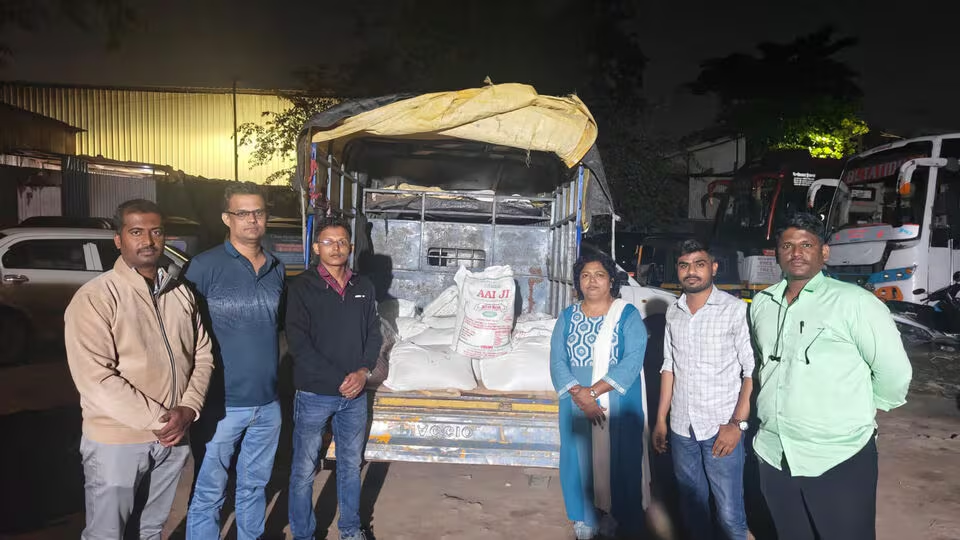
FDA officials inspect food establishments and seize suspected non-compliant food products during Maharashtra’s food-safety enforcement drive in Pune and Sangli. Image Credit: HindustanTimes
The Maharashtra Food and Drug Administration has intensified its food-safety crackdown across Pune and Sangli, suspending the licences and registrations of 12 food establishments after inspections found alleged violations of hygiene and safety standards.
The action was taken under the State’s “Safe Food, Safe Drug, Safe Maharashtra” campaign. FDA teams conducted inspections at hotels, restaurants, bakeries and other food businesses between August 1 and August 9.
Six establishments in the Pune district and six in the Sangli district were found to have violated provisions of the Food Safety and Standards Act, 2006, and the Food Safety and Standards Rules, 2011.
In a separate operation on August 10, officials intercepted a vehicle at Karve Parking in Kondhwa that was allegedly carrying mava sweets without the required food licence. The team seized 458 kilograms of stock valued at ₹1.44 lakh and collected samples for laboratory analysis.
The latest action comes amid a broader enforcement drive in Maharashtra targeting unhygienic kitchens, expired products, unlicensed food transport and suspected violations in the food supply chain.
Establishments named in Pune
The Pune establishments whose licences were suspended include The Lotus Resort in Lonavla, Muscle Foodz in Bibwewadi, Huma Bakery in Ganesh Nagar in Pimpri-Chinchwad, New Maharashtra Bakers in Ambegaon Budruk, Marrakesh Ventures Private Limited in Sahakar Nagar and Swinsta Ent Private Limited in Karve Nagar.
The FDA said the establishments were found to be in violation of food-safety provisions. The department’s action may include suspension of the food business licence or registration, depending on the category and nature of the establishment.
A licence suspension means the business cannot legally continue the food-related activity covered by the suspended licence during the suspension period. The establishments may be required to correct the violations, submit compliance documents and undergo a follow-up inspection before being allowed to resume operations. This story was also covered by The HindustanTimes.
The action is not equivalent to a final criminal conviction. The businesses may have the right to respond to the findings or seek a review under the relevant regulatory process.
Action against Sangli establishments
The FDA also suspended the licences or registrations of six food establishments in Sangli district.
The department has not indicated that all 12 establishments committed identical violations. Food-safety inspections can identify different problems at different premises, including poor sanitation, improper storage, expired stock, inadequate pest control, missing records or failure to comply with licensing requirements.
The action across both districts shows that the campaign is not limited to major urban restaurants. Food businesses in semi-urban areas, tourist locations, bakeries and local eateries are also being inspected.
Officials are expected to review inspection reports, collect samples wherever necessary and determine whether additional proceedings are required.
₹41.36 lakh stock seized
During the inspections conducted between August 1 and 9, the FDA seized food stock valued at ₹41,36,667, or approximately ₹41.36 lakh.
The seized material was reportedly treated as prohibited or non-compliant stock pending further action. The exact nature of all the seized products and the establishments from which they were recovered may differ.
Seizure is generally used to prevent suspected unsafe, expired, adulterated or illegally handled food from entering the market while authorities investigate.
Where samples are collected, they are sent to authorised laboratories for scientific analysis. If laboratory reports confirm violations, the FDA can initiate prosecution or other regulatory action under the Food Safety and Standards Act.
Businesses may also be directed to destroy stock that is found unsafe or unfit for human consumption.
Mava sweets seized in Kondhwa
On August 10, FDA officials intercepted a vehicle at Karve Parking in Kondhwa and allegedly found it transporting mava sweets without the required food licence.
The team seized 458 kilograms of mava sweets valued at ₹1.44 lakh. Samples were collected and sent for analysis.
The interception raises questions about the source of the sweets, their manufacturing conditions, the intended destination and whether the vehicle operator possessed valid food-business documentation.
Mava and other milk-based products require careful handling because they can spoil quickly if they are not kept at the correct temperature. During warm weather, improper transportation can increase the risk of bacterial growth.
The legal status of the seized stock will depend on the laboratory findings and the documentation provided by the transporter or owner. The FDA has not declared the product unsafe before the analysis is complete.
The seizure prevents the stock from being distributed while the department verifies its quality and licensing status.
Statement from FDA officials
D. V. Bhogawade, joint commissioner for Food in the FDA’s Pune division, said the department would continue taking strict action against establishments that violate food-safety norms.
“FDA will continue to take strict action against establishments that violate food safety norms,” Bhogawade said.
The statement indicates that inspections are likely to continue in Pune, Pimpri-Chinchwad, Sangli and other areas within the division.
The department’s campaign is also intended to encourage food businesses to maintain proper records, follow hygiene procedures and avoid storing products beyond their approved shelf life.
How food-safety violations affect consumers
Food-safety failures can affect consumers in several ways. Poor hygiene can lead to contamination by bacteria, insects, chemicals or foreign objects.
Expired products may lose quality or become unsafe, particularly when they require refrigeration. Improperly stored dairy products, sweets, meat and ready-to-eat food can spoil quickly.
Unlicensed transport creates another layer of risk. Authorities may be unable to verify where the food was produced, whether the premises were inspected or whether the product was transported under safe conditions.
For customers, these risks are often invisible. A dish may look normal even when it has been exposed to contamination or stored at an unsafe temperature.
This is why food-safety regulation requires businesses to maintain processes from purchase and storage to preparation, packaging and delivery.
Background to Maharashtra’s enforcement campaign
The “Safe Food, Safe Drug, Safe Maharashtra” campaign is designed to strengthen regulatory inspections across the State. It covers food businesses, pharmacies, manufacturers, transporters and other regulated establishments.
The Pune FDA has conducted repeated inspections in recent months. Earlier enforcement drives in the Pune division also resulted in licence suspensions, improvement notices and seizure of suspected adulterated or prohibited food products.
The latest campaign has focused on restaurants, bakeries, hotels and other food establishments that serve large numbers of consumers.
The action comes as Maharashtra approaches the festival and holiday shopping season, when demand for sweets, snacks, bakery products and prepared food typically increases.
Food regulators often intensify inspections during this period because production and distribution volumes rise. Increased demand can also create incentives for some businesses to cut corners on storage, labelling or sourcing.
Timeline
Between August 1 and August 9, FDA teams inspected food establishments in the Pune and Sangli districts under the State’s food-safety campaign.
During the inspection drive, six Pune establishments and six Sangli establishments were found to have allegedly violated food-safety and hygiene provisions.
The FDA suspended their licences or registrations and seized stock valued at approximately ₹41.36 lakh.
On August 10, officials intercepted a vehicle at Karve Parking in Kondhwa.
The vehicle was allegedly transporting mava sweets without the required food licence. Officials seized 458 kilograms of stock valued at ₹1.44 lakh and collected samples.
On August 11, the FDA confirmed the enforcement action and warned that further strict action would continue against non-compliant food businesses.
Why This Matters
This matters because consumers depend on food establishments to follow basic hygiene and storage practices. When a licence is suspended, it signals that inspectors found conditions serious enough to restrict the business from operating under its food registration.
The seizure of ₹41.36 lakh worth of stock also shows the scale of the enforcement drive. This is not only about individual restaurants; it concerns the movement of food through wholesalers, kitchens, bakeries and transport vehicles.
The Kondhwa mava seizure is particularly relevant because milk-based products can become unsafe when transported without appropriate controls. If such products reach shops or restaurants, hundreds of consumers could be exposed.
The campaign also affects legitimate businesses. Operators that invest in pest control, refrigeration, staff training and proper documentation may face unfair competition from businesses that avoid those costs.
Effective enforcement can create a level playing field. Businesses that follow the rules should not have to compete with operators selling cheaper food by ignoring basic safety standards.
India angle
For Indian consumers, food safety is an everyday concern. People purchase prepared meals, sweets, bakery items and dairy products from small shops as well as large restaurants.
In Pune, a city with a large student, professional and migrant population, food businesses serve thousands of customers every day. In Sangli and surrounding areas, hotels, bakeries and local eateries are also important parts of the regional economy.
Yeh issue kaafi important hai because consumers often cannot see the kitchen, storage room or transport conditions behind the food they buy.
Customers should check packaging, expiry dates, storage instructions and the condition of sealed products. If a package is swollen, leaking, tampered with or has an unusual smell, it should not be consumed.
People can also retain bills and photographs when making complaints. Clear consumer complaints help the FDA identify repeated violations and target inspections more effectively.
For businesses, the message is simple: food licensing, hygiene records and storage compliance are essential, not optional paperwork.
Analysis
Enforcement must be followed by transparency. The FDA should publish the specific nature of violations at each establishment where possible, along with laboratory results for seized samples.
The department should also ensure that licence suspensions are not merely temporary closures. A business should be allowed to reopen only after inspectors confirm that the underlying problems have been corrected.
In the mava case, laboratory analysis will be crucial. The absence of a required licence is itself a regulatory issue, but the safety and quality of the product must be assessed separately.
There is also a need for regular follow-up inspections. One-time raids may create headlines, but sustained compliance depends on routine checks, staff training and meaningful penalties for repeat offenders.
The campaign can improve consumer confidence if businesses understand that violations will have consequences and consumers receive reliable information about the outcome of cases.
What Next
The 12 suspended establishments will likely be required to stop the food business activities covered by their licences. They may need to submit corrective-action reports and seek inspection before reopening.
FDA officials may conduct follow-up visits to verify cleanliness, storage conditions, pest-control systems, employee hygiene and documentation.
The seized stock worth ₹41.36 lakh will remain subject to further proceedings. Products found unsafe, adulterated, expired or otherwise non-compliant may be destroyed according to regulatory procedure.
The 458 kilograms of mava sweets seized in Kondhwa will be tested in a food laboratory. If the report identifies violations, officials may initiate proceedings against the manufacturer, supplier, transporter or other responsible parties.
The department may also trace the distribution chain to determine whether similar stock has reached shops, restaurants or consumers.
Further inspections are expected under the “Safe Food, Safe Drug, Safe Maharashtra” campaign, particularly as demand for sweets and prepared foods rises.
Consumers can expect increased scrutiny of hotels, bakeries, restaurants and food transport vehicles across the Pune division.
Conclusion
The Pune FDA has suspended the licences and registrations of 12 food establishments in Pune and Sangli after inspections identified alleged violations of food-safety and hygiene requirements. Six establishments were from each district, and officials seized stock valued at approximately ₹41.36 lakh during the August 1–9 drive.
In a separate action, 458 kilograms of mava sweets worth ₹1.44 lakh were seized from a vehicle in Kondhwa because the stock was allegedly being transported without the required food licence. Samples have been sent for analysis.
The enforcement drive sends a clear message to food businesses across Maharashtra: hygiene, licensing, safe storage and proper documentation must be maintained throughout the supply chain.
For consumers, the campaign is important because it can keep unsafe food off the market. Its real success, however, will depend on follow-up inspections, public disclosure of test results and firm action against repeat violations.
Written By A. Jack