
A family was reported trapped in the landslip impact area and rescue operations were underway at the site. Both major road links are down, causing serious delays and safety concerns for commuters across the corridor.
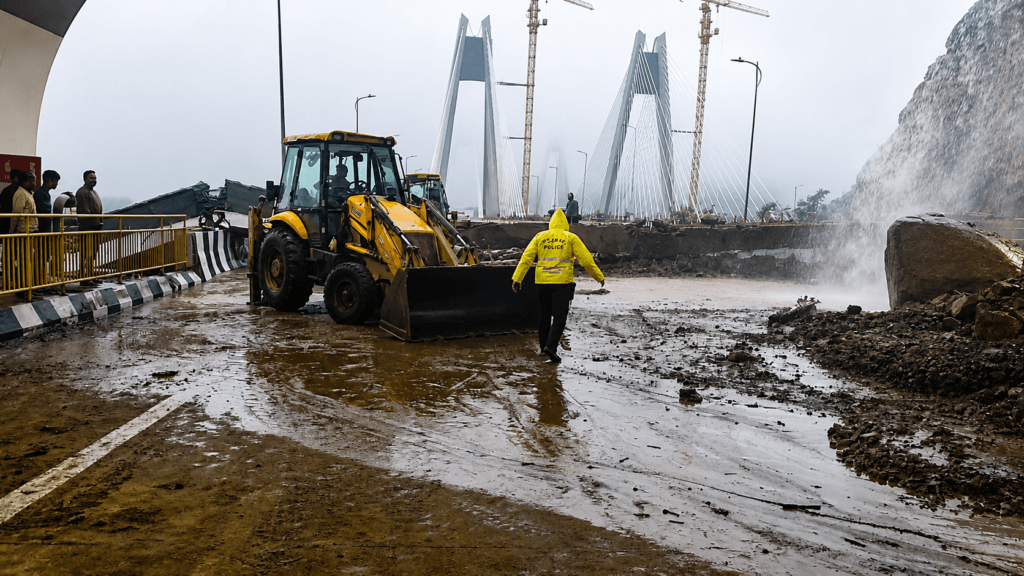
Heavy rain and a landslide near Patan village close to Lohgad Fort forced traffic restrictions on the Pune–Mumbai Motorway and the old highway. Image Credit: The Hindu
Mumbai Heavy Rain: A fresh monsoon-triggered landslide has once again thrown the Pune–Mumbai travel corridor into chaos, with traffic on both the Pune–Mumbai Expressway and the old Mumbai–Pune Highway badly affected on Monday. The slide occurred at Patan village near Lohgad Fort amid continuous heavy rainfall, forcing authorities to shut down movement on the affected stretches and begin rescue operations.
The situation is especially alarming because a family is reported to have been caught within the impact area of the landslide. While details are still emerging, the immediate priority has shifted to rescue and safety. The traffic police have also appealed to the public to avoid all travel between Pune and Mumbai until further notice. Yeh situation kaafi serious hai because both roads are among the most important transport links in Maharashtra.
What Happened
According to the information available, the landslide struck near Patan village close to Lohgad Fort, a hilly and rain-sensitive stretch that often becomes vulnerable during the monsoon. Continuous heavy rainfall likely weakened the soil and rock formation, causing debris and earth to slide down toward the road area. Once a landslide occurs in such a location, road safety becomes a major concern immediately. The Hindu has covered the full story.
The impact was serious enough to disrupt traffic movement on both the expressway and the older highway. That means this is not a small local blockage; it is a corridor-wide problem affecting one of the busiest intercity routes in the state. In practical terms, thousands of commuters, private vehicles, buses and potentially freight movement have all been affected by the closure and the weather conditions.
A family being caught in the landslide zone adds a human emergency to an already difficult transport situation. Rescue teams have been deployed, which suggests that the incident is being treated as more than a traffic problem. In monsoon disasters, the line between road closure and life-threatening emergency can disappear very quickly.
Why the Route Is So Vulnerable
The Pune–Mumbai corridor passes through terrain that is naturally sensitive to heavy rain and slope failure. The area near Lohgad Fort is hilly, and when rainfall continues for long periods, water can seep into the ground and weaken the supporting layers. That makes landslides more likely, especially when the soil is already saturated.
This is why monsoon travel between Pune and Mumbai can become risky without warning. Both the expressway and the old highway run through stretches where land movement, falling rocks and waterlogging can create sudden danger. Once a landslide starts, road closure is usually the only safe response.
The issue is not just the physical blockage. Landslides can also undermine nearby road stability, damage shoulders and make rescue work harder. That is why authorities often ask people to stay away completely rather than try to pass through an affected zone.
Traffic Police Appeal
The traffic police have made a direct appeal to citizens to avoid travelling between Pune and Mumbai until further notice. This is a strong public safety message and not just a routine advisory. When both the expressway and the old highway are affected, alternate travel options can also become overloaded very quickly.
From a commuter perspective, the appeal matters because people often assume they can “manage” a disrupted route by leaving later or taking another road. But in this kind of monsoon emergency, travel can become unpredictable fast. Delays, diversions, additional landslides and rescue-zone restrictions can all make the journey unsafe.
In simple terms, the safest option right now is to postpone non-essential travel. That advice may be inconvenient, but in the monsoon season, especially near ghat and hill sections, caution matters more than schedule.
Rescue Operations
Rescue operations have been initiated at the landslide site, particularly because a family is reported to have been trapped in the impact area. While there is no confirmed full casualty update in the available details, the fact that rescue teams are active indicates that the situation is being handled urgently.
In landslide incidents, rescue work is often challenging because the ground can remain unstable even after the initial slide. Teams must move carefully to avoid secondary slips. That means operations can take time, especially if rainfall continues. The first objective is to locate and help those caught in the debris or impact zone, followed by clearing the road enough to allow safe assessment.
The presence of rain also makes rescue work more complex. Wet soil, poor visibility and continuing slope instability all increase risk for responders. This is why such incidents require coordinated action between police, disaster response teams and road authorities.
Background and Context
The Pune–Mumbai route is one of the most heavily used travel corridors in Maharashtra. It connects two major cities and serves office commuters, families, tourists, truckers and intercity travellers. Because of that, any disruption here has immediate regional consequences.
Monsoon landslides are not new to this stretch. The terrain between Pune and Mumbai includes ghat sections and hilly patches that are especially vulnerable when rainfall is intense. Every year, authorities issue weather-related advisories, but some incidents still occur when conditions become extreme.
Lohgad Fort and its surrounding area are well known for scenic views and trekking routes, but the same geography also creates risk in heavy rain. When the ground becomes oversaturated, even normally stable slopes can give way. That makes the region beautiful but also dangerous in peak monsoon conditions.
Also Read: Mumbai Chawl Collapse Kills 6, Including 5 Children, in Mankhurd Heavy Rain Tragedy
Why This Matters
This matters because the Pune–Mumbai road network is not just a local convenience. It is a critical transport lifeline for Maharashtra. When both the expressway and the old highway are shut, the impact spreads across daily commuters, emergency travel, supply movement and long-distance passengers. Yeh issue kaafi important hai because one landslide can interrupt an entire economic corridor.
It also matters because this is a direct public safety issue. A family reportedly being caught in the landslide zone turns the story from inconvenience to potential disaster. In such cases, every minute counts, and road closures are necessary to protect lives.
For the wider public, this incident is another reminder that monsoon travel in India requires serious caution. Roads may look passable from a distance, but slope failures, falling debris and flash weather changes can make them dangerous very quickly.
India Angle
For Indian readers, this news will feel immediately relevant because many people travel between Pune and Mumbai regularly for work, study or family visits. In Hinglish, seedhi baat yeh hai: jab baarish heavy ho aur ghat section risky ho, toh “just one trip” ka idea bhi danger mein badal sakta hai. The public advisory is not an exaggeration; it is a practical safety warning.
This also connects to a broader Indian monsoon reality. Roads, highways and ghats across the country face similar problems every year, especially in Maharashtra, Himachal Pradesh, Uttarakhand and the Northeast. The Pune–Mumbai corridor is a high-traffic example of a much bigger issue: weather resilience in transport planning.
For families and travellers, the message is simple. Before starting a road journey during heavy rain, check whether the route is actually open and safe. In a country with intense seasonal weather, travel timing can be as important as the destination itself.
Analysis
My opinion is that the most important detail here is not only the shutdown, but the fact that a family may have been caught in the landslide impact area. That shifts the story from traffic disruption to human risk. Whenever a route closure is paired with a rescue operation, the stakes become much higher.
I also think the advisory to avoid travel is the right move. Too often, people try to force travel through bad weather and end up trapped in traffic jams or dangerous conditions. A clear public warning helps reduce secondary risks, especially on a corridor that can become overloaded within minutes.
From an infrastructure perspective, this incident again raises the question of how much preventive slope management is being done on such vulnerable stretches. Monitoring and early warnings matter, but long-term protection measures matter even more. If landslides keep recurring in the same zone, the answer may need to go beyond temporary closures.
What Next
The immediate next step is the rescue operation near the landslide site, along with a detailed assessment of whether more debris is likely to fall. Authorities will need to decide when it is safe to reopen the road, and that will depend on weather conditions and slope stability.
Commuters should expect ongoing disruption, detours and possible delays for the rest of the day, and potentially longer if the rainfall does not ease. If the expressway and old highway remain closed, authorities may continue to urge travellers to stay off the route entirely.
Longer term, the incident may trigger reviews of landslide-prone sections near Lohgad Fort and along the Pune–Mumbai corridor. If the same stretch keeps causing trouble, stronger preventive action may be needed before the next major rain spell.
Conclusion
The landslide near Patan village has once again exposed how vulnerable the Pune–Mumbai corridor becomes during heavy monsoon rain. With the expressway and old highway both affected, traffic has been severely disrupted and rescue teams are working at the site after reports that a family was caught in the impact zone. For now, the public advisory is clear: avoid travelling between Pune and Mumbai until the situation is fully assessed and the route is declared safe. In monsoon travel, safety has to come before speed.
Written By A. Jack