
The incident happened in a packed local train compartment just after midnight, renewing fears about passenger safety on Mumbai’s suburban rail network. The GRP has initiated legal action and a comprehensive investigation is in progress.
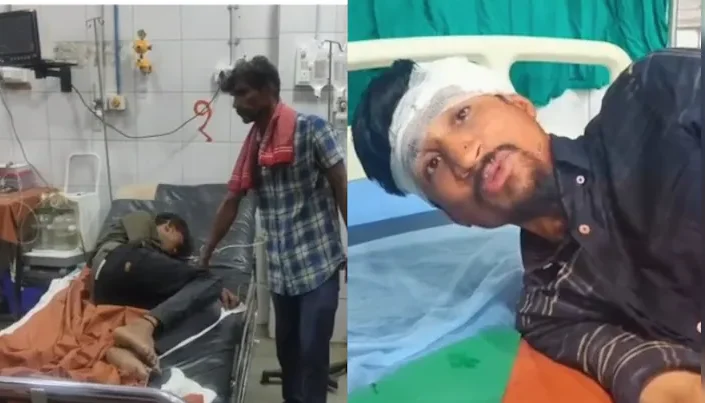
Police and railway personnel respond after a seat dispute on an Ambernath-bound local train turned violent near Thakurli station. Image Credit: NDTV
A routine journey on Mumbai’s suburban railway turned tense and violent late Thursday night when a dispute over a seat escalated into an assault on an Ambernath-bound local train between Dombivli and Thakurli stations. The incident, which occurred shortly after midnight, left two passengers injured and once again drew attention to safety concerns on the city’s crowded local train network.
One of the injured passengers alleged that he was attacked by a group of men using a metal bracelet, or kada, after they objected to him resting on a seat in a train that had become less crowded by the time it reached Diva. Railway police, however, later said their preliminary probe found no evidence of a sharp weapon and that the injuries were caused during a fight when a metal bracelet struck one of the men’s heads. Yeh matter kaafi serious hai because Mumbai locals are used by lakhs of commuters every day, and even a small dispute can turn dangerous in seconds.
What Happened on the Train
According to the injured passenger’s account, he had boarded the train after finishing work and found it crowded. He said that by the time the train reached Diva station, there were more vacant seats available. He alleged that a group of men boarded at Dombivli and questioned him for sleeping on the seat even though there were empty seats nearby.
He claimed that he told them he was getting up, but before he could do so, they removed a metal bracelet and hit him repeatedly on the head. He said the blows caused heavy bleeding. The passenger further alleged that one of the attackers told another that he had been badly injured and that they should leave. He also claimed that the group tried to push him out of the moving train before others intervened when the train stopped at Thakurli. This story was also covered By NDTV.
That version describes a frightening and chaotic scene. But the railway authorities have given a different account. According to the GRP, a fight broke out between two persons in the luggage coach of a Parel-Ambernath local train at around 12:10 am while the train was still in motion. They said both men suffered head injuries during the altercation.
The key difference between the two accounts lies in the nature of the weapon. The injured passenger said he was attacked with a metal bracelet used like a weapon. The GRP said its preliminary inquiry found no sharp weapon and that the injury happened when one man’s metal bracelet struck the other’s head during the fight. That distinction matters because it changes the event from a planned assault narrative into a spontaneous scuffle, at least according to the railway’s initial findings.
Official Response and Medical Assistance
After the train reached Kalyan station, personnel from the Railway Protection Force and the Government Railway Police attended to the matter. The injured passengers were given first aid and then moved to Rukhmabai Hospital. The more seriously injured person was later referred to Sion Hospital for further treatment.
That response suggests that the railway system acted quickly once the incident was reported. In crowded and moving local trains, even a short delay can make things worse, so immediate medical support is important. The fact that police and railway personnel took over at the station also indicates that the incident was treated seriously from the start.
The GRP said it is taking legal action and that a detailed report will be prepared after a fuller investigation. That means the preliminary version of events is not the final word. Witness statements, passenger accounts and any available evidence from the coach will likely shape the final findings. For now, the matter remains under active scrutiny.
Why This Incident Has Drawn Attention
This case has drawn attention not only because of the violence, but also because it happened so soon after another fatal train-related assault in Mumbai. Commuters already travel in extremely crowded conditions, and arguments over seats, space and behaviour are common. Most such disputes end in shouting or tempers cooling down. But when they turn physical, the consequences can be severe.
Mumbai’s local trains are the city’s lifeline. They carry office-goers, workers, students and vendors across the metropolitan region every day. In that environment, even a minor disagreement can spread quickly. A crowded coach, fatigue after work and a sense of personal space being violated can all make people react impulsively. That does not excuse violence, but it helps explain how quickly an argument can spiral out of control.
This is also why the incident matters beyond one train or one evening. It reflects the pressure many commuters face daily. Seedhi baat yeh hai: Mumbai local mein travel karna already stressful hai, aur jab crowd, tiredness and ego takraate hain, toh tension bahut jaldi violence ban sakta hai.
Background and Context
The latest scuffle has come weeks after the killing of Mayank Lohar on June 23. In that case, Lohar, 22, was stabbed to death inside a first-class compartment of a Churchgate-Nallasopara fast local train after an argument over keeping the coach door open during heavy rain. The incident took place between Andheri and Borivali stations after Lohar reportedly asked the accused, Roshan Suvarna, to close the door.
That earlier case had already shaken public confidence in safety on suburban trains. A fatal stabbing inside a first-class coach was not just a law-and-order issue; it was a reminder that tempers can turn deadly in a confined public setting. Against that backdrop, this new incident—while not reported as fatal—has raised similar concerns about commuter behaviour and railway security.
Mumbai’s rail system has long operated under pressure from high passenger volumes. Peak-hour crowding, platform rush and overburdened coaches create a tense environment. Over time, commuters have learned to tolerate discomfort as part of daily life. But when a seat dispute turns violent, it reveals the fragile balance between routine travel and public disorder. That is why this case is being watched so closely.
Timeline
Shortly after midnight: A dispute breaks out on an Ambernath-bound local train between Dombivli and Thakurli.
During the altercation: Two passengers sustain head injuries.
At Thakurli/Kalyan station: Railway personnel and GRP respond, and first aid is provided.
After the incident: One injured passenger alleges an attack with a metal bracelet.
GRP preliminary inquiry: Authorities say no sharp weapon was used and that the bracelet struck during the fight.
Now: Legal action is underway and a detailed report is expected.
Why This Matters
This matters because Mumbai’s local train system is not just a transport network; it is the city’s daily public space. When violence erupts on a train, it affects thousands of commuters who rely on the service and expect a basic level of safety. A seat dispute may sound small, but in a packed compartment it can quickly become a serious security issue. Yeh issue kaafi important hai because public transport safety is directly tied to how people live and work in the city.
It also matters because the incident highlights the need for better crowd management and faster conflict response. Local trains are under constant pressure, and passengers often have limited room to avoid confrontation. If tempers flare, the system needs strong on-ground support from railway staff and police. Any gap in response can turn a small disagreement into a major incident.
There is a broader social lesson too. Commuter frustration, fatigue and aggression are becoming visible in public spaces across Indian cities. When these pressures are not managed, everyday travel becomes risky. The Mumbai train network, because of its scale, often reflects the larger urban stress of the city.
India Angle
For Indian readers, this story is instantly relatable because millions of people use local trains, metros and buses every day under crowded conditions. Mumbai’s suburban railway is especially symbolic because it carries the city’s workforce from early morning till past midnight. In Hinglish, seedhi baat yeh hai: jab itna crowd hota hai, toh patience test hota hai, aur kabhi-kabhi chhoti baat bhi badi ho jaati hai.
This is also a reminder that public transport safety is not only about crime prevention; it is about managing daily human behaviour in dense urban spaces. A rail coach is not a private room. It is shared space, and conflict resolution matters. India’s cities need not only more trains, but also better passenger discipline and stronger support systems on board and at stations.
The recent fatal stabbing in another local train adds to the concern. Together, these cases show that commuter violence is not an isolated issue. It is part of a wider challenge facing Indian urban transport systems. People need speed and affordability, but they also need safety and a sense that the journey will end as expected.
Analysis
My opinion is that the most important point here is the conflict between perception and official finding. The injured passenger believes he was attacked with a metal bracelet in a violent assault. The GRP’s preliminary conclusion is that no sharp weapon was involved and that the injury came from a metal bracelet during a fight. Both versions may overlap in some parts, but the final truth will depend on the detailed investigation. For now, the safest approach is to report both accounts clearly and avoid jumping to conclusions.
I also think this incident reinforces the need for better commuter de-escalation. In a city like Mumbai, arguments over seats are common, but they should never become physical. A stronger presence of railway staff, improved surveillance and quicker intervention could help reduce such flashpoints. Sometimes a small act of conflict management can prevent a major injury.
From an editorial perspective, this story is important because it connects a specific incident with a larger trend. Mumbai’s suburban rail network is under intense pressure, and safety incidents tend to expose the cracks. Each one becomes a reminder that transport policy is not just about schedules and frequency. It is also about passenger conduct, security response and emergency readiness.
What Next
The next step will be the detailed GRP investigation, which will likely include passenger statements, medical reports and possible witness accounts from the coach. If the inquiry confirms criminal assault, legal action could intensify. If the evidence supports the railway’s version, the case may be treated as a violent altercation rather than a weapon attack.
Authorities may also examine whether more security personnel or surveillance systems are needed on late-night suburban trains. That could be especially relevant on routes where crowding and late-hour travel create higher risk. Passengers, too, may become more cautious about conflicts over seating and personal space after this incident.
For commuters, the practical takeaway is simple: avoid escalation, even when tempers rise. In a moving train, a verbal dispute can quickly become dangerous. The best outcome is one where the system learns from the event and passengers become more aware of how fragile safety can be in a crowded coach.
Conclusion
The violent seat dispute on an Ambernath-bound Mumbai local train near Thakurli has once again highlighted the risks of conflict in crowded public transport. While one passenger alleged a metal bracelet attack, railway authorities said their preliminary probe found no sharp weapon and that the injuries occurred during a fight.
With two passengers injured and legal action underway, the case is still unfolding, but the larger message is already clear: Mumbai’s local trains need not only capacity and speed, but also stronger safety, restraint and commuter discipline. In a city that runs on local trains, yeh sab se zyada zaroori hai.
Written By A. Jack