
The 110-year-old dairy brand, which was an institution in Mumbai for decades, is now under scanner after food safety officers pointed out conditions that could lead to microbiological contamination. The suspension has cast doubts over hygiene standards at legacy food businesses.
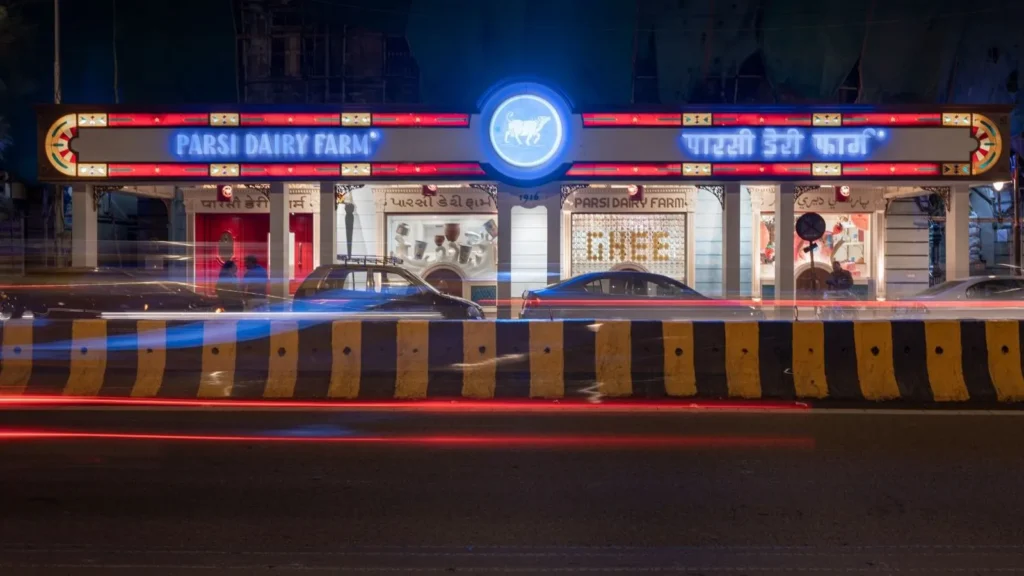
The Marine Lines outlet of Parsi Dairy Farm in South Mumbai after the FDA suspended its FSSAI licence over serious food safety lapses. Image Credit: The IndianExpress
One of South Mumbai’s most iconic food institutions, the 110-year-old Parsi Dairy Farm, has seen its FSSAI licence suspended by the Food and Drug Administration after an inspection uncovered serious hygiene and food safety violations at its Marine Lines facility. The action was taken after food safety officers visited the premises on Tuesday, July 14, and reported multiple lapses that, according to the FDA, could pose a serious health risk to consumers.
The inspection found fungal growth on the walls of storage and production areas, raw material stored directly on the floor near fungus-affected walls, and the absence of a protected Raw Milk Reception Dock for receiving milk. Officers also flagged a large number of flies, no pest and rodent control nets, the absence of an Effluent Treatment Plant, incomplete medical records for food-handling staff, and missing “Best Before/Use By/Date of Expiry” details on several products. Yeh action kaafi serious hai because it involves a heritage brand that has long enjoyed trust among Mumbai consumers.
What the FDA Found
The FDA’s press note paints a troubling picture of the facility’s hygiene conditions. The presence of fungal growth in production and storage areas is one of the most concerning findings because fungus can contaminate surfaces, equipment and potentially food products if not properly controlled. When raw material is stored on the floor next to such walls, the risk increases further because food ingredients become more exposed to contamination. This story was also covered by The IndianExpress.
The absence of a protected Raw Milk Reception Dock is another major issue. In dairy operations, milk reception areas are expected to be clean, controlled and separated from general processing areas so that incoming raw milk does not get exposed to dust, pests or other contaminants. Without that protection, basic hygiene control becomes harder to maintain.
The FDA also noted flies, missing pest and rodent control nets and the lack of an Effluent Treatment Plant. These are not minor housekeeping lapses; they are indicators of a system where environmental and food safety controls may be weak. In dairy and food processing, pests and waste management are directly tied to contamination risk. That is why the agency described the violations as capable of causing microbiological contamination.
Missing medical records for food-handling staff and incomplete product label information added to the concern. Staff health monitoring is important because food handlers can unintentionally spread contamination if they are ill or if their records are not properly maintained. Likewise, missing expiry or “Best Before” details can mislead consumers and make product safety harder to track. Seedhi baat yeh hai: when all these failures appear together, the compliance problem looks systemic, not isolated.
Why the licence was suspended
The suspension of the FSSAI licence with immediate effect suggests the FDA considered the violations serious enough to require urgent action rather than a routine warning. In food regulation, a suspension like this usually signals that the authority believes there is an immediate threat to consumer safety or a major failure to comply with standards.
In this case, the FDA said the lapses could lead to microbiological contamination and pose a serious health risk. That is a strong statement because microbiological contamination can cause foodborne illness, spoilage and wider public health concerns if contaminated products enter the market. For a dairy business, even a limited lapse in cleanliness can have broad consequences because milk and milk products are highly perishable and easily affected by poor storage conditions.
The fact that Parsi Dairy Farm is a very old and trusted brand may also have increased public attention. Heritage alone does not exempt any food business from current safety requirements. In fact, older brands often face a tougher standard from consumers because their reputation is built on trust. Yeh issue kaafi important hai because public confidence in food brands depends not on history alone but on everyday compliance.
Background and Context
Parsi Dairy Farm has been a well-known Mumbai brand for more than a century, especially among families who associate it with milk, sweets, dairy products and old-city food culture. Its Marine Lines location is part of the city’s food identity, and that is why the suspension has triggered concern far beyond a routine regulatory note.
Legacy food businesses often operate in a delicate space. They carry decades of customer trust but also need to keep pace with modern food safety rules, documentation and infrastructure requirements. What may have been considered acceptable in earlier decades is no longer enough under today’s public health and regulatory expectations. This is true across India, where food safety enforcement has become stricter and more visible in recent years.
The case also comes at a time when consumers are increasingly alert to food hygiene issues. From packaged food labels to dairy processing standards, people are paying more attention to what they eat and where it comes from. In that environment, an inspection finding fungal growth and poor pest control at a famous dairy is bound to make headlines. It is a reminder that reputation cannot replace inspection.
Timeline
Tuesday, July 14: Food Safety Officers inspect the Marine Lines facility.
During inspection: FDA finds fungal growth, raw material stored on the floor, flies, missing pest control nets and other lapses.
After inspection: FDA issues a press note describing the violations.
Immediate effect: The FSSAI licence is suspended.
Now: The business faces scrutiny over compliance, hygiene and possible corrective action.
Why This Matters
This matters because dairy products are among the most sensitive food items sold to consumers. Milk, paneer, cream and related products can become unsafe quickly if hygiene is compromised at any stage of production or storage. When the FDA says the situation may lead to microbiological contamination, it is warning that the risk is not theoretical. It could affect real consumers if products from such a facility enter the market. Yeh issue kaafi important hai because food safety failures can have direct health consequences.
It also matters because heritage brands shape public trust in the food economy. If a long-established and popular dairy can be found with such lapses, people may start asking how many smaller or less visible operations are complying with standards. This can have a ripple effect across the industry and push regulators to increase inspections.
There is a broader public-interest angle as well. Food safety is not just about one company; it is about the system that protects millions of consumers every day. A suspension like this can serve as a warning to other manufacturers that legacy status will not protect them from regulatory action. That can improve standards if the industry responds properly.
India Angle
For Indian readers, the story resonates because dairy is central to everyday life in the country. Milk is used in homes, tea stalls, restaurants, sweet shops and countless households every single day. In Hinglish, seedhi baat yeh hai: jab doodh aur dairy products ki safai par sawal uthta hai, toh consumer confidence seedha impact hota hai.
Mumbai has always had a strong relationship with iconic local food brands, and people often associate older names with reliability and nostalgia. But modern food safety rules are stricter for a reason. As Indian cities grow and food systems become more complex, hygiene standards must keep up. This case shows that even the most familiar names are still expected to meet current compliance norms.
The suspension also reflects how food regulation is becoming more visible in India. Consumers are no longer satisfied with just tradition and taste. They want documentation, expiry labels, hygiene controls and visible accountability. That is a healthy shift for the market, because it pushes businesses to modernise and treat safety as a core part of the product, not an afterthought.
Analysis
My opinion is that the key issue here is not just the suspension but the nature of the violations. Fungal growth, flies, missing pest control and raw materials stored on the floor point to more than a one-off lapse. They suggest a pattern of weak compliance. In food journalism, that distinction matters a lot. A single paperwork mistake is one thing; a cluster of structural hygiene problems is another.
I also think the case highlights the tension between legacy and regulation. Many old brands survive because of trust built over generations, but modern food safety standards do not care how old the business is. That is the right approach. Consumers deserve the same level of safety whether they buy from a century-old dairy or a new startup. The FDA action sends that message clearly.
From an editorial perspective, this story has a strong balance of accountability and public interest. It is not sensational for the sake of it. It is based on inspection findings that directly affect consumer safety. That gives the report weight and makes it important for a broader audience. It also opens a wider discussion about how often food businesses are inspected and whether older facilities need more frequent audits.
What Next
The next step will likely depend on how quickly the dairy can address the violations and whether the FDA will require corrective measures before reinstating the licence. That may involve cleaning and sanitisation, pest control upgrades, proper storage changes, infrastructure fixes and complete documentation of staff and products. If the company wants to resume normal operations, it will need to show visible compliance.
The suspension may also lead to additional inspections or follow-up checks from regulators. That is common when violations are serious and immediate. Consumers may also watch closely for any public response from the dairy itself, especially since the brand has strong heritage value and a loyal customer base.
More broadly, the case may prompt other food businesses in Mumbai to review their own compliance systems. When a high-profile brand faces suspension, others often take note. In that sense, the action could have a preventive effect beyond the individual facility. It may push more businesses to tighten up before they face similar scrutiny.
Conclusion
The FDA’s suspension of Parsi Dairy Farm’s FSSAI licence is a major regulatory action against one of South Mumbai’s most iconic food names. The inspection findings — including fungal growth, poor storage practices, pest issues and incomplete safety records — suggest serious lapses that could threaten consumer health. While the brand’s heritage is well known, food safety standards apply equally to every business, old or new.
The next phase will depend on how effectively the facility corrects its shortcomings and restores compliance, but the larger message is already clear: trust in food must be backed by hygiene, discipline and transparency.
Written By A. Jack