
Protesters allege police action went beyond routine crowd control, with detentions, home visits and FIRs targeting peaceful assembly. The case has raised bigger questions about the policing of youth-led protest in India.
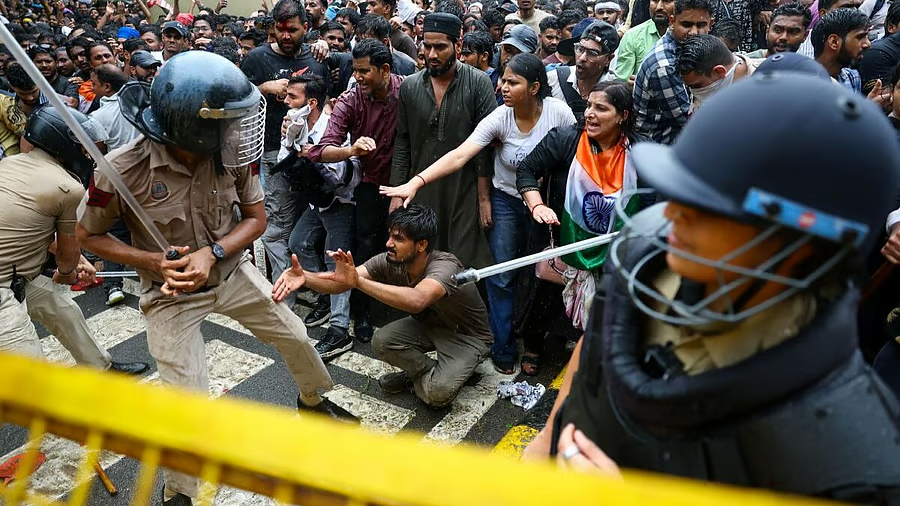
Young protesters and supporters of the Cockroach Janta Party at Shivaji Park in Mumbai. Image Credit: sbkinews
Mumbai Protest Crackdown: A protest in Mumbai that began as a show of solidarity with student demonstrators in Delhi has turned into a legal and civil liberties controversy. Several young residents who gathered near Shivaji Park on July 21 in support of the Cockroach Janta Party movement say they were detained by police, taken to stations, questioned for hours and later named in FIRs.
The allegations are serious because they go beyond a routine protest dispersal. Some of those affected say they were peaceful, unarmed and in some cases not even at the protest site when police stopped them. The situation has now become a wider debate over how authorities respond to youth-led dissent, particularly when large numbers of young people gather to support a political cause.
What happened
According to multiple protest participants, police action started soon after people assembled at Shivaji Park to show solidarity with the student movement at Delhi’s Jantar Mantar. Aditya Tomar, a 26-year-old Mumbai resident, said he was detained during the protest and alleged that a police officer slapped him. He claimed officers began pushing the crowd from behind, creating a stampede-like situation before dragging people away. This story was also covered by The Quint.
Tomar said two policemen manhandled him and that after he objected to being touched, one of them reportedly told him, “I will show you,” before slapping him and placing him in a police van. He was then taken to Sion police station and detained for about four hours. Police reportedly took basic details such as names, ages, phone numbers and addresses before releasing them after their lawyers intervened.
But the trouble did not end there. On July 24, Tomar and 89 others received FIRs alleging unlawful assembly on a footpath without permission and raising slogans while walking. The FIR names 90 protesters, and the report says a majority of them are between 17 and 30 years old.
Why the case is escalating
The conflict appears to stem from a clash between protest rights and police control. The protest was described by participants as peaceful, yet the police response, according to those detained, was aggressive and later followed by legal action. That combination often creates public outrage because it makes people question whether the response was proportionate to the assembly.
The FIRs were not limited to people who had physically reached the protest site. One protester, Ansari, said he was stopped on a road behind Shivaji Park while walking with a friend. He alleges that police snatched their phones, pushed them into a van and took them to Worli police station, where they were detained for nearly five hours. Another participant, Karishma Malhotra, said she was stopped at Dadar station by a man in civil clothes before she and her friends could reach Shivaji Park.
These allegations matter because they suggest a broader policing approach that may have included preventive detentions, questioning and intimidation. If true, that would mean the action was not only against people actively protesting, but also against those simply trying to join or support the demonstration. Yeh issue kaafi important hai because it touches the basic right to peaceful assembly.
The police action and the FIRs
The FIR filed at Shivaji Park police station names at least 90 people, while the broader reporting suggests around 162 people may have been targeted across multiple cases. The charges cited include Section 189(2) of the Bharatiya Nyaya Sanhita for unlawful assembly and provisions of the Maharashtra Police Act that deal with prohibiting acts to prevent disorder and penalties for disobeying police directions.
From a legal standpoint, these provisions are typically used to manage public gatherings that authorities say are unauthorised or likely to disturb order. But when protesters insist they were peaceful and were detained before even reaching the site, the legal justification becomes more controversial. The lack of a public response from the police station mentioned in the report has only added to the uncertainty.
Some of those affected say the police later visited their homes as well. Ansari said four to five policemen in civilian clothes came to his house the next morning and asked him to accompany them to the station. He said he was questioned for hours about his work and why he had attended the protest before being told he could leave.
Background and context
The Mumbai protest was connected to the wider Cockroach Janta Party movement, which had grown out of student anger and had already become a national issue. After the Delhi protests gained momentum and eventually led to the resignation of Education Minister Dharmendra Pradhan, solidarity actions in other cities became more politically significant.
Mumbai’s Shivaji Park has long been a symbolic space for public gatherings, political speech and civic mobilisation. That symbolism matters because when young people gather there to support a cause, they are not just making a local statement; they are participating in a national protest wave.
The current controversy also fits into a larger Indian pattern where protest movements increasingly face pre-emptive policing, detentions and legal notices. This can be justified by authorities as an effort to maintain order, but protesters often see it as intimidation. The result is a recurring trust deficit between citizens and law enforcement.
Timeline
July 21: Protesters gather at Shivaji Park in Mumbai in solidarity with the CJP movement.
Same day: Several participants allege they are detained, questioned and taken to police stations.
After release: Lawyers speak to police and intervene on behalf of some detainees.
July 24: FIRs are issued against 90 protesters in one case, with many accused between 17 and 30 years old.
Following days: Some protesters report home visits by police and further questioning.
Why This Matters
This matters because it raises serious questions about how India handles peaceful protest, especially when young people are involved. If people can be detained before reaching a protest site or booked later for merely gathering without violence, then the boundaries of protest policing become much more important to examine.
It also matters because the numbers involved are not small. Reports say at least 162 people were named in one or more FIRs, and many are under 30. That suggests the crackdown is not limited to a few isolated cases, but rather a wide response to a youth-led political event.
For ordinary citizens, the fear is simple: if protest can lead to detention, legal notices or home visits even without violence, people may hesitate before exercising their democratic rights. That would have a chilling effect on civic participation. In a democracy, that is no small thing.
India angle
For Indian readers, the story feels immediate because protest and policing are part of everyday political life in many cities. From student marches to labour demonstrations and local civic movements, young people often find themselves negotiating with police even before their message reaches the public.
In Hinglish, seedhi baat yeh hai: agar peaceful protest karne par bhi logon ko FIR aur detention ka saamna karna pade, toh youth ka confidence kaise banega? That question is central to this story.
The India angle also includes the legal and social impact on students and early-career professionals. Many of those named in the FIR are in the 17-30 age bracket, which means they are students, first-job workers or young activists trying to participate in public life. A police case can affect their studies, employment prospects and mental well-being.
Analysis
My view as a news writer is that this story is important not just because of what happened in Mumbai but because it reflects a broader trend in Indian protest policing.
The most concerning detail is the allegation that some people were detained before reaching the protest site. If that is accurate, then the issue is not just about crowd control but about pre-emptive restriction of assembly. That raises serious questions about proportionality and procedure.
I also think the police silence is part of the story. When authorities do not respond clearly to allegations of manhandling, home visits or preventive detention, public suspicion deepens. Clear communication matters because it can separate genuine law enforcement from perceived overreach.
What Next
The next step is likely to involve legal review and possible challenges to the FIRs. Protesters may seek withdrawal of charges, especially if they believe they were peaceful participants or were detained unlawfully. Lawyers representing some of the detainees will probably focus on whether proper notice was given and whether arrest or detention procedures were followed.
If the allegations gain more traction, the issue could also move into a civil liberties debate, with activists and legal groups asking whether the police used the right legal tools. At the same time, authorities may defend their actions as necessary to prevent disorder and maintain public safety.
For the protesters, the immediate concern is the legal burden that comes with being named in an FIR. Even if cases do not lead to conviction, the process itself can be stressful, time-consuming and intimidating. That is why this story will likely continue to matter beyond the protest date itself.
Conclusion
Mumbai’s Shivaji Park protest crackdown has become a larger story about youth activism, police power and the right to peaceful assembly. What began as a solidarity protest has now turned into a legal battle for dozens of young people, many of whom say they were detained, questioned and later named in FIRs despite not engaging in violence.
The key issue is not only what the protesters did but also how the state responded. If the allegations are accurate, this episode will raise lasting questions about protest rights and police accountability in India’s biggest cities.
Written By A. Jack