
Ahir said she first filed an online complaint through the cyber police portal and then spent the day at the police station to ensure the case was formally registered. She says the abuse has become personal, targeted and deeply distressing, with her family also at risk of being affected.
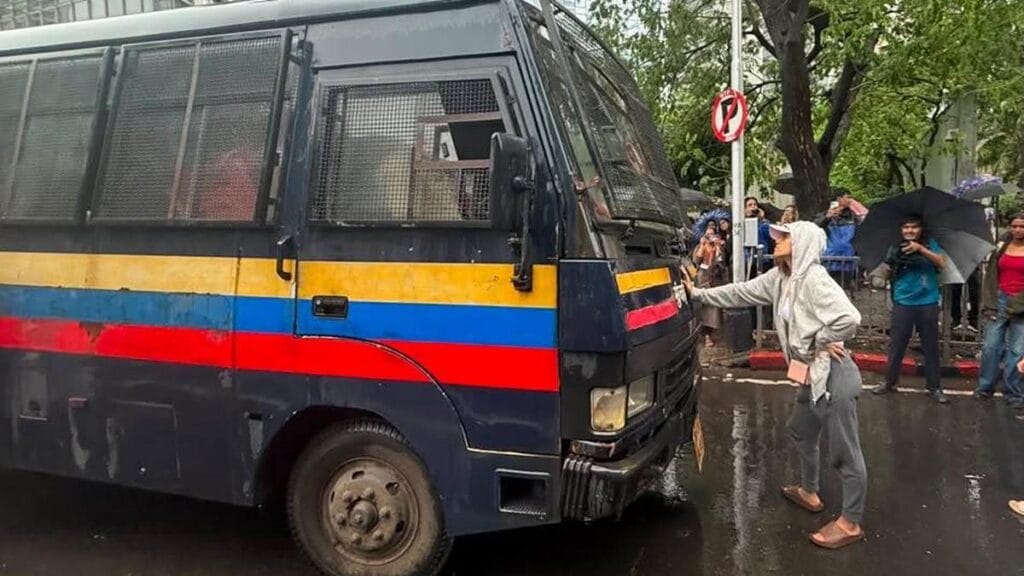
Rhiya Yadav, also known as Rhiya Ahir, the woman who stopped the Mumbai police van. Image Credit: TheHindu
Mumbai-based activist Rhiya Yadav, also known as Rhiya Ahir, has approached the MIDC Police station with a complaint alleging a sustained campaign of online harassment and abuse. The complaint comes days after she drew public attention during a CJP protest in the city, where she was seen stopping a police van.
According to Ahir, the online abuse is not random trolling but a coordinated attack involving defamation, edited images, misogynistic insults, stalking and intimidation. She says the nature of the messages went beyond criticism and entered the territory of targeted harassment, with sexually explicit comments and attempts to shame her publicly.
What Ahir has alleged
Ahir told The Hindu that she had earlier registered an online complaint on the cyber police department’s portal. On Monday, she said she spent the entire day at the police station to make sure the complaint was properly recorded. That detail is important because it suggests that she wanted formal recognition of the matter rather than letting it remain an informal online grievance. This story was also covered by The Hindu.
She alleged that she was being bullied and stalked and that she had also received uncalled-for sexting. In her words, “There is an effort to spread hate against me online. They are slut-shaming me. This is abuse,” she said, adding that she did not want her family to be affected by it.
Her complaint appears to reflect a common pattern in online harassment cases involving women who become visible in public or political spaces. Once a woman is widely identified, the abuse often shifts from debate to body-shaming, sexual comments and attempts to discredit her character. Yeh issue kaafi important hai because it shows how quickly public attention can turn into gendered abuse.
Why this escalated
The timing of the harassment appears closely linked to her visibility during the protest. When a person becomes a symbolic face of a political or social event, online communities often react strongly, and not always in lawful ways. In such cases, memes, altered pictures and comment campaigns can spread quickly across platforms.
What makes Ahir’s complaint particularly serious is the allegation of coordination. If the abuse is indeed being carried out in a planned way, it is no longer just isolated trolling. It becomes a digital intimidation campaign, and that changes both the emotional and legal seriousness of the matter.
The complaint also highlights how women in particular face a different form of attack online. Men who protest are often criticised for their politics, but women are more likely to be attacked through gendered language, sexual shame and threats against family dignity. That difference is one of the darker realities of Indian online spaces.
Background and context
Ahir’s complaint follows a period of heightened protest activity tied to the Cockroach Janta Party movement. The movement has already produced detentions, FIRs and police scrutiny in multiple cities, and that broader political context has made individual protesters more visible online.
In India, online abuse complaints are increasingly common after high-profile protests, campus politics, elections or public controversies. Women, especially, are often targeted when they speak publicly, challenge authority or take a visible role in an agitation. This is not just a social media problem; it is part of how public discourse has become more aggressive and less restrained.
The use of cyber complaint portals is meant to help victims document abuse quickly. But many complainants still have to follow up in person before a case is taken seriously. Ahir’s statement that she sat with police the whole day suggests that even in cyber cases, procedural follow-up remains necessary.
Timeline
Last week: Rhiya Ahir stops a police van during a CJP protest in Mumbai.
After the protest: She alleges that online abuse, trolling and stalking begin or intensify.
Before Monday: She files an online complaint on the cyber police portal.
Monday, July 27, 2026: She visits MIDC Police station to ensure the complaint is formally registered.
Afterward: She publicly describes the abuse as coordinated, misogynistic and harmful to her family as well.
Why This Matters
This matters because online harassment is not harmless speech when it becomes targeted, persistent and sexualised. For many women, the digital space is no longer just a place for debate; it becomes a site of intimidation that can affect safety, mental health and daily life.
It also matters because public women are often forced to choose between visibility and peace. If speaking out leads to abuse, then the cost of participation in civic life rises sharply. That is bad for democracy because it discourages people, especially women, from engaging in public issues.
For families, the impact is even more personal. Ahir said she did not want her family to be affected, which shows how online harassment rarely stays online. It spills into homes, relationships and emotional well-being. In simple Hinglish, yeh sirf trolling nahi hai; yeh insaan ko todne wali cheez ban sakti hai.
India angle
The Indian angle is obvious and urgent. India’s social media ecosystem has become one of the most politically active and emotionally charged in the world, and women protesters often face the harshest abuse. In many cases, the attack is not on the argument but on the woman’s body, morality or character.
This story will resonate with many Indian users because it reflects a familiar pattern: first a woman becomes visible in a protest or public cause, then the trolling begins, then the abuse gets sexualised. That sequence is now painfully common.
It also raises questions about how well cyber complaints are handled in India. Many users know how easy it is to report abuse online, but far harder to get timely action, preservation of evidence and visible accountability. That gap between complaint and response is a major concern.
Analysis
As a news writer, I see this as a highly relevant digital-safety story with strong social importance. The headline is compelling because it combines protest, police, online abuse and women’s safety, all of which are major search interests in India right now.
My opinion is that this case matters not only because of who Ahir is, but because of what her complaint represents. It shows how protest visibility can trigger abuse that is gendered, personal and relentless. When a woman says she is being slut-shamed, stalked and threatened online, the response should be quick and serious, not dismissive.
I also think the story reveals a larger truth about modern public life in India: digital abuse has become one of the most effective ways to silence visible women. The cost of speaking up is often emotional exhaustion, reputation damage and fear for one’s family. That is a real democratic problem, not just a social media annoyance.
What Next
The next step will depend on how police classify the complaint and whether a cyber case is formally pursued. Investigators may ask Ahir to provide screenshots, URLs, message records and other evidence showing the abusive pattern and the identities of the accounts involved.
If the complaint moves forward, the case could set an example for how online misogyny is handled in protest-related situations. If it does not, it may add to the frustration many victims feel when they report cyber harassment. Either way, the matter is likely to stay in public discussion because it connects protest rights with online safety.
There is also a possibility that the wider protest ecosystem will see more such cases. The more visible a movement becomes, the more likely its participants are to face online backlash. That means digital safety will remain a critical issue for activists and citizens alike.
Conclusion
Rhiya Yadav, also known as Rhiya Ahir, has brought an important issue into the open by filing a complaint over alleged online abuse following her appearance in a Mumbai protest. Her allegations of stalking, defamation, sexting and misogynistic harassment underline how quickly public participation can turn into a digital attack on women.
The case is bigger than one complaint. It speaks to the nature of online discourse in India, the vulnerability of women in public life and the urgent need for stronger responses to cyber harassment. If the complaint leads to action, it may offer some measure of accountability. If not, it will remain another reminder of how difficult it is for women to claim space safely online.
Written B y A. Jack