
At about 12:13 am, the Navi Mumbai Police Control Room received a threatening call stating that “Dawood has planted a bomb in the Taj Hotel”. Security agencies quickly sanitised the property before declaring the alert a false one.
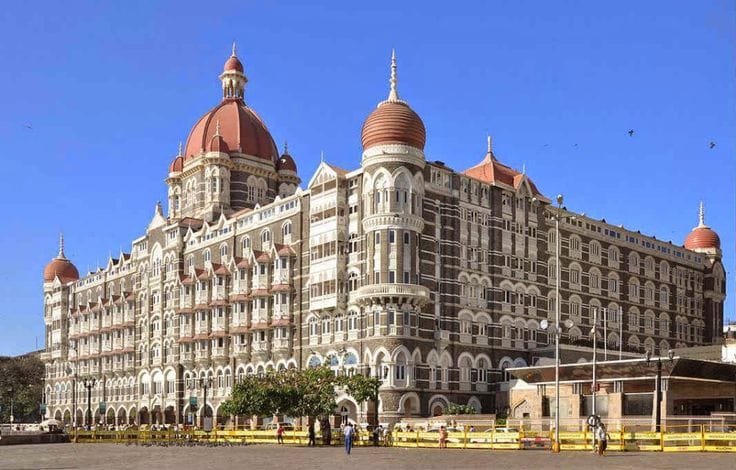
Outside Mumbai’s Taj Hotel. This image is for representations only.
Mumbai’s iconic Taj Hotel in Colaba was thrown into a major security scare early Sunday after a man allegedly called the Navi Mumbai Police Control Room and claimed that “Dawood has planted a bomb at the Taj Hotel.” The hotel was immediately placed on high alert, and teams from the Colaba Police, Crime Branch and Bomb Detection and Disposal Squad rushed to the location for a detailed search.
After a thorough inspection of the hotel’s lobby, banquet halls, swimming pool, restaurants, parking area and outer premises, police confirmed that no suspicious object or explosive was found. The threat was declared a hoax, but not before triggering a significant overnight response in one of the city’s most sensitive and high-profile locations. Yeh incident kaafi serious hai because it involved a site that already has deep historical and emotional significance for Mumbai.
What Happened
According to police, the call came at around 12:13 am and was first received by the Navi Mumbai Police Control Room. The caller allegedly said that Dawood had planted a bomb at the Taj Hotel, a statement serious enough to immediately activate security protocols. The information was then relayed to the Mumbai Police Main Control Room, which set off a rapid emergency response.
The Taj Hotel was quickly placed under high alert. Police teams arrived on the scene with bomb detection and disposal personnel, and the premises were sanitised room by room and area by area. The main lobby, swimming pool, banquet spaces, restaurants, parking lot and surrounding sections were all searched carefully.
That kind of response is standard when a threat is received against a landmark like the Taj. Even if there is a high chance of it being false, police cannot afford to assume anything. The risk is too high, the location too prominent and the consequences of ignoring a real threat too severe. In this case, however, the full search yielded nothing suspicious, and the call was ultimately found to be false.
How the Caller Was Traced
Technical investigation reportedly showed that the call originated from the Turbhe area of Navi Mumbai. Police have now launched a search to identify and arrest the caller based on the mobile number used. Authorities are coordinating with Turbhe Police to trace the suspect and understand the motive behind the hoax. This story was also covered by NDTV.
This part of the story is important because hoax threats are not harmless pranks. They force police, security agencies and hotel staff to divert time, manpower and resources. In a city like Mumbai, where security alerts are taken seriously because of past terror attacks, a false call can cause major disruption and public anxiety.
The use of a mobile phone also means investigators may be able to trace the caller more effectively, depending on the number, network trail and call records. But that does not make the process simple. People who make such calls often try to hide their identity, move locations or use temporary connections. Still, police have a starting point now.
Why the Taj Hotel Was Treated So Seriously
The Taj Hotel is not just another luxury property. It is one of Mumbai’s most iconic landmarks and one of the primary targets of the 26/11 terror attack, in which 166 people were killed and hundreds were injured. That history makes any threat against the hotel especially sensitive.
Because of that background, police and security agencies cannot treat a bomb claim as routine. Even a false alarm needs an immediate response because the location has a well-documented history of being attacked. That is why this hoax call triggered such a large-scale and urgent security operation.
For Mumbaikars, the Taj is more than a hotel — it is a symbol of the city’s resilience. Any threat to it instantly revives memories of 26/11 and causes public concern. This is one reason why the police reaction was swift and uncompromising.
Related Threat in Delhi
The Mumbai scare came shortly after a similar threat involving Delhi’s historic Red Fort. According to reports, the Mumbai Police Control Room received a call claiming that the Red Fort would be blown up. That information was passed to Delhi Police, which then alerted the North District Police.
Security teams, bomb disposal squads and other personnel rushed to the Red Fort and carried out a detailed sanitisation and inspection. After no suspicious object or explosive material was found, the threat too was declared false.
The fact that two major symbolic locations — the Taj Hotel in Mumbai and the Red Fort in Delhi — were targeted with bomb threats in close succession has raised obvious concerns. Even if both were hoaxes, the pattern is unsettling. It creates stress for security agencies and can produce panic among the public.
Timeline
Around 12:13 am, Sunday: A call is made to the Navi Mumbai Police Control Room, claiming a bomb has been planted at the Taj Hotel.
Immediately after: The information is relayed to the Mumbai Police Main Control Room.
Soon after, Colaba Police, Crime Branch and BDDS teams rush to the hotel.
Overnight search: The hotel’s major public and sensitive areas are sanitised and inspected.
After exhaustive checks: Police confirm that no suspicious object or explosive is found.
Technical tracing: The call is found to have originated from Turbhe, Navi Mumbai.
Next step: Police launch a search to identify and arrest the caller.
Also Read: Delhi’s Red Fort Receives Bomb Threat Call, Security Tightened Before Threat Is Declared a Hoax
Why This Matters
This matters because hoax threats create a real security burden even when they turn out to be fake. Police officers, bomb squads and hotel security teams must treat every such call as potentially genuine until proven otherwise. That means every false alarm can pull critical resources away from other duties. Yeh issue kaafi important hai because public safety systems are designed to respond fast, and fake threats exploit that seriousness.
It also matters because threats to symbols like the Taj Hotel and Red Fort are not random. These sites carry national importance and emotional memory. A threat against them instantly generates fear, not just because of the possible danger but because of what those places represent.
There is also a public trust angle here. Repeated hoax calls can make people anxious and create unnecessary panic. They can also reduce the efficiency of emergency systems if too many false alarms occur. That is why authorities usually pursue such cases aggressively.
India Angle
For Indian readers, this story is especially relevant because it involves two of the country’s most recognisable landmarks and two major cities – Mumbai and Delhi. In Hinglish, seedhi baat yeh hai: jab aise iconic places ko threat milta hai, toh sirf police nahi, public bhi alert ho jaati hai. These are the kinds of incidents that remind citizens how important strong security coordination is in big urban centres.
The story also reflects India’s heightened sensitivity to terror-related threats. Since the 26/11 attacks, Mumbai in particular has maintained a very strong response framework for bomb scares and suspicious activity. That vigilance is necessary, but it also means hoax calls can have a big operational impact.
At a broader level, Indian cities are increasingly dependent on real-time coordination between multiple police jurisdictions. This case shows that alerts can move quickly from one control room to another and that inter-city communication is now a crucial part of urban security. That is a positive takeaway even from a negative incident.
Analysis
My opinion is that the phrase allegedly used in the call — linking Dawood to the Taj Hotel — appears designed to create maximum fear and urgency. Whether the caller intended panic, attention or mischief, the effect was the same: a major emergency response. That is exactly why hoax threat laws exist and why police take them seriously.
I also think the timing alongside the Red Fort scare makes the incident more troubling than a single isolated hoax. When threats hit important locations in more than one city, the public starts to wonder whether there is a wider pattern, even if none is confirmed yet. Police will likely need to investigate whether the calls are connected or simply coincidental. That uncertainty will keep the matter in the spotlight.
At the same time, the response shows that Mumbai’s emergency systems are functioning as intended. The threat was escalated, checked thoroughly and cleared only after an exhaustive search. That is reassuring, even though the incident itself was disruptive.
What Next
The immediate next step is the search for the caller. Police will likely use the mobile number, network data and location trail from Turbhe to identify the person behind the threat. If found, the suspect could face serious legal action for making a false bomb threat and causing public alarm.
Authorities may also review whether the call is linked to the similar Red Fort hoax. If any connection is established, that could deepen the investigation and raise the seriousness of the case. For now, police are likely to continue monitoring sensitive sites in Mumbai and Delhi more closely.
For the public, the main takeaway is that both incidents were false alarms, but both required real resources and real security deployments. The next few days may bring more information on the caller, the motive and whether the two threats were connected. Until then, security agencies are likely to stay on alert.
Conclusion
The bomb threat at Mumbai’s Taj Hotel turned out to be a hoax, but not before setting off a serious overnight security response at one of the city’s most symbolic landmarks. Police, Crime Branch teams and BDDS personnel thoroughly searched the premises, found nothing suspicious and later traced the call to the Turbhe area of Navi Mumbai. The case matters not only because it disrupted a high-profile hotel but also because it came at a time when another major monument — Delhi’s Red Fort — also faced a false threat. Together, these incidents underline how even fake alarms can strain security systems and revive public anxiety in India’s biggest cities.
Written By A. Jack