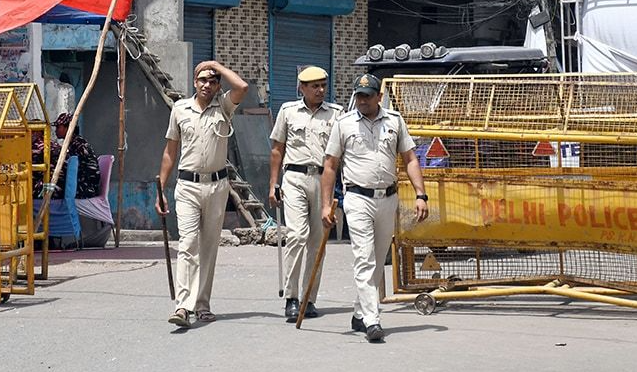
The caller allegedly called the Mumbai Police Control Room and threatened to blow up the Red Fort, following which Delhi Police and North District officials rushed in for checks. The scare came just over eight months after a deadly vehicle borne IED blast near Red Fort Metro Station which killed 15 people.
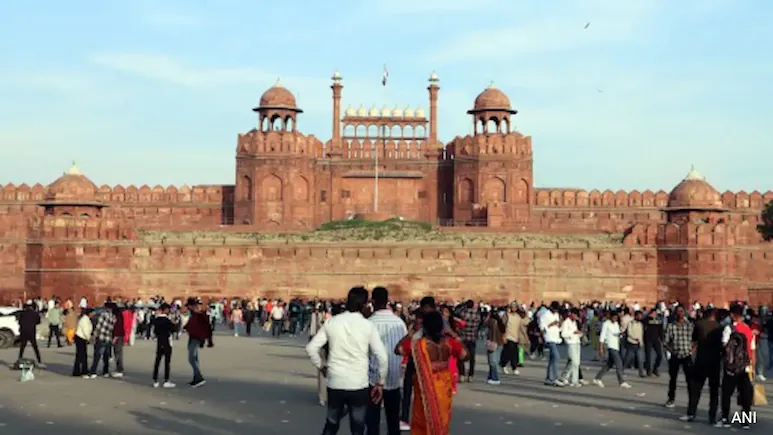
This image is only for illustrations. Image Credit: NDTV
Delhi’s Red Fort was the target of a bomb threat call on Saturday, forcing security agencies to spring into action and conduct a thorough sanitisation of the historic site. Officials said the caller contacted the Mumbai Police Control Room and claimed the Red Fort would be blown up. The message was immediately passed to Delhi Police, which alerted the North District team and began checks at the monument.
After a detailed search and verification exercise, police declared the threat a hoax. Even though no explosive device was found, the incident once again highlighted how sensitive security remains around one of India’s most iconic landmarks. Yeh case kaafi important hai because the Red Fort is not just a monument — it is a national symbol and a high-value security site in the heart of the capital.
What Happened
According to officials, the threat call was made to the Mumbai Police Control Room, not directly to Delhi authorities. The Mumbai side then alerted the Delhi Police Control Room, which informed North District police. That chain of communication triggered a rapid response, with officers moving in to inspect and sanitise the premises. This story was also covered by NDTV.
The police carried out necessary checks before confirming that the threat had no substance. In modern security protocol, such calls are never ignored, even when they later turn out to be false. A hoax today can still cause chaos, mobilise emergency teams and create public fear, which is why every threat is treated seriously until proven otherwise.
The quick confirmation that the call was a hoax likely prevented unnecessary panic from spreading further. Still, the fact that the Red Fort was specifically named would have immediately raised the alarm. In a city like Delhi, where security threats have deep political and emotional resonance, any mention of the Red Fort instantly becomes a matter of national concern.
Why the Red Fort Is Such a Sensitive Target
The Red Fort is one of India’s most visible and symbolically loaded landmarks. It is not just a tourist destination; it is also a national ceremonial site where the Prime Minister addresses the country on Independence Day. That alone makes it a location where security agencies remain highly alert year-round.
Because of that status, even a hoax call can force an extensive operational response. The site sits in a densely populated part of Old Delhi, surrounded by roads, markets and daily pedestrian movement. A threat there is never viewed lightly. It can affect traffic, local businesses, nearby residents and the general sense of safety in the area.
The timing of this hoax also matters because it came nearly eight months after a deadly high-intensity vehicle-borne IED blast near the Red Fort Metro Station. That attack killed 15 people and injured more than a dozen others. So while this latest incident was false, it inevitably revived memories of that earlier tragedy.
Background and Context
The Red Fort area has long been considered a sensitive zone because of both its symbolic importance and its crowded urban environment. Security agencies routinely keep a close watch on the monument and surrounding routes. Any threat message sent to police control rooms is therefore treated as a potential real event until full verification is complete.
The earlier vehicle-borne IED blast near Red Fort Metro Station added a darker layer to that vulnerability. According to the information provided, Umar-un-Nabi, a Kashmiri doctor working at Al-Falah University in Faridabad, was driving the Hyundai i20 involved in the attack. The blast happened around the same time investigators had seized 2,900 kg of explosives, including ammonium nitrate, in neighbouring Haryana’s Faridabad, about 50 km from Delhi.
That background explains why even a hoax threat today cannot be brushed off as routine. Delhi’s security environment has already been tested by serious terror-linked incidents and planned attacks. In such a context, every bomb call sets off a larger institutional memory.
Related Security Concerns
The Red Fort scare also comes amid wider concerns about anti-terror preparedness in and around the capital. In May, nine men with links to Pakistan’s intelligence agency, the ISI, and fugitive don Dawood Ibrahim were arrested for allegedly planning attacks in Delhi, Mumbai and other parts of the country. According to the Delhi Police Special Cell, the accused were tasked with attacking vital installations and security personnel.
Sources said the list of intended targets included nuclear facilities, airports, railway stations and power plants. That shows how broad the security challenge is. The Red Fort is part of that larger threat landscape because it is both high-profile and highly accessible, which makes vigilance essential.
So while Saturday’s incident ended as a hoax, it landed in a context where India’s security agencies are already dealing with multiple layers of threat perception. That is why the response was fast and serious.
Timeline
Eight months earlier: A vehicle-borne IED blast near Red Fort Metro Station kills 15 and injures more than a dozen.
Following weeks: Investigators link the blast to a “white-collar” terror module and arrest key suspects.
May 2026: Nine men with alleged links to ISI and Dawood Ibrahim are arrested over planned attacks.
Saturday, July 11, 2026: A bomb threat call is received about the Red Fort.
Immediately after the call, Mumbai Police alert Delhi Police, which informs North District officers.
Later the same day: Security checks confirm the call was a hoax.
Also Read: 3 Dead, 6 Rescued After Massive Fire At Residential Building In Delhi’s Tughlakabad
Why This Matters
This matters because bomb threats, even fake ones, can disrupt public life and stretch security resources. A single call can trigger police deployment, traffic disruption, crowd movement and public fear. Yeh issue kaafi important hai because the cost of false alarms is real, especially in a city as crowded and security-sensitive as Delhi.
It also matters because the Red Fort is a national symbol. Threats against such landmarks are never just local. They have psychological impact, media impact and policy impact. When people hear of a threat to the Red Fort, they immediately think of national security, not just a routine police matter.
The case also shows how security agencies in India have to operate in a constant state of readiness. They cannot assume a call is fake. They have to treat it as potentially real until every check is done. That is exhausting, expensive and necessary all at once.
India Angle
For Indian readers, this is a reminder of how deeply connected national symbols are to security concerns. In Hinglish, seedhi baat yeh hai: Red Fort pe threat ka matlab sirf ek building ka issue nahi hota, yeh pura security ecosystem ka test hota hai. The response involves Delhi Police, control rooms, district units and broader intelligence awareness.
It also connects to public anxiety around terror threats and hoax calls in major Indian cities. India has seen how quickly such messages can spread panic. Citizens, especially in metro cities like Delhi and Mumbai, are highly sensitive to these alerts because they know the consequences can be serious.
This story is also relevant because it shows inter-city coordination. A call made to Mumbai Police was relayed to Delhi authorities, proving how networked India’s policing system has become. That coordination is essential in a country where threats may travel across state boundaries.
Analysis
My opinion is that the hoax nature of the threat should not reduce the seriousness of the response. In fact, the response itself is the point. When a historic landmark receives a threat call, agencies must act as though the danger is real. The fast sanitisation and verification show that protocol worked.
I also think the background of the earlier explosion gives this story weight far beyond a normal false alarm. Readers are likely to view it through the lens of recent violence and terror-related investigations. That means even a hoax can carry a real emotional cost because it reopens old fears.
From a reporting perspective, this is the kind of story that needs careful framing. It should not sensationalise the call, but it must explain why the reaction was immediate. The balance between caution and clarity is important here.
What Next
The next step will likely be a police effort to trace the caller and determine whether the bomb threat was made as a prank, a disturbance tactic or something more organised. False threat calls can still lead to legal action, especially if they consume emergency resources or aim to create panic.
Security checks around the Red Fort may also remain heightened for some time. Even after a hoax is confirmed, agencies often review security arrangements and communication channels to make sure response systems work smoothly. That is standard practice in sensitive zones.
For the public, the immediate takeaway is simple: the threat was false, but the vigilance was real. The Red Fort will continue to be monitored closely, and any similar call is likely to trigger the same level of urgency.
Conclusion
The Red Fort bomb threat turned out to be a hoax, but it still exposed how sensitive and high-stakes security remains around one of Delhi’s most important landmarks. The call triggered a swift police response, a full sanitisation and renewed attention on earlier terror-linked incidents near the same area. With the monument carrying both national symbolism and security significance, even a false alarm can create serious concern. In the end, the threat was fake, but the caution it prompted was entirely justified.
Written By A. Jack