
BMC data shows Mumbai’s lake storage is far below normal for this time of year, with the seven reservoirs holding only 8.3% of useful capacity. The delayed monsoon has left the city vulnerable to mounting water supply pressure.
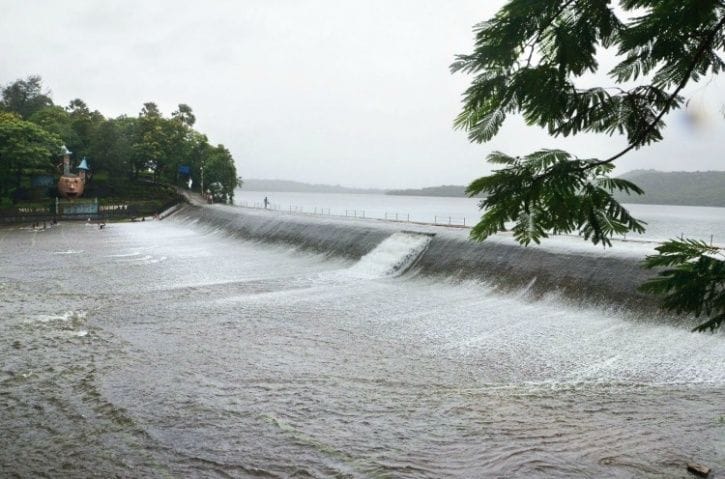
Mumbai’s major lakes supplying the city are running at critically low levels. This Image is only for Illustration.
Mumbai’s water security has come under fresh stress as the combined water levels in the seven lakes that supply the city dropped to 8.3% of useful capacity on June 22, 2026. The Brihanmumbai Municipal Corporation’s Hydraulic Engineer’s Department reported that the lakes together held 120,712 million liters at 6 a.m. on Monday, against a total useful capacity of 1,447,363 million liters. The situation has become more worrying because the monsoon has been delayed in Maharashtra, leaving the city dependent on limited stored water at a time when its larger reservoirs are extremely low compared to the same period last year.
Why the Levels Are So Low
The biggest reason behind the low storage is the delay in the monsoon. Mumbai’s seven-lake system depends heavily on seasonal rainfall to refill reservoirs before and during the rainy season, and when the rains arrive late, the city’s water balance gets tight very quickly. In practical terms, that means the city continues to consume water at a steady pace while the natural replenishment cycle remains stuck. The Hindu has covered the full story.
This is especially concerning because the lakes that serve Mumbai are not minor storage points; they are the backbone of the city’s water supply network. When the levels remain low in late June, the pressure on municipal planners increases sharply. They have to balance household demand, commercial demand, industrial use and emergency reserve planning, all at once.
The situation also becomes more sensitive because water demand does not slow down simply because reservoirs are low. Mumbai is a densely populated city, and even small shortfalls can have a visible impact on households, businesses and civic administration. That is why the current 8.3% figure has drawn attention.
What the BMC Data Shows
According to the BMC Hydraulic Engineer’s Department, the combined useful capacity across the seven lakes is 1,447,363 million liters. As of 6 a.m. on June 22, the total storage was only 120,712 million liters. That works out to 8.3% of useful capacity, which is extremely low for this stage of the season.
The phrase “useful capacity” matters here because it refers to the portion of storage that can actually be drawn for city supply. So even though the reservoirs may hold some volume of water, the available usable stock is the key number for planners. When that usable stock falls below a certain threshold, the city’s margin for error shrinks quickly.
This also explains why the lakes are being watched so closely now. In a city like Mumbai, reservoir levels are not just a technical statistic; they are a direct indicator of how comfortable or strained the water supply system is likely to become over the next several weeks.
Background and Context
Mumbai’s water supply depends on a cluster of reservoirs in and around the city that fill during the monsoon and support supply through the rest of the year. In normal years, rain begins to improve the storage situation by this stage of June. But when the monsoon is delayed, the city enters a difficult holding pattern where demand continues and replenishment lags behind.
The current situation is more serious because the lakes are reportedly much lower than they were at this time last year. That year-on-year comparison suggests this is not a small seasonal dip but a meaningful shortfall. Whenever reservoir levels trend below the previous year’s benchmark, civic authorities begin preparing for tighter water management measures.
In Mumbai, such low storage levels can affect planning for household supply schedules, pressure maintenance, emergency use and even communications around conservation. While the city has historically handled water stress through civic coordination, a prolonged delay in monsoon onset can force sharper decisions.
Timeline
Before June 2026: Maharashtra experiences a delayed monsoon onset, slowing reservoir replenishment.
June 22, 2026, 6 a.m.: BMC records a combined storage of 120,712 million liters in the seven lakes.
June 22, 2026: The combined useful capacity stands at 1,447,363 million liters, meaning storage is at 8.3%.
Current stage: Water levels remain much lower than the same time last year.
Coming days: Civic authorities will closely track rainfall and reservoir recovery as the monsoon progresses.
Also Read: Light Rain Brings Relief in Mumbai After Monsoon Delay: 25 mm at Worli, Ghatkopar Records 24 mm
Why This Matters
This matters because water is one of the most basic urban essentials, and Mumbai’s supply network is highly dependent on timely monsoon replenishment. If lake levels remain low for longer, the city may face tighter management of distribution, greater pressure on existing stock and more public concern over everyday supply.
It also matters because water stress has a ripple effect. Low reservoir levels can influence everything from domestic routines to commercial operations, construction activity and civic planning. Yeh issue kaafi important hai because when a megacity like Mumbai gets squeezed on water, the impact is felt across multiple layers of daily life.
For residents, the immediate concern is whether supply will remain stable and sufficient if rains continue to lag. For planners, the concern is how long the system can safely stretch before stronger conservation measures become necessary.
India Angle
From an India perspective, Mumbai’s low lake levels are not just a local story. They are part of a larger national conversation about water security, climate variability and urban resilience. Many Indian cities depend heavily on seasonal rainfall, so a delayed monsoon creates familiar stress points across the country.
In Hinglish, seedhi baat yeh hai: jab rain delay hota hai, toh city ka water balance bhi bigad sakta hai. Mumbai is a prime example of how monsoon timing directly affects urban life, and that makes this story relevant for readers across India who are watching weather patterns, reservoir levels and civic planning more closely than ever.
The story also shows why water conservation matters at the household level. When a city’s major supply lakes are running low, every bit of careful use helps. That message is especially important in India, where urban demand keeps rising and climate uncertainty makes planning harder.
Possible Response and Civic Pressure
Although no emergency shortage has been declared in the data provided, low reservoir levels typically increase pressure on civic authorities to monitor daily usage more tightly. The BMC is likely to keep tracking storage closely and adjust planning based on rainfall movement, inflow levels and consumption trends.
Public messaging around water conservation may also become more visible if the storage situation does not improve soon. In cities like Mumbai, that often means appeals to avoid wastage, reduce unnecessary use and stay alert to supply notices. If monsoon activity improves quickly, the pressure may ease. If not, the discussion could shift from concern to practical restrictions.
Analysis
My opinion is that this story is particularly important because it highlights how climate timing affects a city’s daily systems. A delayed monsoon may sound like a weather issue, but for Mumbai it quickly becomes a civic planning issue. The lower reservoir figure is not dramatic for its own sake; it matters because it can shape the city’s next few weeks of water management.
Another important point is the comparison with last year. A low figure is concerning, but a lower-than-last-year figure is even more telling because it suggests a worsening pattern rather than a temporary dip. That is the kind of detail editors, policy watchers and readers all pay attention to.
What Next
The next step will depend largely on monsoon progress over Maharashtra. If rainfall increases soon, inflows into the lakes should begin to improve and reduce the pressure on Mumbai’s water stock. If the delay continues, the BMC may need to consider stronger conservation messaging or tighter supply planning.
Civic officials will likely keep close watch on daily storage updates, especially because reservoir levels can change quickly once the rains begin in earnest. Residents should expect continued attention on water stock numbers in the coming days, along with possible reminders to use water carefully.
For now, the key question is simple: will the monsoon arrive in time to stabilize Mumbai’s water security, or will the city be forced to stretch already thin reserves a little longer?
Conclusion
Mumbai’s seven lakes holding just 8.3% of useful capacity is a clear warning sign for the city as the monsoon remains delayed in Maharashtra. With only 120,712 million liters stored against a useful capacity of 1,447,363 million liters, the water situation has become a serious civic concern. The coming days will be crucial, because every rainfall update now has a direct impact on how comfortably Mumbai can manage its water supply. In a city this large, even a delayed monsoon quickly turns into a major everyday issue.
Written By A. Jack