
Taloja: A speeding car crashes into pedestrians and people standing on the road, turning an ordinary evening into a horrific road accident. Authorities are searching for the driver and the injured are receiving treatment.
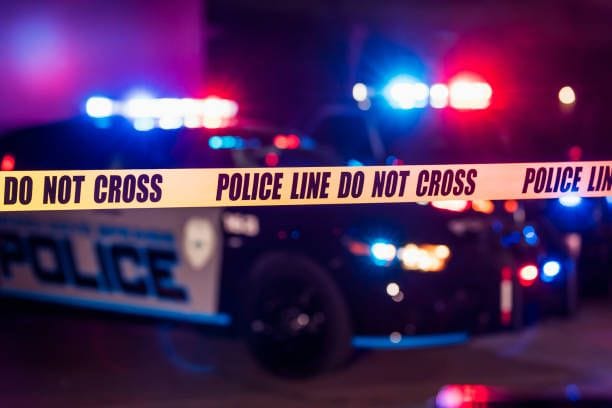
Police inspect the scene after a speeding car hit pedestrians in Taloja Sector 10. This image is only for illustrations.
A fatal road accident in Navi Mumbai’s Taloja area has left two people dead and eight injured after a car struck pedestrians on Monday, July 6, 2026. Police said the vehicle was moving at high speed when the driver lost control in Taloja Sector 10 and hit people who were walking on the road and standing near the roadside. The driver left the car at the scene and ran away, prompting police to begin a search operation.
This is one of those incidents that shows how quickly negligence on the road can turn into a human tragedy. In a matter of seconds, families were left shattered, injured victims were rushed for treatment and the local area was suddenly dealing with a serious law-and-order and road safety case. Yeh incident kaafi serious hai because it is not just an accident — it is a hit-and-run case with deadly consequences.
What Happened
According to police, the accident occurred in Taloja Sector 10 when a car travelling at high speed lost control and struck pedestrians. The vehicle hit multiple people who were either walking along the road or standing by the roadside. Two people died in the incident, while eight others sustained injuries.
What makes the case more disturbing is the driver’s conduct after the crash. Instead of helping the victims or staying at the scene, the driver allegedly abandoned the vehicle and fled. That has turned the matter from a road accident into a criminal investigation. Police are now searching for the driver and trying to establish the exact sequence of events. This story was also covered by The Hindu.
At this stage, the key question is whether the crash happened because of reckless driving, a sudden loss of control, intoxication, distraction or some other factor. Police have not publicly confirmed those details yet, but the speed of the car and the driver’s escape point to a serious lapse in responsibility. In road safety terms, this is the kind of incident that raises immediate concern for everyone who uses crowded urban roads.
How the Crash Likely Unfolded
Based on the available information, the sequence appears to be straightforward but tragic. The car was moving fast through the Taloja area when the driver lost control. Instead of slowing down or regaining control, the vehicle veered into pedestrians on or near the roadside. The impact was severe enough to kill two people and injure several others.
In Indian urban areas, roadside pedestrian movement is common, especially in densely populated or semi-industrial pockets like Taloja. People often walk close to traffic because footpaths may be absent, blocked or difficult to use. That reality makes speeding vehicles far more dangerous. Even a brief loss of control can have devastating results when pedestrians have little space to escape.
The driver’s decision to flee also worsens the incident. Under Indian law and basic human responsibility, the first response after such a crash should be to stop, call for help and cooperate with emergency services. Running away usually makes matters worse, both for the victims and for the legal case that follows. From a public safety angle, that is a major red flag.
Police Response
Police have started an investigation into the accident and are actively searching for the driver. That likely means they are collecting evidence from the crash site, checking nearby CCTV cameras, speaking to witnesses and trying to identify the vehicle’s ownership details.
In hit-and-run cases, the early hours are crucial. Authorities usually look for vehicle registration information, damage patterns, possible route tracking and eyewitness statements. If the car was left behind at the scene, that may help investigators move faster, because it gives them a direct physical clue. Still, tracing the person behind the wheel can take time if the vehicle is registered under another name or if the driver was not the owner.
Police action in such cases also serves a wider purpose: it sends a message that fleeing the scene will not erase responsibility. The law treats hit-and-run offences seriously because they combine reckless driving with a failure to help injured victims. In this case, the investigation will likely focus on both the crash itself and the driver’s conduct afterward.
Background and Context
Road accidents remain one of India’s most persistent public safety problems. In fast-growing urban regions like Navi Mumbai, traffic density, mixed road use and pedestrian movement often create dangerous conditions. When vehicles are driven at high speed in such areas, even a small mistake can become fatal.
Taloja has seen rapid development, with residential, industrial and transit movement all overlapping in the same zone. That often means vehicles, workers, pedestrians and local traffic share limited road space. In such settings, road discipline becomes extremely important. A speeding car in a pedestrian-heavy stretch is not just a traffic issue; it is a direct threat to life.
This accident also reflects a broader pattern seen in many Indian cities where pedestrian safety is often not treated with the seriousness it deserves. People walking on the roadside should not have to fear being hit by a vehicle losing control. But in practice, weak enforcement, poor road design and reckless driving make such tragedies far too common.
Timeline
Monday, July 6, 2026: A car enters Taloja Sector 10 in Navi Mumbai at high speed.
Moments later: The driver loses control of the vehicle.
Immediate impact: The car hits pedestrians walking and standing by the roadside.
After the crash: Two people are killed and eight others are injured.
At the scene: The driver abandons the vehicle and flees.
Following the incident: Police launch an investigation and begin a search for the driver.
Why This Matters
This matters because road accidents in crowded urban spaces do not just affect those directly involved — they shake the entire community. Families lose loved ones, workers lose income, and the local area is left dealing with trauma and fear. In this case, two deaths and eight injuries show how violent a single reckless moment can become. Yeh issue kaafi important hai because it reminds us that road safety is a daily survival issue, not a distant policy topic.
It also matters because pedestrians are among the most vulnerable road users. Unlike drivers, they have no protective barrier, no seat belt and no metal shell around them. When a speeding car hits people on the roadside, the consequences are often severe. That is why cities need stronger safety systems, better traffic enforcement and more pedestrian-friendly infrastructure.
For Navi Mumbai residents, this incident is a reminder that traffic safety must be taken seriously in developing urban zones like Taloja. Rapid growth without equal attention to road discipline can create dangerous conditions. This is not just about one car or one driver — it is about the environment that allows such incidents to happen.
India Angle
Across India, hit-and-run cases continue to trigger public anger because they combine two painful realities: reckless driving and abandonment of victims. In Hinglish, seedhi baat yeh hai — jab koi driver accident karke bhaag jaata hai, toh logon ka trust system par aur kam ho jaata hai. That is why this Navi Mumbai case will resonate beyond the city.
It also connects to a bigger Indian problem: the gap between road growth and road safety. Cities expand, vehicles increase and traffic becomes denser, but pedestrian protection does not always keep pace. Footpaths, speed controls and lane discipline often lag behind. That mismatch creates dangerous conditions, especially in mixed-use zones like Taloja.
For many Indian families, this is not an abstract news report. It is a warning that everyday travel can become risky when drivers ignore speed limits and safety norms. The emotional impact is what makes stories like this land so strongly with readers.
Analysis
My view is that the most serious part of this story is not only the fatalities, but the pattern behind them. Speeding in a pedestrian area is already dangerous, but fleeing the scene shows a complete collapse of responsibility. That transforms the case from a tragic accident into a moral and legal failure. It also means the public will want to know whether the driver was intoxicated, distracted or otherwise unfit to be behind the wheel.
I also think cases like this underline the need for stronger urban traffic design. If pedestrians are forced to walk on the edge of fast-moving roads, the city is setting them up for danger. Better street lighting, barriers, footpaths and enforcement could reduce such incidents. So yes, the driver is the immediate cause, but the system around the road matters too.
Finally, the story has a strong human-interest angle. Two lives lost and eight injuries is not a small crash — it is a family-level crisis for many people at once. That emotional weight is why the incident deserves careful reporting and not just a brief police note.
What Next
The next stage will likely focus on the police investigation and the search for the driver. Officers may use CCTV footage, vehicle registration records and local witness accounts to identify the person who fled. Once the driver is traced, the case could move into legal proceedings involving rash driving, causing death by negligence and hit-and-run offences.
The injured victims will also need ongoing medical care, and their condition may shape the wider public discussion around the case. If any of them are seriously hurt, that could add further legal and social pressure on the authorities to act quickly.
There may also be renewed calls for traffic enforcement in Taloja and other busy Navi Mumbai areas. After a tragedy like this, the most common public question is simple: how can such incidents be prevented next time? That may lead to demands for speed-calming measures, pedestrian protection and more visible police presence.
Conclusion
The Navi Mumbai crash in Taloja Sector 10 is a grim reminder of how fast a speeding vehicle can turn into a deadly threat. Two people have died, eight others have been injured and the driver has fled, leaving police to piece together what happened and why. While the investigation continues, the larger lesson is already clear: road safety, pedestrian protection and driver accountability cannot be treated casually. In cities like Navi Mumbai, one reckless moment can change many lives forever.
Written By A. Jack