
The first international flight will depart at 2.55 am and will be thrice a week. It is also NMIA’s first global perishable export shipment and bolsters its cargo ambitions.
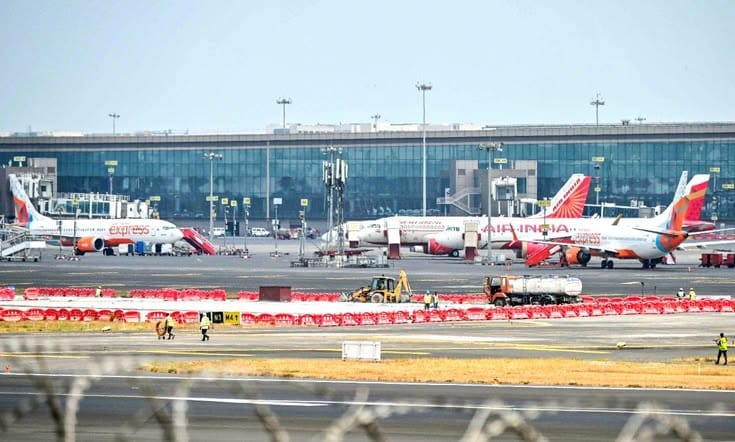
Navi Mumbai International Airport prepares for its first international departure to Abu Dhabi as Air India Express begins thrice-weekly service. Image Credit: PTI
Navi Mumbai International Airport will begin its first international flight service on Wednesday, with Air India Express operating a flight to Abu Dhabi at 2.55 am, airport operator Adani Airports Holding Ltd said. The launch makes NMIA the Mumbai Metropolitan Region’s second global gateway and adds a new direct air link between Maharashtra and the UAE.
The new service comes a little over six months after the airport began domestic commercial operations on December 25. With this step, NMIA is moving from a domestic rollout phase into full international functionality, which is a major milestone for both the airport and the wider aviation ecosystem in western India. Yeh development kaafi important hai because it turns a greenfield airport into an active international connector for passengers and cargo alike.
What the Launch Means
The Abu Dhabi route will be operated thrice weekly by Air India Express, giving travellers a direct link to one of West Asia’s most important aviation and business hubs. That matters because Abu Dhabi is not just a popular travel destination; it is also a major transit point for Indian passengers heading to Europe, the Middle East and beyond. This story was also covered by Rediff.
For NMIA, this is more than just a new flight. It is the official start of international operations, which typically signals that airport infrastructure, coordination and regulatory readiness have moved to the next level. International flights require more than runways and terminals. They need immigration, customs, security, cargo handling and close coordination between multiple agencies. The airport operator has said the launch reflects the combined efforts of government agencies, aviation regulators, airline partners and airport stakeholders.
According to Adani Airports Holding Ltd, the airport is now strengthening its position as a major part of the Mumbai Metropolitan Region’s aviation network. In practical terms, that means NMIA is no longer just an additional airport on paper. It is becoming a real operational alternative for travellers and businesses in one of India’s busiest economic corridors.
Why Abu Dhabi Was Chosen
A direct route to Abu Dhabi makes strategic sense for several reasons. First, the UAE is one of the strongest overseas travel markets for India, especially for business travellers, workers, tourists and transiting passengers. Second, Air India Express has a strong low-cost international network that fits a short-haul West Asia route. Third, Mumbai’s large migrant and business population has long relied on direct flights to Gulf destinations.
A route like this usually helps an airport quickly build credibility because it combines high passenger demand with strong airline utility. The choice of a thrice-weekly service also suggests a measured launch rather than an aggressive full-scale expansion. That is often the right move for a new international airport, because it allows operations to stabilise while demand is tested.
For passengers in the Mumbai Metropolitan Region, especially those in Navi Mumbai, Thane, Panvel and nearby areas, this could eventually mean less dependence on the older airport and more choice in flight timings. If the route performs well, it may open the door to additional West Asia and international destinations in the coming months.
Cargo Milestone Adds Economic Value
The inaugural international flight is also carrying NMIA’s first global perishable export shipment. That is a big deal because it shows the airport is not only focused on people movement but also on time-sensitive cargo. Perishable goods such as seafood, flowers, fruits, vegetables and other temperature-sensitive exports depend on fast handling and reliable air links.
This is especially relevant for Indian exporters. A new airport with strong cargo capability can improve access to overseas markets, reduce transit delays and support higher-value exports. For Maharashtra and the wider western region, that could benefit farmers, traders and supply-chain businesses that rely on speedy delivery.
AAHL said this milestone is expected to strengthen NMIA’s growing cargo capabilities and improve international market access for Indian exporters. In simple terms, that means the airport is trying to be more than a passenger terminal. It is positioning itself as a logistics asset as well.
Background and Context
NMIA is a joint venture between the Adani Group and CIDCO, Maharashtra’s urban planning and infrastructure development agency. The airport has been one of India’s most closely watched greenfield aviation projects because of its scale, timing and strategic location. Its launch is seen as a major infrastructure addition to the Mumbai Metropolitan Region, which is already one of the country’s busiest economic zones.
The airport’s domestic operations began on December 25, and since then it has been handling around 150 Air Traffic Movements per day, connecting 46 domestic destinations. That gives a sense of how quickly the airport has scaled up. Moving from domestic operations to the first international service within a little over six months suggests that the airport is being expanded in a phased but rapid manner.
Adani Group’s broader airport portfolio now includes eight airports: Mumbai, Navi Mumbai, Ahmedabad, Jaipur, Lucknow, Thiruvananthapuram, Guwahati and Mangaluru. All eight airports now have international flight services in addition to domestic operations. That indicates a strong push to build a networked aviation footprint across India.
Timeline
December 25: NMIA begins commercial domestic operations.
Following months: The airport handles about 150 ATMs per day across 46 domestic destinations.
Wednesday: NMIA launches its first international service to Abu Dhabi.
Same inaugural flight: The airport also sends out its first global perishable export shipment.
Next phase: More international and cargo growth is expected as operations expand.
Why This Matters
This matters because a second global gateway for the Mumbai Metropolitan Region can reduce pressure on existing air infrastructure and improve travel options for millions of people. Mumbai is one of India’s biggest travel markets, and any new international connectivity in the region has a direct impact on business, tourism and family travel. Yeh issue kaafi important hai because better airport capacity usually means better access, smoother movement and more competitive fares over time.
It also matters for India’s aviation growth story. Greenfield airports are expensive, complex and politically significant projects. When one of them begins international service, it shows that India’s infrastructure pipeline is translating into actual operations. That is important not just for prestige but for practical economic growth.
The cargo angle is equally important. India’s exporters increasingly need speed, reliability and cold-chain-friendly transport. If NMIA can build a strong perishable cargo network, it could become a valuable hub for western India’s trade ecosystem. That would have a broader economic effect beyond passenger travel.
India Angle
For Indian readers, this story is not just about an airport opening another route. It is about how India’s transport map is changing. In Hinglish, seedhi baat yeh hai: Navi Mumbai ke logon ko ab international flying ke liye ek aur bada option mil gaya hai, aur yeh travel convenience ka real boost h. The launch could also help residents in surrounding districts avoid longer commutes to reach other airports.
The Abu Dhabi link is especially relevant for Indian travellers because Gulf routes are among the most used international sectors from India. Many passengers use these flights for work, tourism, family visits and onwards connections. So even one new direct route can have a noticeable impact on people’s travel planning.
There is also a pride factor. India has been building more modern airports in recent years, and NMIA’s international debut adds to that momentum. For a country watching its cities grow fast, a new airport handling both passengers and cargo is a strong sign of urban and economic confidence.
Analysis
My opinion is that the most interesting part of this story is how quickly NMIA has moved from domestic launch to international service. That suggests strong coordination, which is not easy in airport projects of this size. The fact that the first international route is to Abu Dhabi also makes commercial sense because it connects a high-demand market with a strong airline partner. This is a smart, pragmatic start rather than a symbolic one.
I also think the cargo shipment is a quietly important detail. Many airport stories focus only on passenger travel, but cargo often determines how useful an airport becomes to the wider economy. If NMIA can build both passenger and export strength early, it will have a stronger long-term business case. That is a sign of mature airport planning.
From a broader editorial perspective, NMIA’s launch also reflects the changing geography of Mumbai’s aviation future. The city is no longer dependent on a single major airport for all growth. That diversification could improve resilience, reduce bottlenecks and create more balanced development across the metro region.
What Next
The next step will be a gradual expansion of international services if the Abu Dhabi route performs well. Airlines will likely watch passenger demand, load factors and cargo volumes before adding more destinations. If the route succeeds, NMIA could see additional Gulf and long-haul connections in the future.
Operationally, the airport will need to ensure smooth international processing from day one. That means immigration, baggage handling, customs, security and airline coordination must stay efficient. For a new airport, early impressions matter a lot because passengers often judge the entire facility based on their first experience.
The cargo side will also be important to watch. If perishable exports move consistently through NMIA, the airport could attract more logistics business and time-sensitive shipments. That would strengthen its role as a dual-purpose aviation hub rather than just a passenger terminal.
Conclusion
Navi Mumbai International Airport’s first international service to Abu Dhabi is a major milestone for both the airport and the Mumbai Metropolitan Region. With Air India Express launching a thrice-weekly route at 2.55 am, NMIA is stepping into its next phase as a global gateway while also sending out its first perishable export shipment. The launch matters because it improves travel options, supports cargo growth and strengthens India’s aviation infrastructure. For passengers, exporters and the region’s economy, this is the beginning of a much bigger journey.
Written By A. Jack