
The appeal comes days after Ketan’s father wrote to President Droupadi Murmu seeking speedy justice in the Pune Fort murder case. The family in mourning says the trauma has already taken two generations in one month.
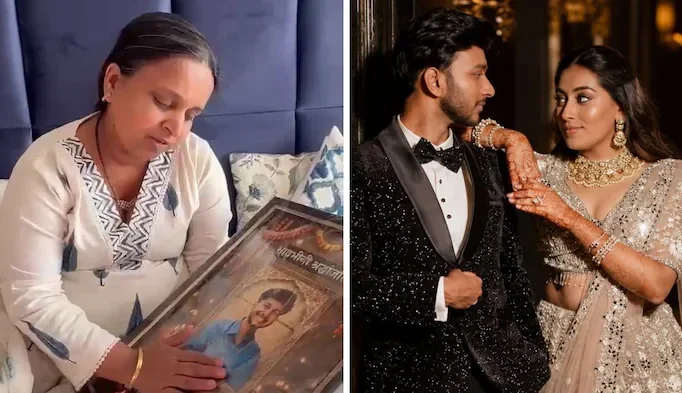
Ketan Agarwal’s mother, Rakhi Agarwal, has appealed to Prime Minister Narendra Modi for swift justice in the Pune Fort murder case. Image Credit: NDTV
In a deeply emotional appeal that has drawn public attention, Rakhi Agarwal, the mother of Pune Fort murder victim Ketan Agarwal, has written to Prime Minister Narendra Modi asking him not to let her son become “just another case file”. Her note, sent by email on Monday night, pleads for the strictest punishment for those accused of killing her son and for justice to be delivered without delay.
Ketan Agarwal, a 26-year-old realtor from Pune, was allegedly pushed to death from a cliff at Lohagad Fort on June 18 by his fiancée Siya Goyal and her alleged lover Chetan Chaudhary, according to the case details shared in reports. The family’s grief has only deepened since then, first with the murder itself and then with the death of Ketan’s grandfather, who reportedly died of cardiac arrest after being unable to bear the loss. Yeh case kaafi heartbreaking hai because it is not only about a brutal killing but also about a family that says it has been destroyed by grief.
What the Mother Said
Rakhi Agarwal’s note is full of personal anguish, and that is what makes it so powerful. She wrote that like every mother, she had dreamt of watching Ketan build a beautiful life, get married and grow old with the family. Instead, she had to perform his last rites. Her words reflect a kind of pain that ordinary legal language often fails to capture. This story was also covered by NDTV.
She also described how every corner of the home reminds her of him — his room, his clothes, his photographs and the silence that has replaced his laughter. That kind of grief is not abstract. It is daily, visible and relentless. In her words, Ketan was not just a son, grandson or brother. To her, he was her whole world.
The emotional core of the letter is her request that the case not be reduced to paperwork or a file number. She wants justice to be visible, swift and meaningful. That point matters because families in high-profile criminal cases often fear that media attention may fade before the legal process is over. Her message is essentially a plea against forgetting.
Why the Family Is Seeking Top-Level Intervention
The family’s appeal to the Prime Minister comes after Ketan’s father, Vishal Agarwal, wrote to President Droupadi Murmu last week seeking a fast-tracked investigation and speedy justice. That sequence tells us something important: the family is trying to push the case into the highest possible public and institutional focus. They are not asking for sympathy, they are asking for action.
This is common in cases where families feel the pace of justice may be slow or where they believe the seriousness of the crime deserves direct attention from the top. The message is not just emotional; it is strategic. By reaching out to the country’s highest constitutional and political offices, the family is making a public case that the matter should not be allowed to drift.
Their concern is understandable. In India, families of victims often have to wait long periods for trials, arrests, forensic clarity and final verdicts. When a case involves allegations of pre-planning, betrayal and murder within an intimate relationship, the emotional damage becomes even more intense. The Agarwal family appears to believe this case must move quickly because delay would deepen the suffering further. Yeh issue kaafi important hai because justice delayed often feels like justice denied for grieving families.
Background and Case Details
According to the reported case timeline, Ketan Agarwal was allegedly pushed to death from a cliff at Lohagad Fort on June 18. The accused named in reports are his fiancée Siya Goyal and her alleged lover Chetan Chaudhary. Police custody has already been reported in the case, and further investigation continues.
The relationship details make the case even more disturbing. Ketan and Siya were engaged in February and were reportedly set to marry in November. The families had even booked a palace in Jaipur for the wedding at a reported cost of Rs 17 crore and arranged two private planes for guests. That level of planning makes the alleged murder feel even more shocking, because it suggests a life that appeared to be moving toward celebration rather than tragedy.
Reports also say Siya and Ketan visited the fort on May 31, then again on June 4 after she pressed for a second visit, though Ketan’s mother did not permit it. On June 14, she allegedly persuaded him to go again. During that visit, she allegedly tried to push him off a cliff, but he managed to hold on to a bush. When he asked why she had pushed him, Siya allegedly claimed there had been a snake and that she had acted to protect him. If these reported details are proven in court, they will likely become key to establishing intent and planning.
Another reported development is that Siya allegedly married Chetan secretly after her engagement with Ketan. Two of her college friends, who allegedly signed as witnesses, are also being probed. These are all still allegations and part of the ongoing legal process, but they show why the case has attracted so much attention. The combination of personal betrayal, alleged deception and a violent death has made the case especially unsettling.
Timeline
February: Ketan and Siya get engaged.
May 31: The couple reportedly visits Lohagad Fort.
June 4: Siya allegedly pushes for another visit, which Ketan’s mother does not allow.
June 14: Another fort visit takes place; Siya allegedly tries to push Ketan off a cliff.
June 18: Ketan is allegedly pushed to his death at Lohagad Fort.
After the murder: The case begins to draw police attention and investigation.
Last week: Ketan’s father writes to President Droupadi Murmu.
Monday night: Rakhi Agarwal emails her emotional appeal to PM Modi.
Present: Siya and Chetan remain in custody as the investigation continues.
Also Read: Ketan Agarwal Family Faces Another Tragedy as Grandfather Devichand Agarwal Dies in Pune
Why This Matters
This matters because it is more than a criminal case; it is a story about trust, family tragedy and the demand for accountability in a murder investigation. When a mother says she does not want her son to become just another case file, she is speaking for many victims’ families across India who fear that the legal system can sometimes move too slowly. Yeh issue kaafi important hai because public trust in justice depends not only on arrests but also on timely outcomes.
It also matters because the case has touched a nerve in the public imagination. The alleged facts involve a young man, an engagement, a planned wedding and then a brutal death in a scenic but tragic setting. That emotional contrast makes the story resonate far beyond Pune. People are not just reacting to a crime; they are reacting to the collapse of what looked like a hopeful future.
There is also a broader social impact. Cases like this sharpen public conversations about relationship secrecy, deception and violence within intimate settings. They remind readers that some of the most serious crimes happen not in isolated or unfamiliar spaces, but within relationships that are trusted by families. That is what makes this case so painful and so widely discussed.
India Angle
For Indian readers, this story has strong emotional and social relevance because it touches on family honour, arranged expectations, engagement culture and the role of the justice system. In Hinglish, seedhi baat yeh hai: jab ek family shaadi ki tayari kar rahi ho aur wahi relationship murder case mein badal jaaye, toh shock double ho jaata hai. The story will likely be followed closely by readers across India because it combines romance, betrayal and violence in one highly public case.
The appeal to PM Modi also reflects a familiar Indian pattern in high-profile tragedies: families often seek help from top national leaders when they fear the process may become slow or lost in bureaucracy. That shows both hope and frustration. It shows how deeply families believe that public pressure can help move things forward.
The case also matters in the context of media attention in India. Crime stories can quickly fade from headlines unless they are kept alive by legal milestones or family appeals. Rakhi Agarwal’s letter is, in effect, a reminder to the public and institutions that the case is not over just because the shock value has passed. For Indian audiences, that is a powerful message.
Analysis
My opinion is that the mother’s appeal will likely shape public sympathy more than any legal filing alone. A mother describing her son’s room, clothes and silence is the kind of detail that stays with readers. From an SEO and editorial standpoint, this makes the piece more powerful because it is not just about a case update — it is about grief, memory and the demand for justice. That combination is what drives attention and engagement.
I also think the timing of the appeal matters. The family is trying to keep the case visible while the investigation and custody proceedings are still active. That is smart because public attention often fades quickly. The more visible the case remains, the harder it becomes for it to slip into the background. In that sense, the family is fighting not only for punishment but also against forgetting.
From a legal perspective, the case will likely hinge on evidence, witness statements, the reported confessions or disclosures, and the chronology of visits to the fort. If the prosecution can clearly show planning and intent, the case may move in a direction that supports the family’s demand for strict punishment. But legal outcomes take time, and that is precisely what the family fears. Their letter is a reminder that for victims’ families, every day matters.
What Next
The next step is likely continued police investigation, custody proceedings and evidence collection. If the case includes phone records, witness testimony or corroborating details about prior visits and alleged concealment, those will become important in court. The college friends reportedly being probed may also add another layer to the investigation.
The family is likely to continue seeking fast-tracked justice through political and legal channels. More letters, public statements or court-related petitions may follow if the pace slows. That is often how high-profile victim families keep pressure on the system.
For the public, the next phase will be about watching whether the case gets the seriousness the family is demanding. If the investigation stays active and the legal process moves visibly, it could reassure many people. If not, the family’s warning that Ketan should not become “just another case file” will sound even more urgent.
Conclusion
Rakhi Agarwal’s emotional letter to Prime Minister Narendra Modi has turned the Pune Fort murder case into more than a headline — it is now a public plea for justice, dignity and memory. Her words capture the unbearable grief of a mother who lost her son, followed by the death of the grandfather who could not bear the loss. With the accused already in custody and the investigation continuing, the family is asking for the strictest punishment without delay. The case has moved beyond a criminal file; for the Agarwals, it is now a fight to make sure Ketan is remembered as a person, not just a case number.
Written By A. Jack