A Delhi court on Saturday remanded Pune-based physics lecturer Manisha Sanjay Havaldar to six-day CBI custody in the NEET paper leak case. The agency says she played a key role in circulating physics questions and allegedly used her National Testing Agency translation assignment to pass on confidential material.
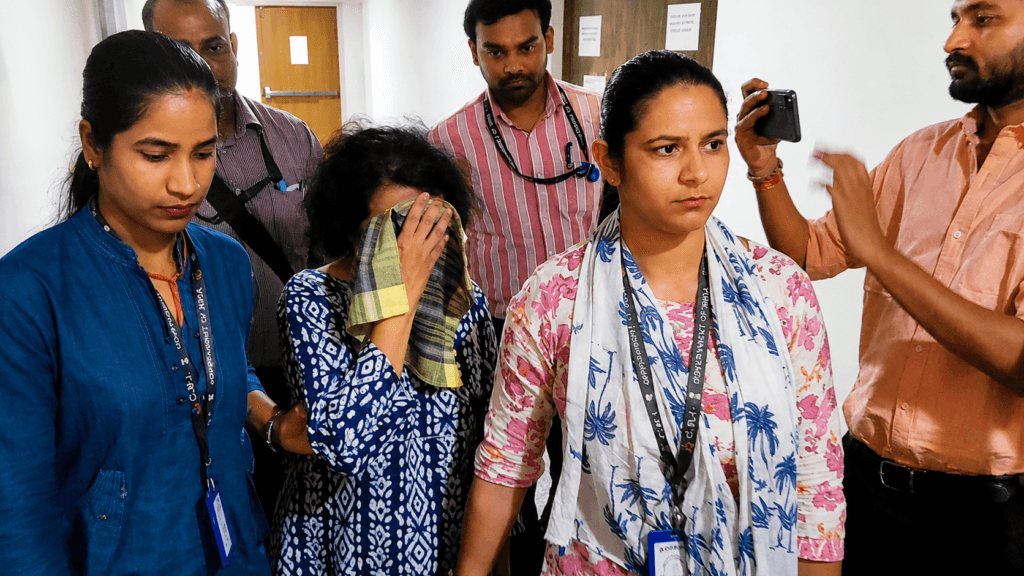
Court proceedings in the NEET paper leak investigation as CBI secures custody of Pune lecturer Manisha Havaldar.
NEET Paper Leak Case
The NEET-UG paper leak investigation has taken another major turn after a Delhi court remanded Pune-based physics lecturer Manisha Sanjay Havaldar to six days of CBI custody on Monday, May 25, 2026. Special Judge Ajay Gupta allowed the Central Bureau of Investigation’s plea for custodial interrogation, marking a fresh development in a case that has already triggered concern across India’s exam and coaching ecosystem.
According to the CBI, Havaldar, who worked at Seth Hiralal Saraf Prashala in Pune, was not just another link in the chain but a key accused alleged to be the source of the leak of NEET-UG 2026 physics questions. The agency says she, along with other accused, circulated translated physics questions and shared confidential content with students before the exam. Yeh case kaafi important hai because it goes to the heart of exam fairness in India, especially for lakhs of medical aspirants.
What the CBI Says
The CBI told the court that Havaldar had worked as a translator for NEET-UG and that she, along with other accused, circulated physics questions that were sent for translation. The agency’s case is that handwritten notes containing NEET-related questions were prepared and retained by her during her National Testing Agency assignment.
Those notes, according to the investigation, were then allegedly used to pass on examination-related content to some students through WhatsApp messages and printed copies. The CBI also informed the court that Havaldar allegedly worked in collusion with botany teacher Manisha Mandhare, who is already in custody, and shared NEET-related questions and content with students in exchange for money. The Hindu has covered the full story.
This is a serious allegation because it suggests a breach not only of exam confidentiality but also of institutional trust. If a person involved in the translation process is found to have leaked questions, then the concern moves beyond one accused individual and into the system that was supposed to secure the paper. In simple words, sirf paper leak ka issue nahi hai, poora trust system shak ke daayre mein aa gaya hai.
How the Case Reached Custody
Havaldar was arrested by the CBI on May 22 and was first produced before the court on transit remand. The Delhi court then granted the agency six days of custodial interrogation after hearing the plea. Custody in such cases usually means investigators want to confront the accused with documents, digital records, and possible co-accused statements.
The timing of the arrest and remand matters because exam leakage cases often rely on digital evidence, handwritten notes, and communication trails. When investigators have to identify how information moved from official translation work to student groups, they need time to compare chats, call records, printouts, and statements. That is likely why the CBI sought custody in the first place.
The fact that the court accepted the request suggests that the agency had enough material to justify further interrogation. While that does not prove guilt by itself, it does indicate that investigators believe Havaldar may hold important answers about the route through which the questions moved.
What the Investigation Suggests
The most troubling part of the CBI’s version is the alleged use of translation work as a source of leakage. Havaldar is said to have admitted to sharing physics questions from NEET-UG 2026, which she had translated or reverse-translated, with one student and with Manisha Mandhare, a botany lecturer from Modern College of Arts and Science in Pune.
That admission, if proven in detail, could become a major piece of the case. It indicates that the exam material may not simply have been copied and circulated randomly. Instead, it may have passed through a specific chain of persons who had access to official or semi-official exam content. This makes the case much more serious because it implies planning rather than an accident.
The CBI’s allegation that the questions were shared in exchange for monetary benefits also adds another layer. If money changed hands, the case becomes not just about exam malpractice but also about a possible criminal network built around the leak. That is the kind of allegation that can widen the probe further into coaching circles, intermediary networks, and digital communication groups.
Background and Context
NEET-UG is one of India’s most important entrance examinations, with lakhs of students competing for medical seats every year. Because the stakes are so high, even a small allegation of leakage can cause massive anxiety. In the present case, the concern is even greater because the allegations touch not just students or tutors, but people connected to the translation and administrative process.
The role of translation is especially sensitive. Large national exams often involve multiple languages and require careful handling of question papers before they are released. If someone involved in that process is accused of retaining handwritten notes or reverse-translating questions for unauthorized sharing, it raises obvious questions about safeguards, oversight, and internal controls.
This is not an isolated concern in the broader Indian exam context. Over the years, there have been repeated debates about whether centralized exams are secure enough, whether digital tracking is strong enough, and whether institutions need more robust audit systems. The NEET case has now become one of the most watched examples of those fears becoming real.
Timeline
Before the arrest: CBI builds its case around alleged circulation of NEET-UG physics questions.
May 22, 2026: Manisha Havaldar is arrested by the CBI.
Transit remand: She is brought before the court after arrest.
May 25, 2026: Delhi court sends her to six-day CBI custody.
During proceedings: CBI tells the court she was a key source of the physics question leak.
Next phase: Custodial interrogation begins as investigators examine chats, notes, and links with co-accused.
Also Read: Clashes in Mumbai’s Mira Road Over Alleged Goat Sacrifice Ahead of Eid al-Adha
Why This Matters
This matters because medical entrance exams are supposed to be among the fairest and most tightly controlled exams in the country. When a leak allegation reaches the translation stage, it suggests that vulnerabilities may exist even inside official workflows. That is deeply worrying for students who spend years preparing honestly.
It also matters for public trust. If families begin to believe that exam papers can be leaked through insiders, then the entire credibility of the exam system comes under pressure. Yeh issue kaafi important hai because it affects not just one year’s admissions but also confidence in the way India conducts high-stakes competitive exams.
India Angle
For Indian students and parents, this case is not just a legal headline; it is a question of fairness in the education race. NEET decides futures for thousands of young people from small towns, big cities, and rural areas alike. Any allegation of leakage feels personal to families who sacrificed time, money, and emotional energy for the exam.
The India angle is also about how national-level examinations are administered in a country with such massive participation. If translation assignments, handwritten notes, and WhatsApp sharing can become a source of compromise, then stronger oversight becomes essential. In Hinglish, seedhi baat yeh hai: agar exam hi safe nahi hoga, toh mehnat ka kya value bachega? That is why the investigation has national significance.
Analysis
My view is that the most serious element here is the alleged overlap between official exam work and private sharing of questions. That kind of breach is harder to defend than a simple outside leak because it suggests someone with access may have exploited a trusted role. If the allegations are confirmed in court, this case could push authorities to tighten translation safeguards, strengthen digital audits, and review who handles sensitive exam material. The other important point is that the public needs facts, not rumors. In cases like this, speculation can damage reputations, but verified evidence can also force real reform. That balance is crucial.
What Next
The next few days of custodial interrogation will likely focus on how Havaldar stored the notes, who she shared them with, and whether there were financial transactions linked to the alleged leak. Investigators may also examine deleted chats, phone logs, and other digital evidence to reconstruct the chain of communication.
The CBI is also likely to question how translation-related material was handled during the NTA assignment and whether other people were involved in the same network. If the agency finds a wider pattern, more arrests could follow. The case may also lead to more pressure on exam authorities to explain how such access was possible and what changes will be made to prevent repeat incidents. For students, the bigger hope is simple: a system where hard work, not backdoor access, decides outcomes.
Conclusion
The Delhi court’s decision to send Manisha Havaldar to six-day CBI custody marks a major step in the NEET paper leak case. The agency says she was a key source of the leaked physics questions and that she shared exam-related content with students and another lecturer in exchange for money.
What happens next could shape not just the future of this case, but also the way India secures its competitive examinations. If the investigation proves the allegations, the consequences will be serious for everyone involved. More importantly, the case is a reminder that exam integrity is not a technical detail—it is the foundation of trust for millions of students across India.
Written By A. Jack