Gadkari will travel on road from Delhi to Kota-Ratlam via the motorway and review construction, maintenance and safety arrangements including the Dara Tunnel near Kota. The trip has taken on urgency after a July 1 car crash exposed a host of road-safety failures on the stretch.
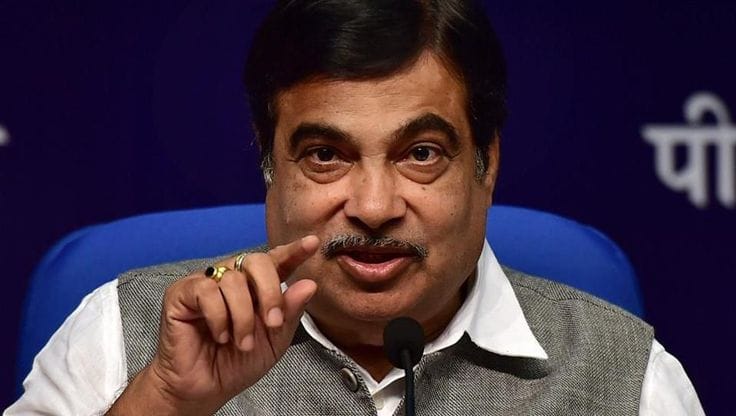
Union minister Nitin Gadkari announced a road inspection of the corridor just days after a horrific accident in Rajasthan’s Dausa district. Image Credit: PTI
The Delhi-Mumbai Motorway is back in focus after Union minister Nitin Gadkari announced a road inspection of the corridor just days after a horrific accident in Rajasthan’s Dausa district left eight people dead and 28 injured. According to NHAI officials, Gadkari will travel by road from Delhi and proceed towards Kota-Ratlam through the motorway, with possible stops at key safety-sensitive locations, including the July 1 fire accident site near Dausa and the Dara Tunnel project near Mukundara Hills in Kota.
The timing of the visit has made headlines because the motorway is supposed to represent India’s next-generation highway model, yet the latest crash has exposed concerns about unclear signage, non-functional SOS systems and lapses in traffic enforcement. This is not just a routine ministerial review. It is a response to a serious safety question that has already cost lives. Yeh issue kaafi important hai because the Delhi-Mumbai Motorway is a flagship project, and any weakness on such a route affects public trust nationwide.
What Happened on July 1
The immediate trigger for this inspection was the deadly July 1 accident near Dhanawda village, close to Zero Point, under the Kolwa Police Station area in Rajasthan’s Dausa district. A bus travelling from Haridwar to Indore crashed into the rear of a moving trailer truck at around 2:30 am. The impact caused the bus to plunge into a roadside gorge and catch fire, killing eight people and injuring 28 others. This story is also being covered by NDTV.
The crash was devastating not only because of the death toll, but also because it happened on a corridor designed for safer, faster and more efficient travel. The Delhi-Mumbai Motorway is supposed to reduce congestion and improve movement between major economic centres. Instead, this tragedy has brought attention back to road design, driver confusion and safety enforcement.
According to preliminary findings, the truck involved in the accident was supposed to take the Jaipur-Ajmer exit. But at Zero Point, the turn was not clearly marked. After missing the exit, the truck slowed down, and the bus coming from behind rammed into it. That sequence suggests a chain of errors made more dangerous by poor signage and a confusing road layout.
Why the Route Is Under Scrutiny
The motorway stretch around Dausa is now being examined because multiple reports suggest the problem is not isolated. Officials and sources say drivers approaching from the Delhi side often get confused while trying to take the Jaipur 4C Link Motorway. At Zero Point, there is reportedly no clear directional arrow or signboard, which leads many motorists to overshoot the exit and then brake suddenly or attempt unsafe reversals.
That is a dangerous combination on a high-speed highway. When one vehicle slows unexpectedly, others behind may not have enough reaction time. On expressways, even a few seconds of hesitation can lead to a chain-reaction crash. That appears to be what happened here.
There is also concern that the signs installed nearly two kilometres before the exit have arrows that are too small to be read easily at highway speeds. This matters because signboards on fast roads must be visible well in advance, not only to identify exits but also to give drivers enough distance to decide calmly. If drivers are forced to react too late, the road itself becomes unsafe.
Officials have also said the issue extends beyond one point. At several locations on the Delhi-Mumbai Motorway, signage and direction indicators are reportedly unclear. Drivers heading to Jaipur are said to face two options, one via Dausa and another via Kanota, but the route signs do not clearly show which exit leads where. That kind of confusion is exactly what modern highway design is supposed to eliminate.
Official Response and On-Ground Measures
In response to the crash, the Rajasthan Chief Secretary has already held two important meetings on the issue. The Dausa district administration has also formed a committee to identify safety issues on the stretch. Acting on instructions from District Collector Soumya Jha, the District Road Safety Task Force carried out a detailed review of the motorway.
An eight-member inquiry committee headed by the Additional District Collector has been formed. The team will inspect Packages 6, 7 and 8 between chainage 150 km and 240 km on July 8 and 9. That shows the administration is treating the matter seriously, at least at the review stage.
Temporary encroachments along the motorway were also removed under the supervision of IG Rahul Prakash after the accident. In a statement to NDTV, he said: “All temporary encroachments from Alwar to Dausa have been removed because they pose a road safety risk. However, the exact cause of the July 1 accident will only be known after the investigation is complete.” That statement is important because it separates immediate cleanup from final responsibility. The inquiry is still ongoing, and officials are careful not to overstate conclusions before the evidence is complete.
Safety Lapses Identified So Far
The preliminary inspection has already identified several shortcomings that could be contributing to accidents on this section of the motorway. Among the most serious are non-functional SOS phones, unclear arrows and direction signs, weak monitoring of speeding vehicles and inadequate enforcement of speed-limit violations.
Each of these issues may sound small on its own, but together they create a dangerous system failure. A high-speed motorway is only as safe as its weakest link. If emergency phones do not work, a stranded driver cannot call for help. If speed enforcement is poor, vehicles may move too fast for the road conditions. If signage is unclear, drivers may make sudden and dangerous decisions. Put all of that together, and accidents become more likely.
The inquiry has also concluded that the absence of proper signboards at Zero Point is increasing the risk of collisions. This is especially worrying because the July 1 crash happened at the same location. In road safety terms, that makes the site a clear “black spot” that needs urgent redesign, not just monitoring.
Background and Context
The Delhi-Mumbai Motorway is one of the National Highways Authority of India’s flagship projects and has been presented as a major step forward in India’s transport infrastructure. It is meant to improve connectivity, reduce travel time and create a safer, smoother route between two of the country’s most important urban and economic zones.
That makes every safety failure on the highway politically and operationally significant. A project of this scale is not judged only by how quickly it cuts travel time but also by how safely it performs in real traffic conditions. If a new motorway cannot provide clear exits, functioning emergency systems and reliable enforcement, then the promise of modern infrastructure becomes weaker.
The Dausa crash has now turned this motorway into a national safety conversation. People are not only asking what happened on July 1 but also whether the road’s layout was properly tested before opening, whether warnings were adequate and whether repeated concerns were acted upon early enough.
Timeline
July 1, 2026: A bus travelling from Haridwar to Indore crashes into a truck near Zero Point in Dausa, killing eight and injuring 28.
Immediately after the crash: Local authorities begin preliminary checks and remove temporary encroachments from sections of the motorway.
Following days: The Rajasthan Chief Secretary holds two meetings on the safety issue.
This week: A district inquiry committee is formed to inspect Packages 6, 7 and 8 of the motorway.
Today: Nitin Gadkari is expected to inspect the Delhi-Mumbai Motorway by road from Delhi to Kota-Ratlam via Dausa.
Also Read: Dausa Bus Fire on Delhi-Mumbai Expressway Kills 7, Injures 22 in Horror Night Crash
Why This Matters
This matters because road safety failures on a major motorway can affect thousands of daily users, not just the victims of one crash. Yeh issue kaafi important hai because when signage is poor and enforcement is weak, the road becomes unpredictable, and unpredictability is deadly at highway speeds. A single confusing exit can trigger a chain reaction that ends in fire, injuries and loss of life.
It also matters because the Delhi-Mumbai Motorway is a showcase project. If a flagship national highway faces repeated safety questions, it sends a larger message about how infrastructure is being planned and managed. People expect modern highways to be safer than older roads, not more confusing.
For commuters and transport operators, the impact is immediate and practical. They need clearer directions, safer exits and functioning emergency systems. For policymakers, the impact is reputational. A road that is meant to symbolise progress cannot afford repeated safety lapses without corrective action.
India Angle
For Indian readers, this story hits a familiar nerve because many motorists have experienced confusing highway exits, unclear boards or sudden lane changes on long-distance roads. In Hinglish, seedhi baat yeh hai: agar signboard hi clear na ho, toh driver ka mistake hona almost inevitable ho jata hai. That is why the Dausa accident is not just a Rajasthan issue — it is a national road-safety lesson.
It also matters because India is building more motorways than ever before. That is a positive development, but the quality of road design, maintenance and traffic management must keep pace. Otherwise, new roads can become dangerous in different ways. The country needs not just faster roads but also smarter and safer ones.
There is another India angle here too: accountability. When a senior minister inspects the route himself, it signals that the issue has moved beyond local administration. For the public, that is a reminder that road safety is a governance issue, not just a traffic issue.
Analysis
My opinion is that the core problem here seems less about one driver error and more about system design. If multiple sources are reporting that exits are unclear, arrows are too small and SOS phones are not working, then the motorway needs more than routine maintenance. It needs a serious redesign of safety communication.
I also think the minister’s road inspection is politically important because it can push faster corrective action. Public attention often accelerates administrative response, and in this case that may be necessary. But the real test will not be the inspection itself. The real test will be whether the findings lead to visible changes on the ground.
Another important point is that motorway safety is not only about engineering. Enforcement matters too. If drivers can speed unchecked and stop suddenly at confusing exits, even a well-built road becomes risky. Good signage, strong monitoring and working emergency systems all have to function together.
What Next
The immediate next step is the minister’s inspection of the motorway and tunnel project, where he is expected to review maintenance, ongoing construction and safety arrangements. Officials will also likely compare the Dausa stretch with other sections in Madhya Pradesh and Gujarat to identify broader corridor-wide issues.
The inquiry committee’s site visits on July 8 and 9 will be important because they may determine whether the safety lapses are localised or systemic. If the findings confirm major signage failures, the authorities may be pushed to install clearer route boards, enlarge arrows, improve SOS systems and strengthen speed monitoring.
Longer term, the outcome may shape how India audits new motorways before and after opening. If this incident leads to stricter design checks and better safety compliance, the tragedy may at least produce reforms that help prevent future crashes.
Conclusion
Nitin Gadkari’s planned inspection of the Delhi-Mumbai Motorway comes at a crucial moment, just days after the deadly Dausa crash exposed serious concerns about signage, speed control and emergency preparedness. The latest inquiry suggests that unclear exits and weak safety systems may be contributing to repeated accidents on the corridor, making this more than just an isolated incident. With the minister now travelling the route himself, the focus has shifted from condolences to accountability and corrective action. The message is clear: India’s flagship highways must not only be fast and modern, they must also be safe, readable and reliable.
Written By A. Jack