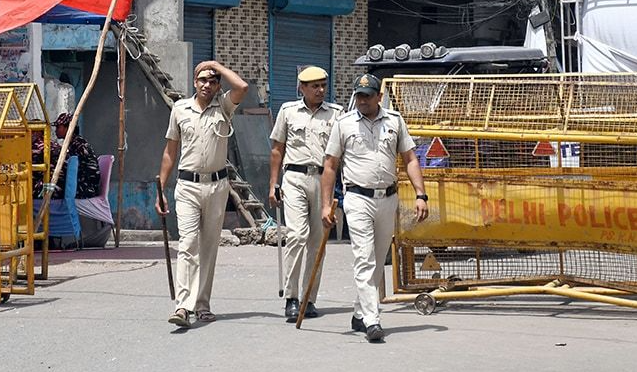
The victim was brought dead at AIIMS following the accident which occurred near Lajpat Nagar at around 1 am. “Officers are still in the early stages of the investigation and forensic teams are working to establish what happened,” officers said.
This image is for illustrations only.
A suspected hit-and-run Case in Delhi’s Lajpat Nagar area early Tuesday claimed the life of a 23-year-old Ugandan national, police said. The victim, identified as Naka Vema Nowa, was declared brought dead after being taken to AIIMS, and officers have begun a probe to identify the vehicle involved and reconstruct what happened in the minutes before the fatal collision.
The case has already triggered a full investigation, with police recording statements from the woman’s friends and other witnesses. Crime team officials and forensic experts also examined the site and collected evidence. At this stage, the exact vehicle is still unknown, but the police are treating the incident as a serious case of rash driving and negligence. Yeh matter kaafi serious hai because a young life has been lost and the offender is still unidentified.
What Happened
According to police, the accident took place around 1 am in southeast Delhi’s Lajpat Nagar area. Information about the victim’s medico-legal case was received from AIIMS around 2.20 am, after which a police team rushed to the spot. The woman had already been declared brought dead, indicating that the injuries were severe and that she likely did not survive long after the incident. This story is also covered by NDTV.
The police have registered a case under sections 281 and 106(1) of the Bharatiya Nyaya Sanhita, which deal with rash driving and causing death by negligence. These charges are typically applied when a vehicle is alleged to have been driven recklessly and caused a fatal accident. In a hit-and-run case, the priority for police is usually twofold: first, identify the vehicle and driver; second, establish whether the crash was purely accidental or the result of avoidable negligence.
The area has been secured for technical analysis, and investigators are now relying on CCTV footage, witness accounts and any nearby vehicle movement records. That process is critical because road incidents at night often happen quickly and can be hard to piece together without camera evidence. In simple terms, yeh aisa case hai jahan har second ka footage matter karta hai.
Police Investigation
Police said they have already recorded statements from the victim’s friends and other witnesses. That suggests investigators are trying to understand where she was going, whether she was walking or travelling, and whether any other people saw the vehicle or the impact. Witness testimony can sometimes fill in gaps that cameras miss, especially in crowded urban areas with blind spots.
The crime team and forensic science laboratory teams inspected the scene and collected evidence. That step is important because it may help determine the point of impact, direction of travel, speed and whether there were skid marks or vehicle fragments left behind. Even in a case where the vehicle is not immediately found, forensic clues can narrow the search.
Police have also said the case is still at a preliminary stage. That means they are not rushing to conclusions and are waiting for technical evidence to solidify the sequence of events. The offending vehicle has not yet been identified, but the investigation remains active. According to the officer, “The investigation is at a preliminary stage. The offending vehicle is yet to be identified and further investigation is in progress.” That statement shows police are still building the case carefully rather than speculating too early.
Why the Case Is Disturbing
This incident is disturbing not just because it happened but because the driver responsible may have fled the scene. Hit-and-run crashes raise the stakes of road safety because they often involve a second layer of wrongdoing: not just negligent driving, but also failure to stop and help. In many such cases, that delay can make the difference between survival and death.
Lajpat Nagar is a busy urban area with significant pedestrian movement, commercial activity and late-night traffic. When such incidents occur in city centres, they highlight the vulnerability of people on foot and the risks of high-speed or careless driving even in dense localities. Delhi has long struggled with road safety, and this case fits into a wider pattern of concern.
It is also important that the victim was a foreign national living in Delhi. That does not change the legal process, but it does underline the city’s responsibility to ensure safety for residents from all backgrounds. Whether a person is Indian or from another country, the expectation is the same: public roads should be safe and victims should get swift justice.
Background and Context
Hit-and-run cases are unfortunately not rare in large Indian cities, where traffic density, speeding and weak nighttime discipline can create dangerous conditions. In areas like south and southeast Delhi, road widths, vehicle volume and mixed pedestrian traffic can make accidents particularly serious. Nighttime is often riskier because visibility is lower and drivers may move faster.
Delhi’s road safety challenges are well known, but each fatal case still feels fresh because they reflect the same unresolved problem: too many drivers continue to treat roads as if speed matters more than caution. The law is clear, but enforcement and accountability remain uneven. That is why every hit-and-run case becomes more than an isolated tragedy — it becomes a reminder of how fragile urban road safety can be.
There is also the challenge of witness memory and evidence preservation. When a crash happens at 1 am, the clock starts ticking immediately. CCTV recordings may be overwritten, bystanders may leave, and vehicle traces can be washed away or disturbed. That makes the first few hours of investigation extremely important.
Timeline
Around 1 am, Tuesday: The suspected hit-and-run occurs in Lajpat Nagar, southeast Delhi.
Around 2.20 am: AIIMS informs police about the victim’s medico-legal case.
Soon after: Police reach the scene; the woman is declared brought dead.
Tuesday morning: Crime team and forensic experts inspect the spot and collect evidence.
Later in the day: Witness statements are recorded and CCTV analysis begins.
Current stage: Police continue efforts to identify the vehicle and reconstruct the incident.
Also Read: Nitin Gadkari to Inspect Delhi-Mumbai Expressway After Dausa Crash Killed 8
Why This Matters
This matters because road fatalities are not just statistics — they are preventable losses that affect families, communities and public trust. In a city like Delhi, where traffic already creates daily stress, every fatal hit-and-run raises questions about road discipline, policing and infrastructure safety. Yeh issue kaafi important hai because if offenders can disappear after a fatal crash, then deterrence becomes weaker.
It also matters because the victim was young, living away from her home country and likely building a life in Delhi. Such deaths are not only tragic on a human level, they also affect how safe a city feels to its residents and visitors. Cities that depend on mobility, business and international connections cannot afford to appear unsafe for pedestrians.
For authorities, the case matters because it will test how quickly they can identify the vehicle and whether the evidence chain is strong enough to bring charges. For citizens, it matters because it is a reminder to demand better enforcement, better street lighting, safer crossings and responsible driving.
India Angle
For Indian readers, this story lands in a familiar context: road safety remains one of the country’s most urgent everyday issues. In Hinglish, seedhi baat yeh hai: agar city ke beech raat mein bhi log safe nahi hain, toh road system pe serious question uthta hai. Most Indians have seen reckless driving, sudden overtaking or speeding in congested urban areas, so this case feels unfortunately relatable.
It also connects to how cities like Delhi are experienced by people from outside India. Many international students, workers and visitors live in the capital, and their safety becomes part of the city’s image. A case like this can affect how people view Delhi as a place to live and work.
There is a wider national lesson too. India’s road safety conversation often focuses on highways, but city roads can be just as dangerous. Stronger pedestrian protection, CCTV coverage and stricter enforcement at night are not luxury measures; they are basic safety needs.
Analysis
My opinion is that the most important part of this story is the investigative challenge. The police have the right framework in place — witness statements, forensic inspection and CCTV analysis — but the real test is whether they can quickly identify the vehicle. In hit-and-run case, speed matters because evidence disappears fast.
I also think the human dimension should not be lost. The victim was only 23, a young woman living in a big city away from home. That makes the tragedy feel especially heavy. News reports often focus on the accident details, but behind every such case is a family waiting for answers.
From an editorial point of view, this is also the kind of story that underscores why road safety reporting matters. It is not just about the crash itself; it is about what the crash says about traffic culture, enforcement and urban accountability. That broader frame helps readers understand why a single incident matters beyond one evening.
What Next
The next step is the technical identification of the vehicle through CCTV footage, traffic camera records and any available eyewitness clues. Police will likely continue mapping the route, analysing impact details and checking whether nearby repairs, signboards or road conditions played any role.
If the vehicle is identified, the legal process will move toward establishing who was driving, whether alcohol or speeding were factors, and whether the driver fled knowingly after the collision. If the vehicle is not quickly found, the investigation may depend even more heavily on surveillance footage and forensic traces.
The broader next step should be a review of road safety in the area, especially for pedestrians and late-night traffic. Cities often react to such tragedies with temporary vigilance, but lasting change comes only if infrastructure and enforcement improve.
Conclusion
The death of Naka Vema Nowa, in a suspected hit-and-run case in Lajpat Nagar, is a painful reminder of how fragile road safety can be in a busy city like Delhi. Police have opened a case, examined the scene and begun reviewing CCTV and witness accounts, but the offending vehicle has not yet been identified. Until that happens, the case remains a serious test of investigation and accountability. More broadly, it is a reminder that every road user — whether local or foreign, driver or pedestrian — deserves a safer city.
Written By A. Jack